

Recipe for Béchamel Sauce
Ingredients
Equipment
Method
- Melt the butter in a medium saucepan over medium-low heat.
- Add the flour and whisk continuously for 2 minutes to form a smooth roux. Do not allow it to brown.
- Slowly pour in the warm milk while whisking constantly to prevent lumps.
- Continue whisking until all the milk has been incorporated.
- Simmer gently for 8–10 minutes, stirring frequently, until the sauce thickens and coats the back of a spoon.
- Stir in the salt, black pepper, and nutmeg.
- Add the Parmesan cheese, if using, and whisk until melted and smooth.
- Remove the saucepan from the heat.
- Let the Béchamel Sauce rest for 5 minutes before using or serving. Stir once more before adding it to recipes.
Notes
- Warm milk helps create a smooth, lump-free sauce.
- Whisk continuously while adding the milk for the creamiest texture.
- For a thinner sauce, add a little extra warm milk.
- Cover the surface with plastic wrap if storing to prevent a skin from forming.
- Refrigerate for up to 4 days or freeze for up to 2 months.
Most home cooks have faced the same frustrating moment: you follow what seems like a simple sauce recipe and end up with a lumpy, floury, or bland mess that ruins the dish you worked hard to prepare.
The recipe for Béchamel sauce has a reputation for being finicky, but the truth is it is one of the most forgiving sauces in the kitchen once you understand a few key principles. This guide breaks down everything clearly, from the exact ingredients and ratios to the most common mistakes and how to fix them, so you can make a perfectly smooth, creamy classic béchamel sauce every single time.
What Exactly Is Béchamel Sauce?
Béchamel is one of the five French mother sauces, meaning it serves as the foundation for dozens of other sauces and dishes in both French and Italian cooking. It is a white sauce made from just three core ingredients: butter, flour, and milk. These three simple components combine to create something silky, versatile, and deeply satisfying.
The sauce has been part of European cuisine since the 17th century and is known by different names in different countries. In Italy, it is called salsa besciamella and appears in lasagna, baked pasta, and creamy gratins. In France, it forms the base of classic dishes like croque-monsieur and soufflés. Understanding this sauce opens up an enormous range of cooking possibilities.
Why You Will Want to Learn This Recipe
Once you master béchamel, your cooking changes permanently. Here is why this sauce is worth learning properly:
- It forms the creamy base of lasagna, mac and cheese, moussaka, and pasta bakes
- It takes less than 15 minutes to make from start to finish
- Only three main ingredients are required, all of which are already in your kitchen
- It can be flavored and customized endlessly to suit any dish
- A smooth, well-made béchamel elevates even the simplest ingredients into something special
- It stores well and reheats beautifully, making it perfect for meal prep
Ingredients for a Classic Béchamel Sauce
The beauty of this sauce is its simplicity. Here is everything you need for a standard batch that yields approximately two cups:
The Three Core Ingredients
- 3 tablespoons unsalted butter
- 3 tablespoons all-purpose flour
- 2 cups whole milk, warmed
Essential Seasonings
- Half a teaspoon of fine salt
- A pinch of white pepper (or black pepper if that is what you have)
- A small pinch of freshly grated nutmeg
Optional Flavor Boosters
- 1 small bay leaf added while the milk warms
- A pinch of garlic powder for savory dishes
- 2 tablespoons grated parmesan for a richer, cheesier version
How Thick Should Your Béchamel Be? A Simple Guide
The thickness of your béchamel depends entirely on what you plan to use it for. Here is a quick reference:
| Sauce Consistency | Butter and Flour | Milk | Best Used For |
| Thin (pouring) | 1 tbsp each | 2 cups | Soups, creamy broths |
| Medium (coating) | 2 tbsp each | 2 cups | Pasta sauces, gratins |
| Thick (binding) | 3 tbsp each | 2 cups | Lasagne, croquettes, soufflé base |
| Very thick (stiff) | 4 tbsp each | 2 cups | Stuffed pasta fillings, béchamel cakes |
The standard ratio used in this recipe produces a medium-thick sauce that works for most everyday cooking needs, including lasagna and mac and cheese.
Step-by-Step: How to Make Béchamel Sauce
Step 1: Warm the Milk First
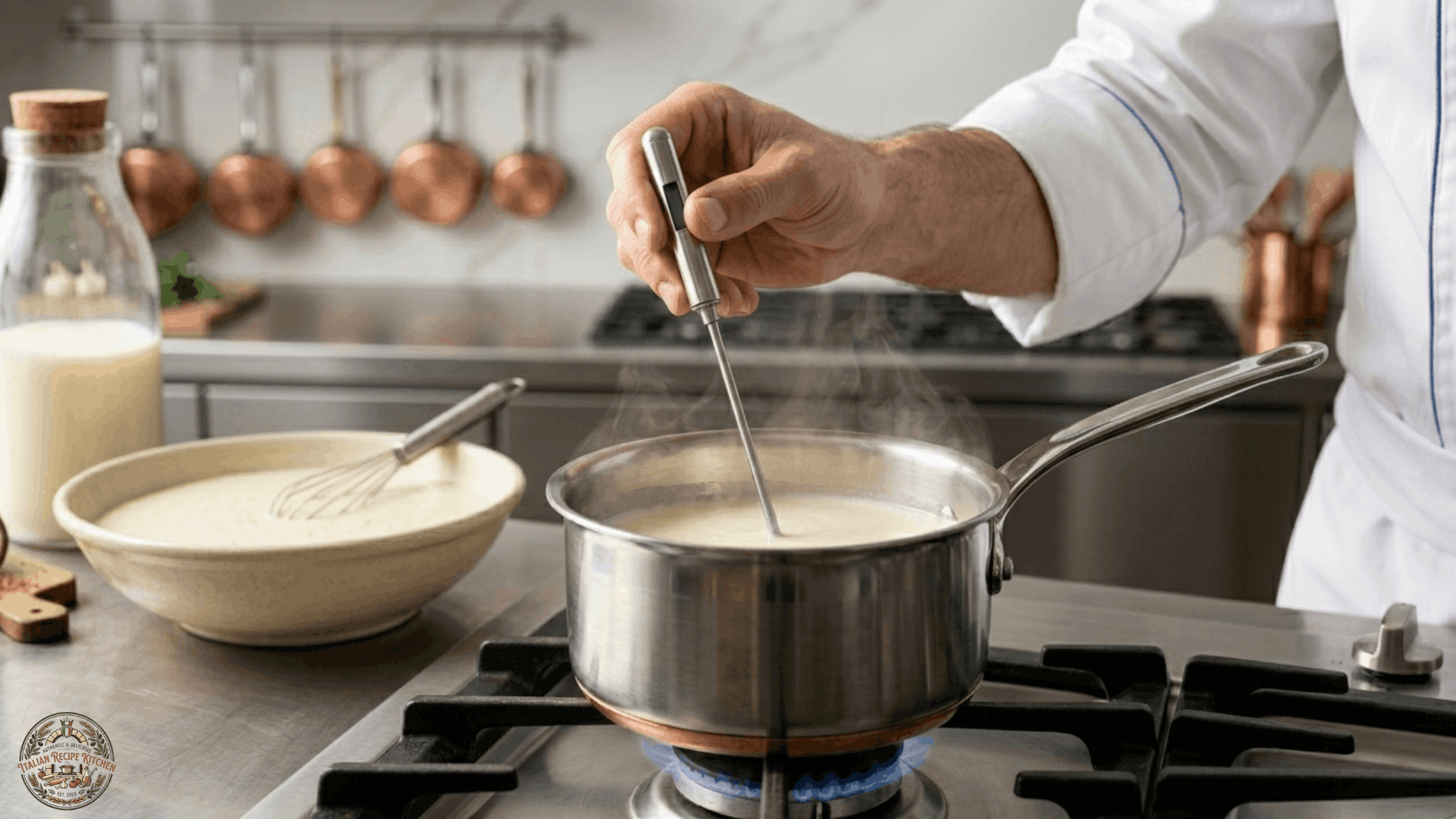
Pour the milk into a small saucepan and warm it over low heat until it is just steaming but not boiling. Warming the milk before adding it to the roux is one of the most important steps. Cold milk shocks the roux and causes lumps to form almost immediately. Warm milk blends in smoothly and produces a silky sauce every time.
Step 2: Make the Roux
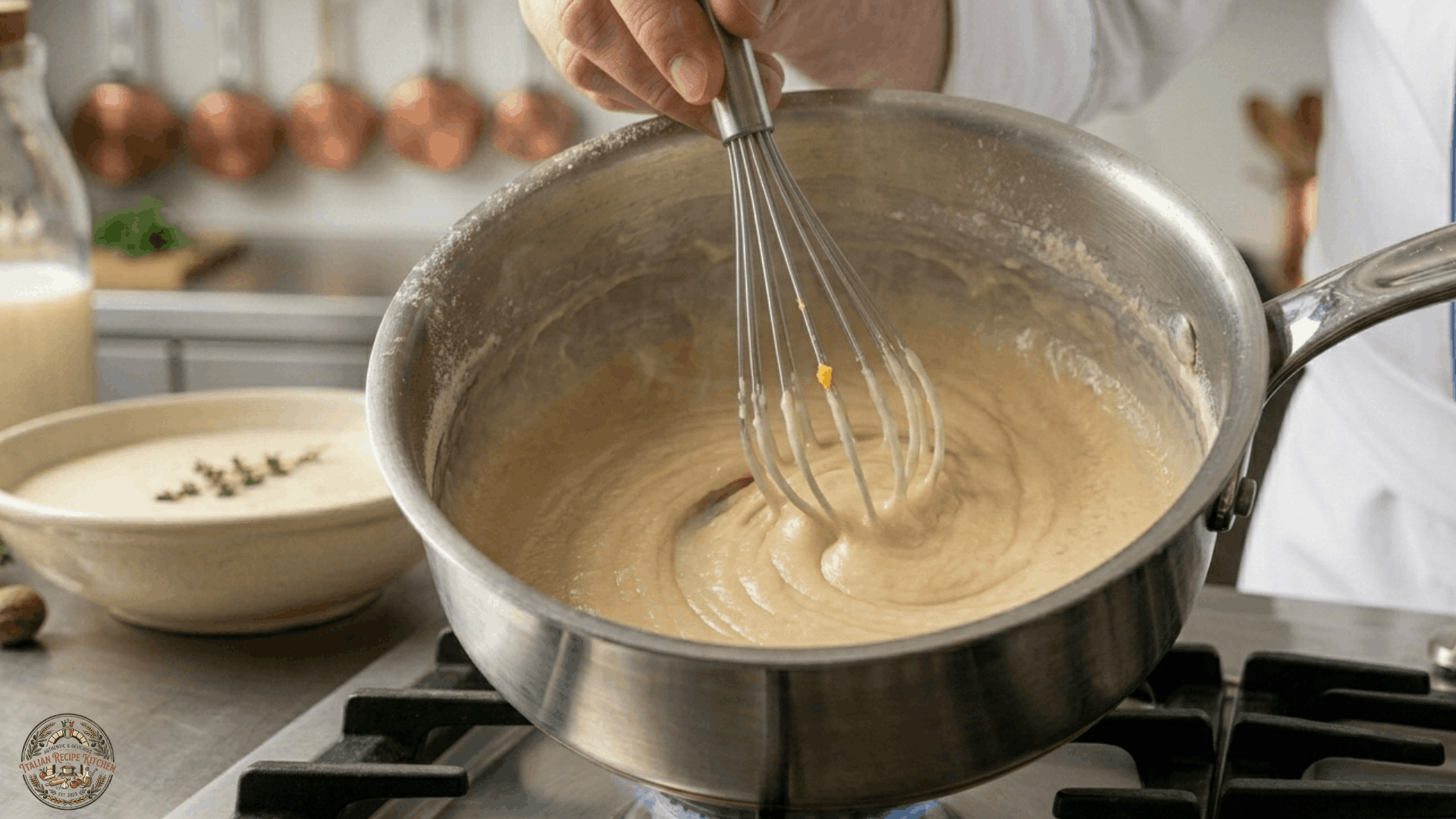
Melt the butter in a medium saucepan over medium heat. Once it stops foaming and begins to look glossy, add all the flour at once. Whisk immediately and continuously for two to three minutes. The mixture will look like a thick, pale paste. This cooking time is essential because it removes the raw flour taste that would otherwise make your sauce taste starchy and heavy.
Watch the color carefully. The roux should turn a very pale golden shade but never brown. If it starts to darken, lower the heat immediately. A dark roux changes the flavor profile and cannot be reversed.
Step 3: Add the Warm Milk Gradually
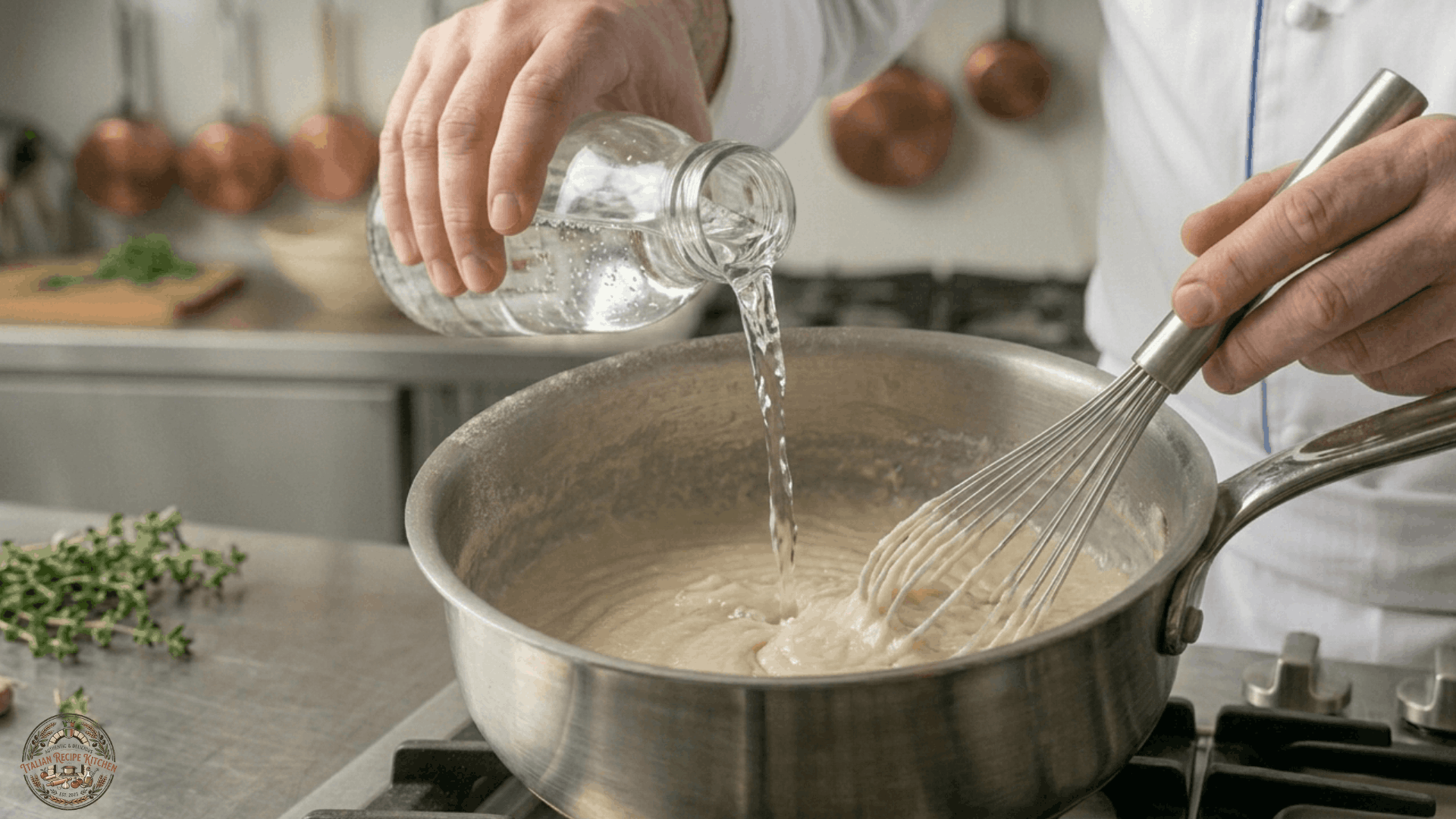
Remove the pan from the heat for about 30 seconds, then add roughly a quarter of the warm milk all at once. Whisk vigorously to fully incorporate it and dissolve any lumps before the mixture sets. Once smooth, return to medium heat and add the remaining milk in a slow, steady stream while whisking constantly.
Continue whisking as the sauce comes to a gentle simmer. Never walk away at this stage. The sauce can catch and burn on the bottom if left unattended. Stir and scrape the bottom of the pan with your whisk throughout.
Step 4: Cook Until Thickened
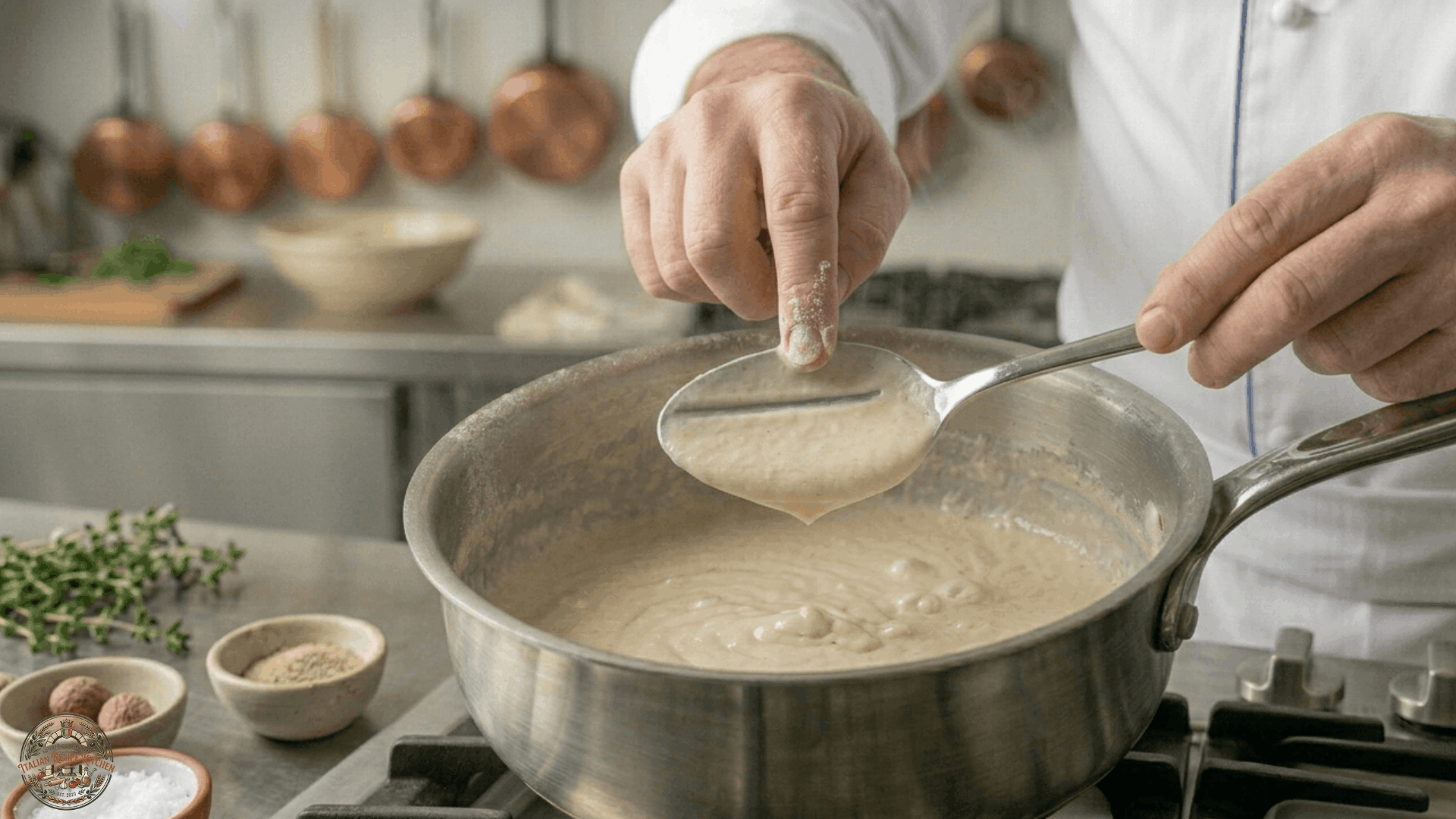
Keep the sauce at a gentle simmer for four to six minutes, stirring continuously, until it thickens enough to coat the back of a spoon. The classic test is to dip a spoon into the sauce and draw a line across the back with your finger. If the line holds clean without the sauce running back together, your béchamel is ready.
Remove from heat and season with salt, white pepper, and nutmeg. Taste and adjust before using. A properly seasoned béchamel should taste rich, creamy, and subtly aromatic.
Expert Tips for a Perfectly Smooth Sauce Every Time
Small habits make a big difference when making béchamel. Keep these in mind:
- Always warm the milk before adding it to the roux, never use cold milk straight from the fridge
- Whisk constantly from the moment the milk hits the pan, no pausing
- Use a heavy-bottomed saucepan so the heat stays even and the sauce does not scorch
- Cook the roux for the full two to three minutes, or your sauce will taste of raw flour
- Remove the pan from the heat briefly before adding the first pour of milk to reduce lumping
- Grate your nutmeg fresh if possible, as pre-ground nutmeg lacks the same aromatic depth
- If the sauce is too thick, whisk in warm milk one tablespoon at a time until the right consistency is reached
Mistakes That Ruin Béchamel and How to Avoid Them
These are the most common reasons béchamel goes wrong, and exactly what to do instead:
- Adding milk too fast: Always add milk gradually, especially the first pour. Rushing causes lumps that are very hard to remove later.
- Using cold milk: Cold milk creates thermal shock in the roux and produces a lumpy sauce almost instantly. Always warm it first.
- Not cooking the roux long enough: A roux cooked for less than two minutes leaves a floury, starchy taste in the finished sauce.
- Letting the roux brown: A béchamel should be made with a white or blond roux only. Brown roux changes the flavor and color completely.
- Walking away from the pan: Béchamel requires continuous attention. Even one minute unattended can lead to scorching on the bottom.
- Skipping the nutmeg: Nutmeg is a small addition, but it rounds out the flavor in a way that makes the finished sauce taste complete and balanced.
If lumps do form despite your best efforts, do not panic. Simply strain the sauce through a fine mesh sieve or blend it briefly with an immersion blender to restore it to a smooth consistency.
Creative Variations and Smart Substitutions
Classic béchamel is wonderful on its own, but it is also a brilliant base for customization:
| Variation | What to Add | Best For |
| Mornay sauce | Add grated Gruyère or Parmesan | Mac and cheese, gratins |
| Mustard béchamel | Add 1 tsp Dijon mustard | Ham dishes, croque monsieur |
| Herb béchamel | Add fresh thyme, tarragon, or parsley | Chicken, fish, and vegetable dishes |
| Garlic béchamel | Infuse warm milk with garlic | Pasta bakes, pizza base |
| Dairy-free version | Use oat milk or almond milk | Vegan dishes and lactose intolerance |
| Gluten-free version | Use cornstarch instead of flour | Celiac-friendly cooking |
For a dairy-free béchamel, oat milk works best because it has a neutral flavor and thickens similarly to whole milk. Use the same quantity and technique as the classic version.
All the Ways You Can Use Béchamel Sauce
Once you have a batch ready, the possibilities are genuinely endless:
- Layered into lasagna between pasta sheets and meat sauce
- Poured over pasta and baked for a creamy pasta al forno
- Used as the cheese sauce base in Italian mac and cheese
- Spoon over vegetables before baking for a gratin
- Spread on bread as the base of a croque-monsieur
- Mixed with cheese and used as a creamy pizza sauce
- Folded into soufflés as a binding and enriching base
- Used as a filling base for savory crepes
How to Store and Reheat Béchamel Without Losing That Silky Texture
Béchamel stores extremely well when handled correctly. After making the sauce, press a sheet of plastic wrap directly against the surface before it cools. This prevents a skin from forming on top, which is the most common storage problem with white sauces.
Store in the refrigerator in an airtight container for up to four days. To reheat, transfer to a saucepan over low heat and whisk in a splash of warm milk to loosen it back to the original creamy consistency. Never microwave it straight from the fridge as it heats unevenly and causes separation.
For freezing, béchamel can be stored for up to three months. Thaw overnight in the refrigerator and reheat slowly with added milk while whisking.
Final Thoughts
Classic béchamel sauce is one of those foundational recipes that every home cook deserves to have in their repertoire. It takes less than 15 minutes, uses ingredients you already own, and unlocks an entire world of dishes from lasagna to mac and cheese to elegant gratins.
The key is patience with the roux, warm milk added gradually, and a whisk that never stops moving. Master these three things, and you will never struggle with white sauce again. Once you feel the difference between a homemade béchamel and anything store-bought, the choice becomes obvious every time.
Frequently Asked Questions
What are the three main ingredients in béchamel sauce?
Béchamel is made from butter, all-purpose flour, and milk. Salt, pepper, and nutmeg are added for seasoning.
Why does my béchamel sauce have lumps?
Lumps usually form when cold milk is added too quickly, or the roux is not whisked fast enough. Always use warm milk and add it gradually while whisking continuously.
How do I fix a lumpy béchamel sauce?
Strain the sauce through a fine mesh sieve or blend it briefly with an immersion blender to restore a smooth consistency.
Can I make béchamel sauce without butter?
Yes, you can substitute olive oil or a dairy-free butter alternative, and the sauce will still thicken properly, though the flavor will be slightly different.
What is the difference between béchamel and white sauce?
They are the same thing. Béchamel is the French culinary term, while white sauce is the common English name for the same preparation.
How do I make béchamel thicker or thinner?
Add more flour and butter for a thicker sauce. Add extra warm milk, one tablespoon at a time, to thin it out to the consistency you need.
Can I freeze béchamel sauce?
Yes. Store in an airtight container for up to three months. Thaw overnight in the fridge and reheat slowly on the stovetop with a splash of warm milk while whisking.