
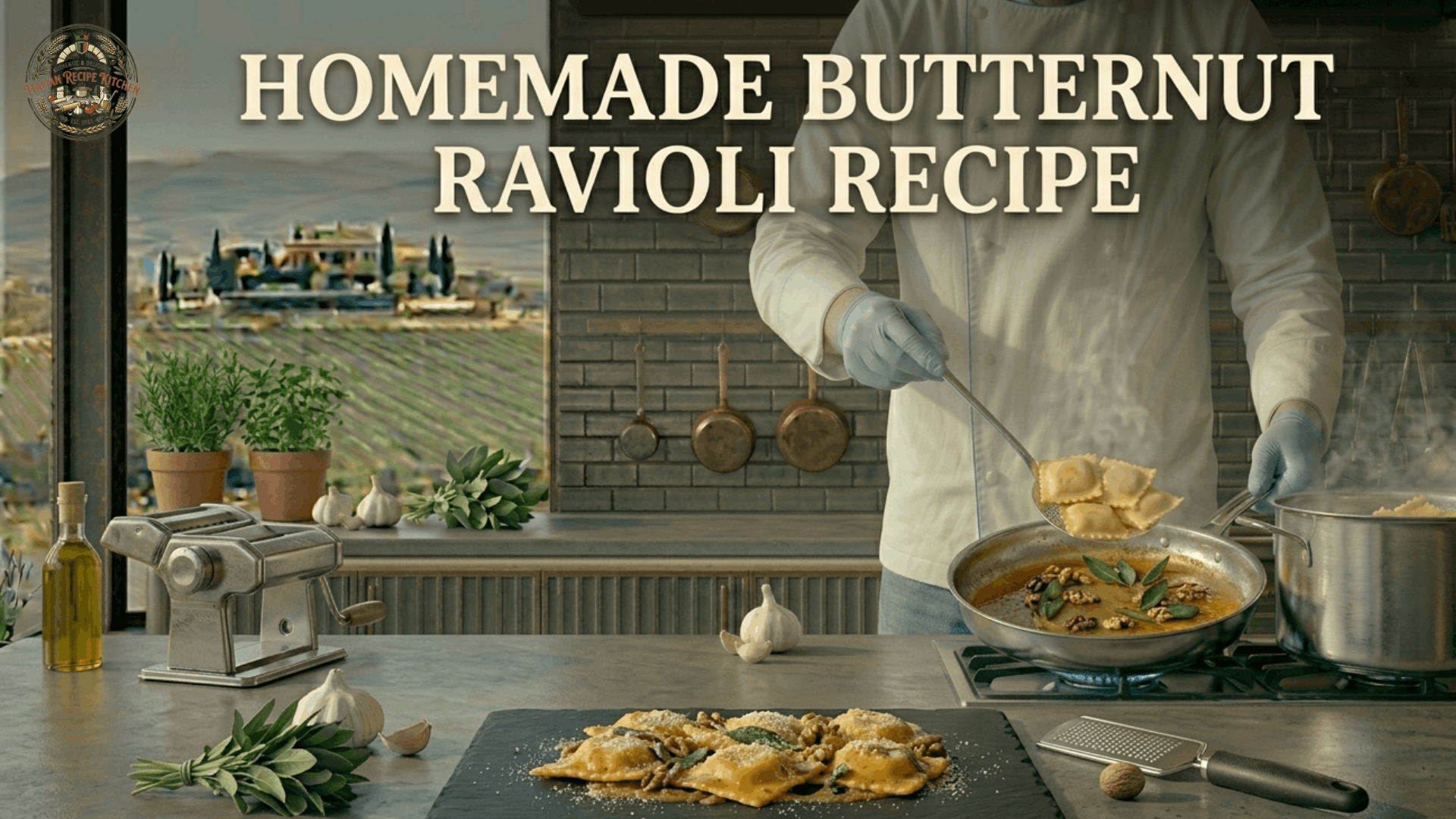
Butternut Ravioli Recipe
Ingredients
Equipment
Method
- Combine the flour and salt in a large bowl. Add the eggs and olive oil, then mix until a dough forms.
- Knead the dough for 8–10 minutes until smooth and elastic.
- Wrap the dough tightly and let it rest for 30 minutes at room temperature.
- Mix the roasted butternut squash, ricotta, Parmesan, nutmeg, sage, salt, and pepper until smooth.
- Roll the dough into thin sheets using a pasta machine or rolling pin.
- Place small spoonfuls of filling onto one sheet of pasta, spacing them evenly.
- Brush water around each mound of filling, place another sheet on top, and press out any air.
- Cut the ravioli using a ravioli cutter or stamp.
- Bring a large pot of salted water to a gentle boil.
- Cook the ravioli for 3–4 minutes, or until they float to the surface.
- Meanwhile, melt the butter in a skillet over medium heat and cook the sage leaves until fragrant and lightly crisp.
- Transfer the cooked ravioli directly into the sage butter sauce and toss gently.
- Sprinkle with Parmesan cheese and parsley before serving.
Notes
- Resting the dough makes it easier to roll and improves texture.
- Avoid overfilling the ravioli to prevent them from bursting during cooking.
- Freeze uncooked ravioli on a baking sheet, then transfer to freezer bags for up to 2 months.
- Serve with extra Parmesan cheese and freshly cracked black pepper.
- Use fresh sage for the most authentic flavor.
Making the best homemade butternut ravioli recipe from scratch is one of the most rewarding cooking experiences you can have in your kitchen. Silky fresh pasta dough wraps around a rich, creamy squash filling, and everything comes together with a simple brown butter sage sauce. This classic fall pasta dish is easier than it looks, and once you try it, store-bought ravioli will never feel the same again.
What Makes This Butternut Squash Ravioli So Special
The magic of this recipe lies in the balance of sweet and savory. Roasted butternut squash brings natural sweetness while roasted garlic and shallots add deep umami flavor. A pinch of nutmeg ties everything together. Combined with silky homemade egg pasta, this dish delivers restaurant-quality results in your own kitchen. You can check the quality by making it in the kitchen, and also check the quality of what is made in markets; there is a huge difference.
Unlike store-bought pasta, fresh homemade pasta has a tender, melt-in-your-mouth texture that pairs perfectly with creamy squash filling. The brown butter sage sauce takes only a few minutes to make but adds an incredible nutty, aromatic richness that elevates the entire dish.
Butternut Squash Ravioli Recipe Ingredients
Here is everything you need, broken into three parts:
These are easily available in the markets
For the Fresh Pasta Dough
| Ingredient | Amount |
| All-purpose flour | 1½ cups |
| Semolina flour | ½ cup |
| Large eggs | 3 whole + 1 yolk |
| Olive oil | 1 tablespoon |
| Salt | ½ teaspoon |
For the Butternut Squash Filling
| Ingredient | Amount |
| Butternut squash | 1 medium (about 2 lbs) |
| Ricotta cheese | ½ cup |
| Parmesan cheese, grated | ¼ cup |
| Roasted garlic cloves | 3 cloves |
| Fresh sage leaves | 4 leaves |
| Ground nutmeg | ¼ teaspoon |
| Salt and black pepper | To taste |
For the Brown Butter Sage Sauce
| Ingredient | Amount |
| Unsalted butter | 4 tablespoons |
| Fresh sage leaves | 8 to 10 leaves |
| Walnuts (optional) | ¼ cup, crushed |
| Parmesan, for serving | As needed |
How to Make Homemade Butternut Squash Ravioli
Step 1: Roast the Butternut Squash
Preheat your oven to 400°F (200°C) in the kitchen. Cut the squash in half lengthwise, drizzle with olive oil, and place the cut side down on a lined baking sheet. Tuck garlic cloves and sage in foil with a splash of oil and add to the tray. Roast everything for 40 to 45 minutes until the squash is completely fork-tender and golden on the edges.

Step 2: Make the Pasta Dough
Mound the flour on a clean surface and create a wide well in the center. Crack the eggs into the well and add the olive oil and salt. Using a fork, slowly beat the eggs while pulling flour in from the sides. Once a shaggy dough forms, knead by hand, covering with gloves for 8 to 10 minutes until smooth and elastic. The dough should feel soft and slightly tacky. Wrap it tightly in plastic wrap and let it rest for at least 30 minutes at room temperature. It is very easy to do.

Step 3: Prepare the Ravioli Filling
Scoop the roasted squash flesh into a bowl and mash it with a fork until smooth and perfect. Squeeze out the roasted garlic that you made and add it along with the ricotta, parmesan, nutmeg, salt, and pepper. Stir everything together until combined and creamy. Taste and adjust seasoning to your taste. The filling should be thick enough to hold its shape on a spoon.

Step 4: Roll and Fill the Ravioli
Divide the remaining dough into four portions. Keep the rest covered while you work. On a lightly floured surface, roll one portion to about 1/16 inch thickness using a rolling pin or pasta machine. Lay the sheet out flat and place teaspoon-sized mounds of filling about 2 inches apart across one half of the sheet. Fold the other half over, press firmly around each mound to remove air, and cut into individual squares using a knife or pastry cutter, which is available at that time. Press the edges firmly to seal it.

Step 5: Cook the Ravioli
Bring a large pot of heavily salted water to a boil. Drop in the ravioli in small batches and cook for 3 to 4 minutes. Fresh ravioli cooks quickly and will float to the surface when done. Remove with a slotted spoon and transfer directly to the sauce.

Step 6: Make the Brown Butter Sage Sauce
While the ravioli cooks in the kitchen, melt butter in a wide skillet over medium heat. Add the sage leaves and crushed walnuts if using. Swirl the pan gently and cook until the butter turns golden brown and smells nutty, about 3 to 4 minutes, to your taste. Add the cooked ravioli directly to the pan and gently toss to coat. Serve immediately with freshly grated Parmesan.

These are very easy steps that you can take to make it properly.
Why This Recipe Works
Roasting the squash instead of boiling it is the key step most home cooks overlook. Roasting concentrates the natural sugars and drives out excess moisture, which gives the filling a thick, creamy texture that does not make the pasta soggy. Letting the pasta dough rest is equally important since the gluten relaxes and makes rolling much easier. The combination of semolina and all-purpose flour gives the pasta the perfect balance of tenderness and chew. These same attention-to-detail techniques are what make an Italian Baked Ziti Recipe truly exceptional.
Serving Suggestions
This butternut squash ravioli is a complete dish on its own but pairs beautifully with a few simple sides.
- A crisp arugula salad with lemon vinaigrette
- Crusty sourdough bread to soak up the brown butter
- A glass of chilled Pinot Grigio or light Chardonnay
- Roasted asparagus or broccolini on the side
For toppings, try toasted pine nuts, crispy pancetta, a drizzle of truffle oil, or red pepper flakes for a gentle kick.
Storage and Make-Ahead Tips
You can prepare the components ahead of time to make this dish stress-free for entertaining. The pasta dough keeps in the fridge wrapped in plastic for up to 24 hours. The squash filling keeps refrigerated for up to 3 days. Uncooked ravioli can be frozen in a single layer on a floured tray, then transferred to a freezer bag and stored for up to 2 months without being damaged. Cook from frozen by adding an extra 2 minutes to the cooking time, which makes it perfect.
Other Great Ravioli and Pasta Recipes to Try
Once you master this recipe, your homemade pasta journey does not have to stop here. Here are a few equally delicious recipes to explore next.
- Classic spinach and ricotta ravioli with marinara
- Mushroom and truffle ravioli with cream sauce
- Lemon ricotta ravioli with brown butter and pine nuts
- Pumpkin tortellini with crispy sage
- Beetroot ravioli with goat cheese filling
Final Thoughts
Homemade butternut squash ravioli is one of those recipes that feels like a true labor of love but is genuinely approachable for any home cook. The steps are simple when broken down, and the result is a plate of pasta that tastes like something you would order at a great Italian restaurant. Whether you make it for a quiet fall weekend dinner or a special occasion, this recipe will earn a permanent spot in your rotation.
Frequently Asked Questions:
Can I use store-bought pasta dough instead of homemade?
Yes, fresh store-bought pasta sheets work well and save time. Look for them in the refrigerated section of Italian specialty stores or well-stocked supermarkets.
What can I use instead of ricotta in the filling?
Mascarpone makes a richer, creamier substitute. Soft goat cheese also works and adds a pleasant tanginess to the filling.
Can I make butternut squash ravioli without a pasta machine?
Absolutely. A good rolling pin and a lightly floured surface are all you need. Roll the dough thin enough to almost see your hand through it for the best texture.
How do I prevent the ravioli from opening while cooking?
Press firmly around the filling to remove all air before sealing. Brushing the edges with a small amount of water or egg wash before folding helps the dough bond securely.
Can I freeze homemade butternut squash ravioli?
Yes. Freeze uncooked ravioli in a single layer on a floured baking sheet, then transfer to a freezer bag once solid. They will keep for up to 2 months.
What sauce goes best with butternut squash ravioli?
Brown butter and sage are the classic pairing and complement the sweet squash perfectly. A light cream sauce or a drizzle of good olive oil with sea salt also works beautifully.
Is butternut squash ravioli suitable for vegetarians?
Yes, this recipe is fully vegetarian. Just ensure the parmesan you use is made without animal rennet if you want to keep it strictly vegetarian.