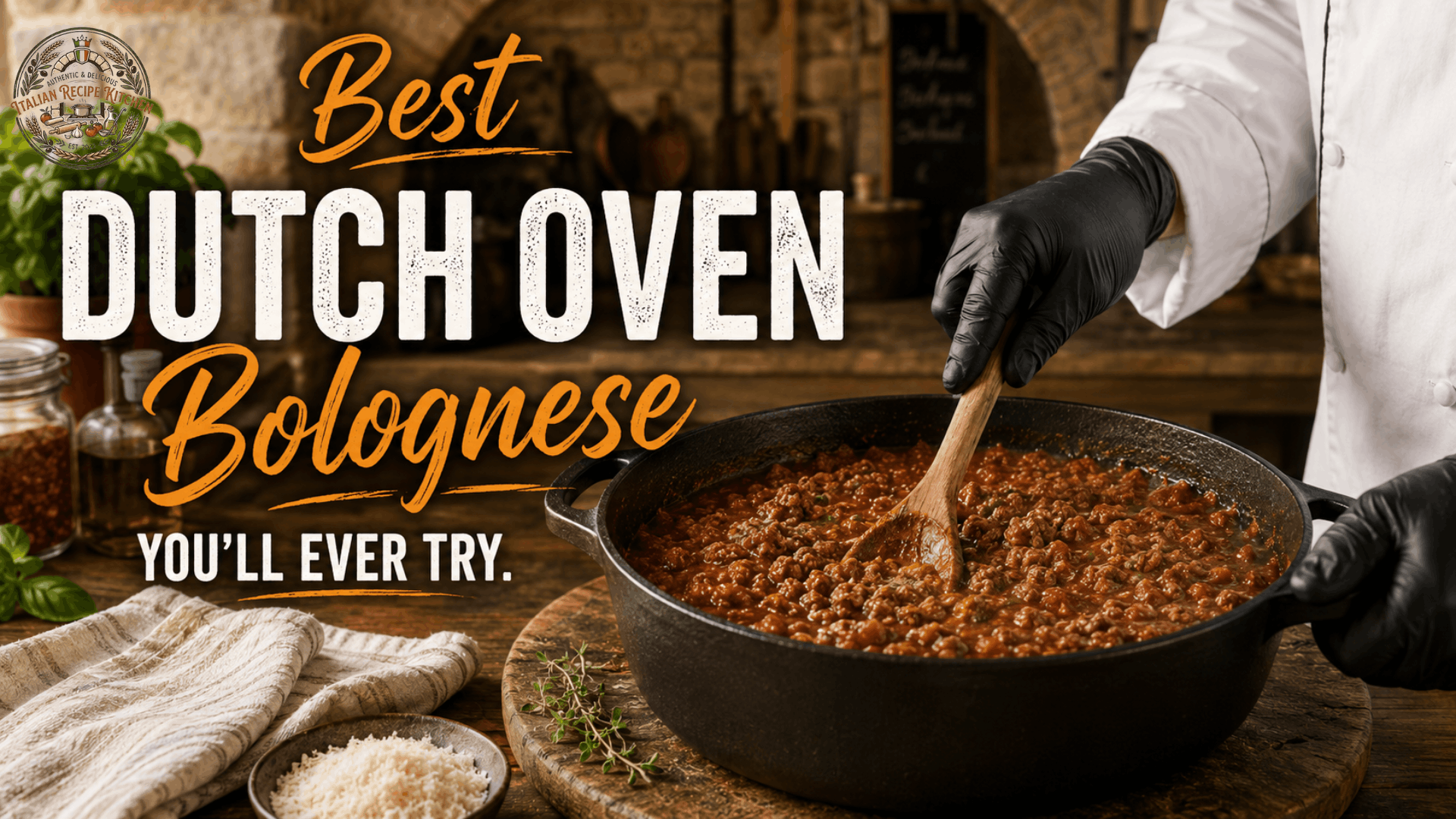
Dutch Oven Bolognese
Ingredients
Equipment
Method
- Heat the olive oil and butter in a Dutch oven over medium heat.
- Add the onion, carrots, and celery. Cook for 8–10 minutes until softened.
- Stir in the garlic and cook for 30 seconds.
- Add the ground beef and pork, breaking the meat into small pieces. Cook until browned, about 8–10 minutes.
- Stir in the tomato paste and cook for 2 minutes.
- Pour in the red wine and simmer for 5 minutes, allowing it to reduce by half.
- Add the crushed tomatoes, milk, beef stock, bay leaves, oregano, thyme, salt, black pepper, and red pepper flakes.
- Bring the sauce to a gentle simmer.
- Reduce the heat to low, partially cover, and cook for 2½–3 hours, stirring every 20–30 minutes. Add a splash of stock if the sauce becomes too thick.
- Remove the bay leaves and taste, adjusting the seasoning if needed.
- Cook the pasta in salted boiling water until al dente.
- Toss the pasta with the Bolognese sauce.
- Let the Bolognese rest for 15 minutes before serving to deepen the flavor.
- Garnish with freshly grated Parmesan cheese and chopped parsley or basil.
Notes
- A Dutch oven distributes heat evenly, making it ideal for long, slow cooking.
- Whole milk helps mellow the acidity of the tomatoes and creates a silky texture.
- For the best flavor, make the sauce a day ahead and reheat before serving.
- Freeze leftover Bolognese in airtight containers for up to 3 months.
- Pair with pappardelle, tagliatelle, or fresh homemade pasta for an authentic Italian meal.
Most homemade Dutch oven bolognese ends up thin, watery, and oddly sour. You simmer ground beef with a jar of marinara, wait twenty minutes, and call it dinner. The result is fine, but it is nothing like the deep, velvety ragù you remember from a real Italian kitchen.
The problem is not your skill. Authentic bolognese is built slowly, in stages, inside one heavy pot. Every layer of flavor depends on patience, not speed.
This guide walks you through the traditional Dutch oven approach to ragù bolognese, the same one used in Bologna for generations. By the end, you will know exactly how to build a sauce that is rich, tender, and worth the wait.
What Makes a Bolognese Truly Authentic?
A real Bolognese Sauce Recipe is a meat sauce first and a tomato sauce second. Tomatoes add color and a touch of acidity, but they never dominate. The base is meat, dairy, and a proper sofrito of onion, carrot, and celery.
The other defining trait is time. Authentic bolognese simmers for three to four hours on low heat. This slow cooking breaks down the meat until it turns soft and almost creamy, not crumbly.
Key Ingredients in Bolognese
A short ingredient list does not mean a simple sauce. Each item below plays a specific role in building flavor.
Pancetta and Sofrito Base
Pancetta brings salty, savory depth that ground meat alone cannot give. Cook it first in butter or olive oil until the fat turns golden and fragrant. This rendered fat becomes the cooking base for everything else.
The sofrito, a fine dice of onion, carrot, and celery, goes in next. Cook it gently until soft and sweet, never browned. A food processor makes quick work of mincing the vegetables evenly.
Meat Selection for Ragù
Traditional bolognese uses a mix of ground beef and pork, sometimes with a little veal. The combination gives a balance of richness and lighter texture that beef alone cannot match.
- Ground beef (80/20 blend works well)
- Ground pork for extra fat and tenderness
- Ground veal, optional, for a milder flavor
- Pancetta or guanciale for savory depth
Using Liver in Bolognese (Optional)
Some traditional recipes include a small amount of chicken liver for extra richness and a subtle minerality. It is optional, and many modern cooks skip it entirely without losing much character.
If you want to try it, finely chop or process a small piece of liver and cook it with the meat. Use no more than an ounce or two for a full pot of sauce.
Best Cooking Liquid for Ragù
Authentic bolognese typically uses three liquids: white wine, whole milk, and a small amount of stock or water. Wine deglazes the pot and adds acidity. Milk tenderizes the meat and softens the tomato’s sharpness.
| Liquid | Purpose | When to Add |
| White or red wine | Deglaze the pot, add acidity | After browning meat |
| Whole milk or cream | Tenderizes meat, mellows acidity | Before or after tomatoes |
| Stock or water | Keeps sauce from drying out | During the long simmer |
| Crushed tomatoes | Color and light acidity | After the wine has been reduced |
Ingredients & Substitutions
You can adapt this recipe without losing its authentic character. Here are common swaps that still produce a satisfying ragù.
- No pancetta: use thick bacon, though the flavor will be smokier
- No whole milk: substitute half and half or a splash of heavy cream
- No white wine: use red wine or a splash of dry vermouth
- Vegetarian option: swap meat for lentils and mushrooms, though this is not traditional
- No chicken liver: simply leave it out, the sauce is still rich
Equipment Needed
A heavy Dutch oven is the most important tool here. Its thick walls distribute heat evenly and prevent scorching during the long simmer.
- Dutch oven, 5 to 6 quarts, enamel-coated or cast iron
- A wooden spoon for breaking up meat
- Sharp knife and cutting board, or a food processor for the sofrito
- Fine grater for Parmesan cheese
- Ladle for serving over pasta
Step-by-Step: Best Dutch Oven Bolognese
Authentic Bolognese sauce is a slow-cooked Italian ragù known for its rich, deep flavor and tender meat. This Dutch oven method builds flavor step by step, so each stage is important for the final result.
Follow this guide carefully to make a traditional, restaurant-quality Bolognese at home.
Step 1: Heat the Fat and Cook Pancetta
Start by heating olive oil and butter in a Dutch oven over medium heat. Add pancetta and cook until it turns golden and slightly crisp, about 6 to 8 minutes. This creates a rich, savory base for the sauce.
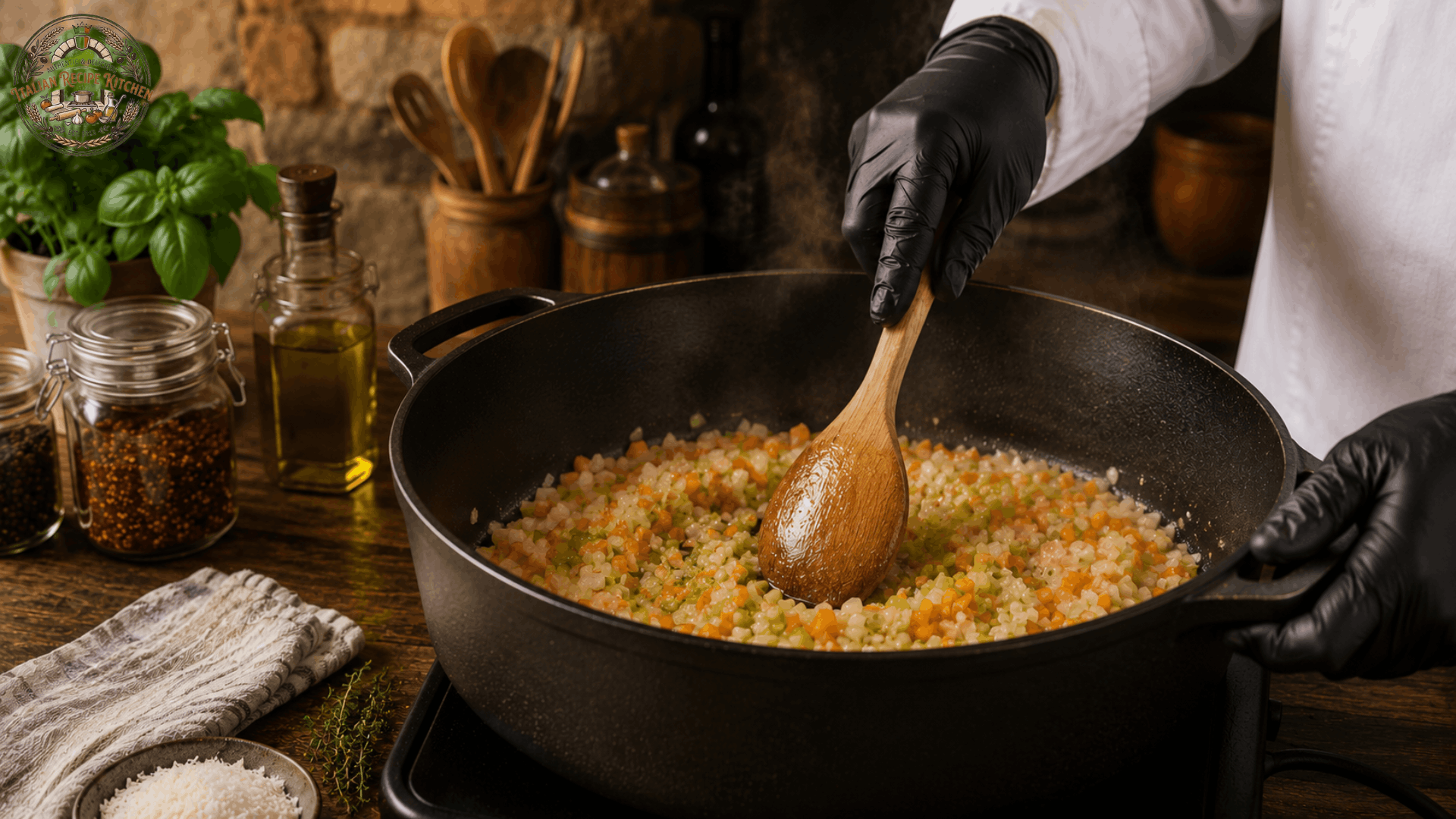
Step 2: Cook the Sofrito Base
Add finely chopped onion, carrot, and celery to the pot. Cook slowly for 8 to 10 minutes until the vegetables are soft and fragrant. Make sure they do not brown, as this keeps the flavor sweet and balanced.
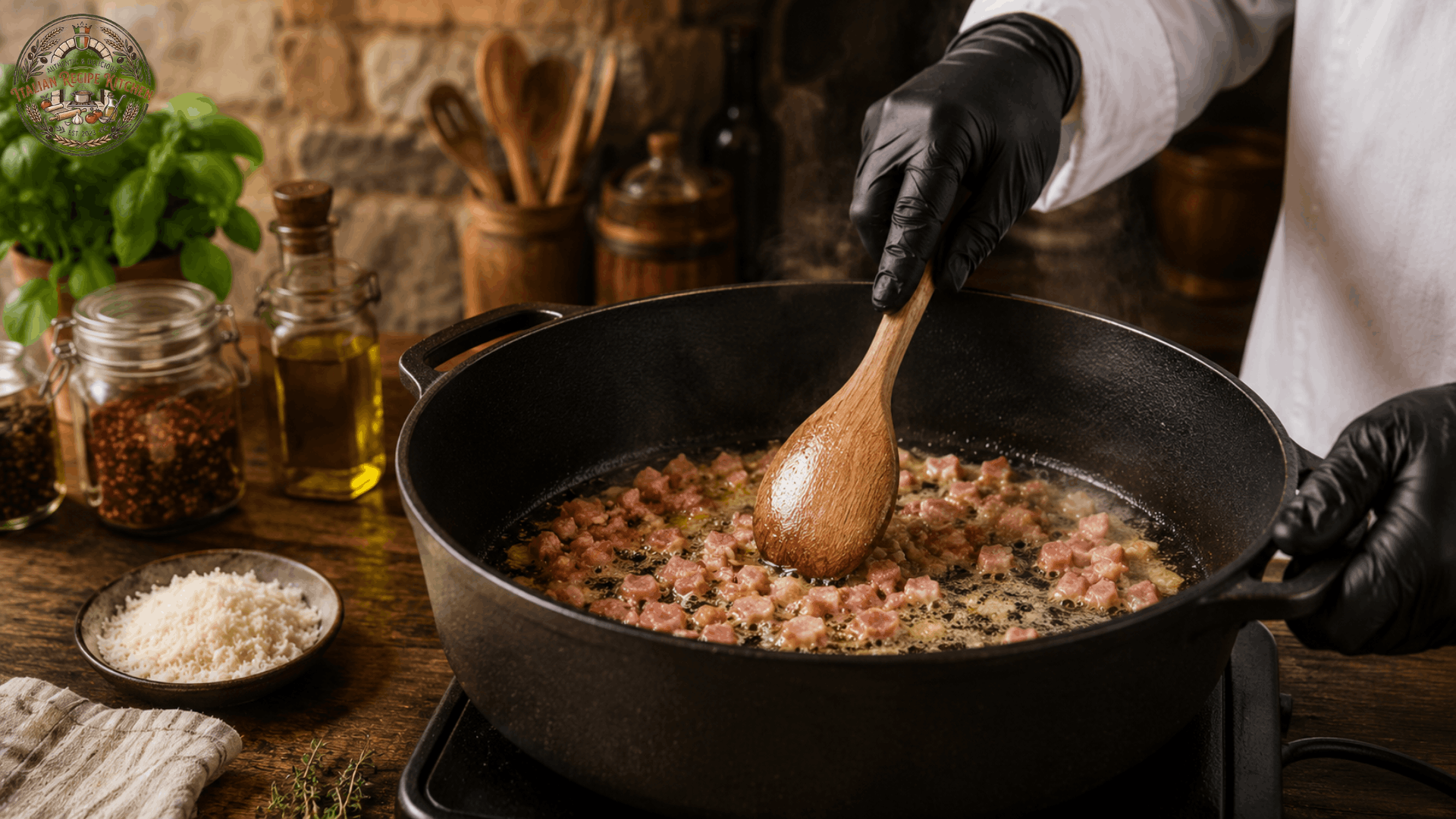
Step 3: Brown the Meat Slowly
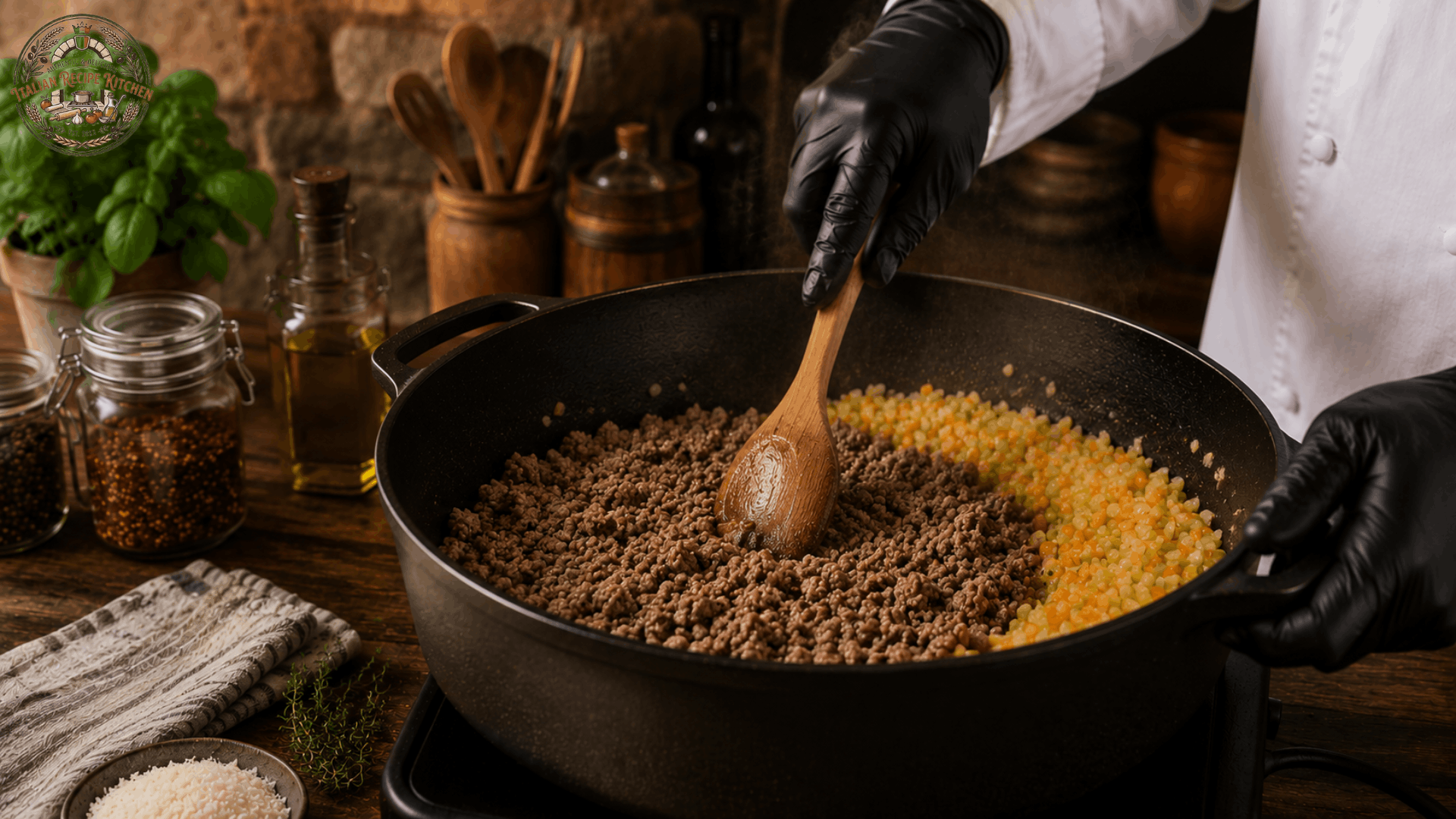
Push the vegetables to the side and add the ground meat. Break it apart using a wooden spoon and cook until it is evenly browned. Take your time here, as proper browning builds deep flavor.
Step 4: Deglaze with Wine
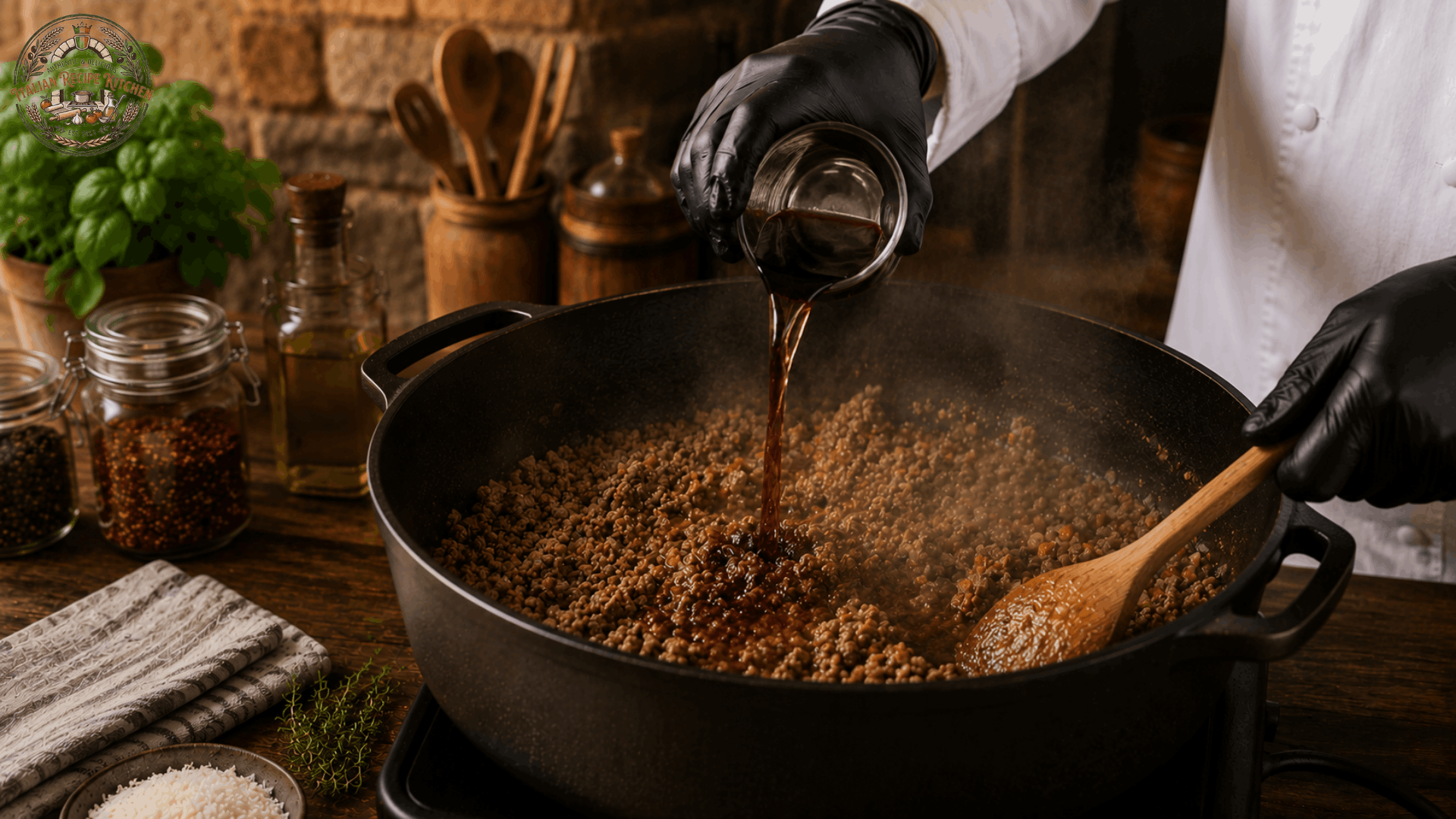
Pour in the wine and use a wooden spoon to scrape up any browned bits stuck to the bottom of the pot. Let it simmer until the liquid reduces almost completely, which enhances the richness of the sauce.
Step 5: Add Milk for Authentic Flavor
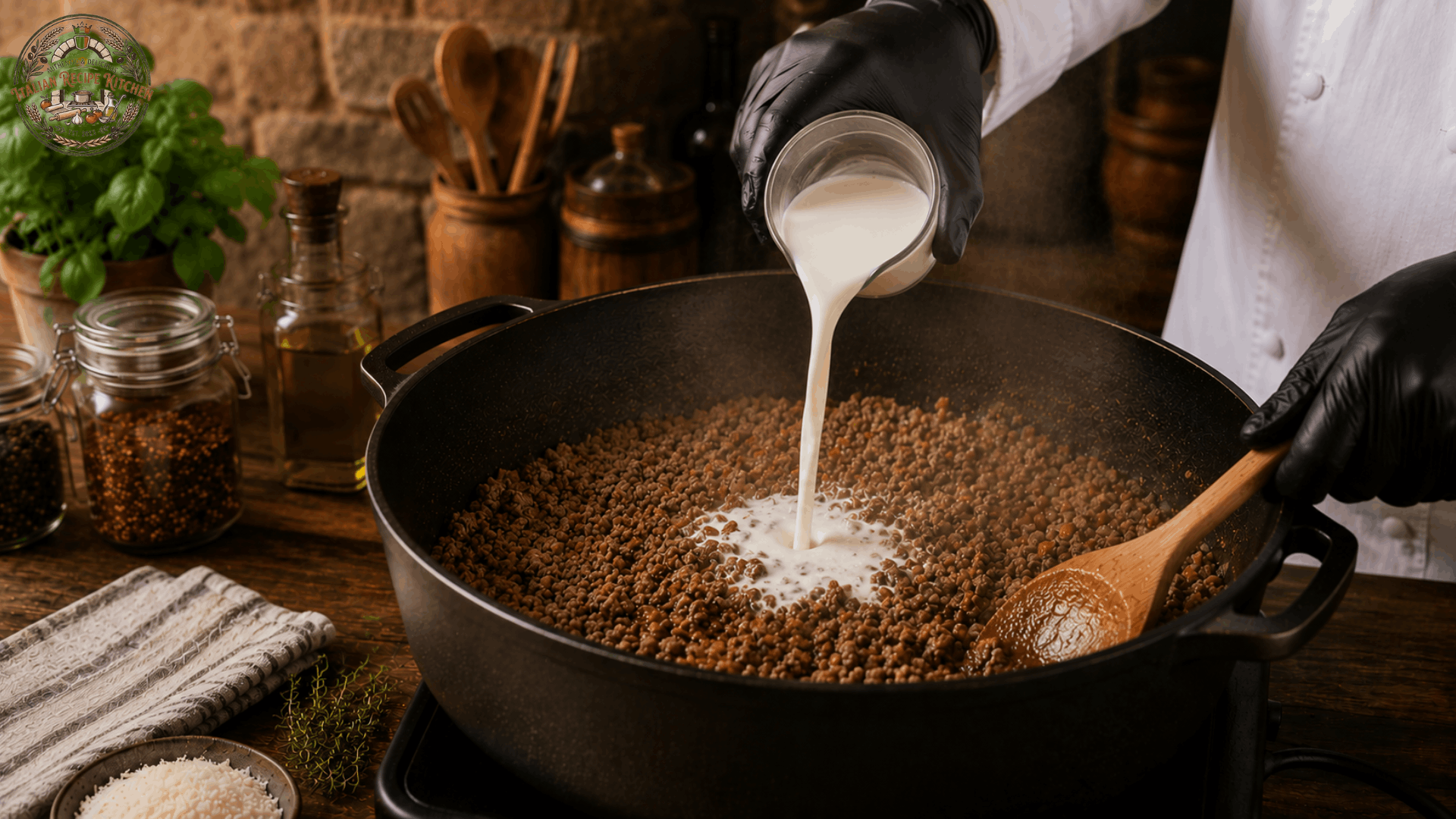
Stir in the milk and allow it to absorb into the meat mixture. This traditional step softens the acidity and gives the sauce a creamy, balanced taste.
Step 6: Add Tomatoes and Combine
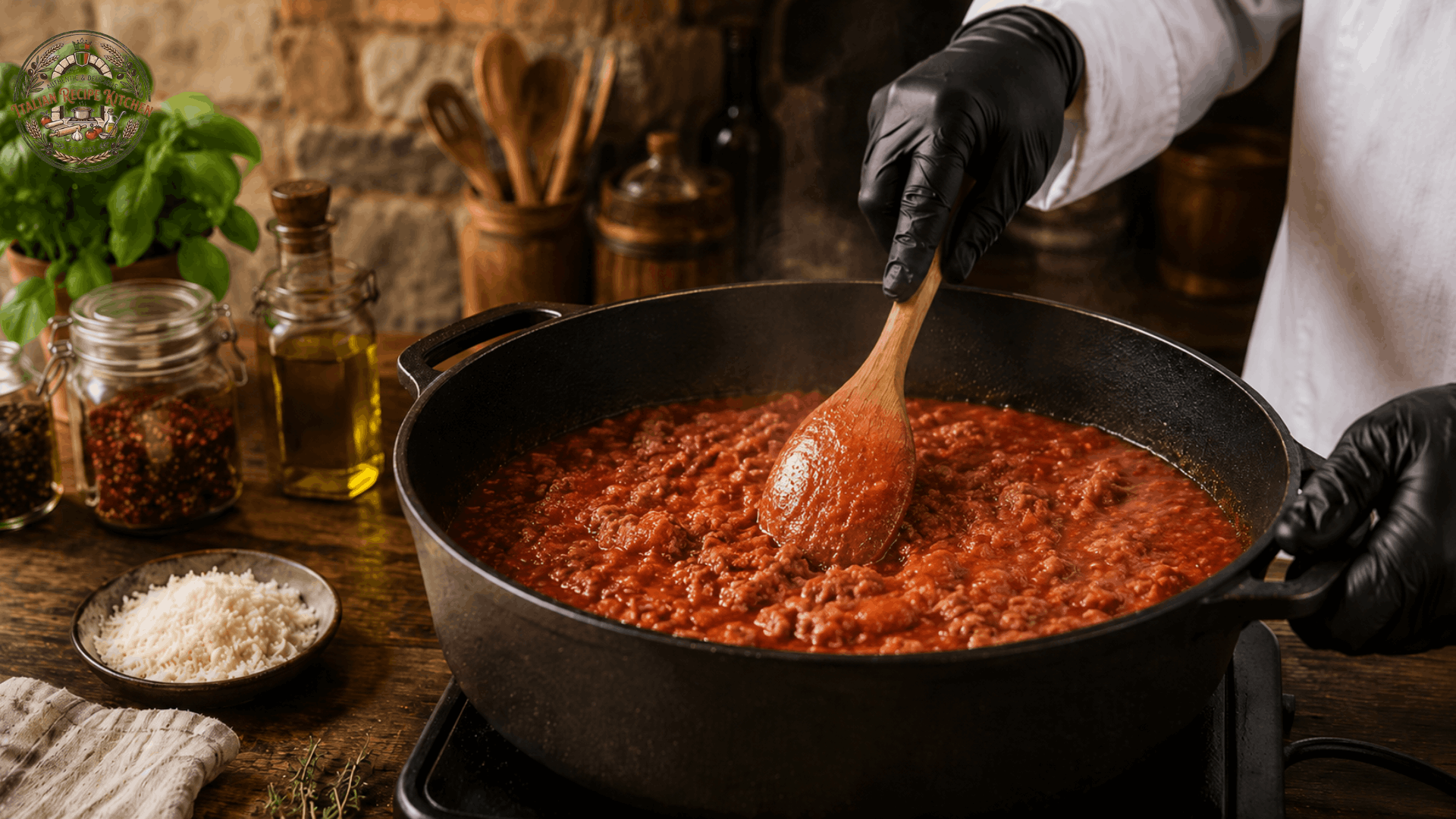
Next, add crushed tomatoes and stir well to combine all ingredients. This forms the base of your slow-cooked ragù sauce.
Step 7: Slow Simmer for Rich Flavor
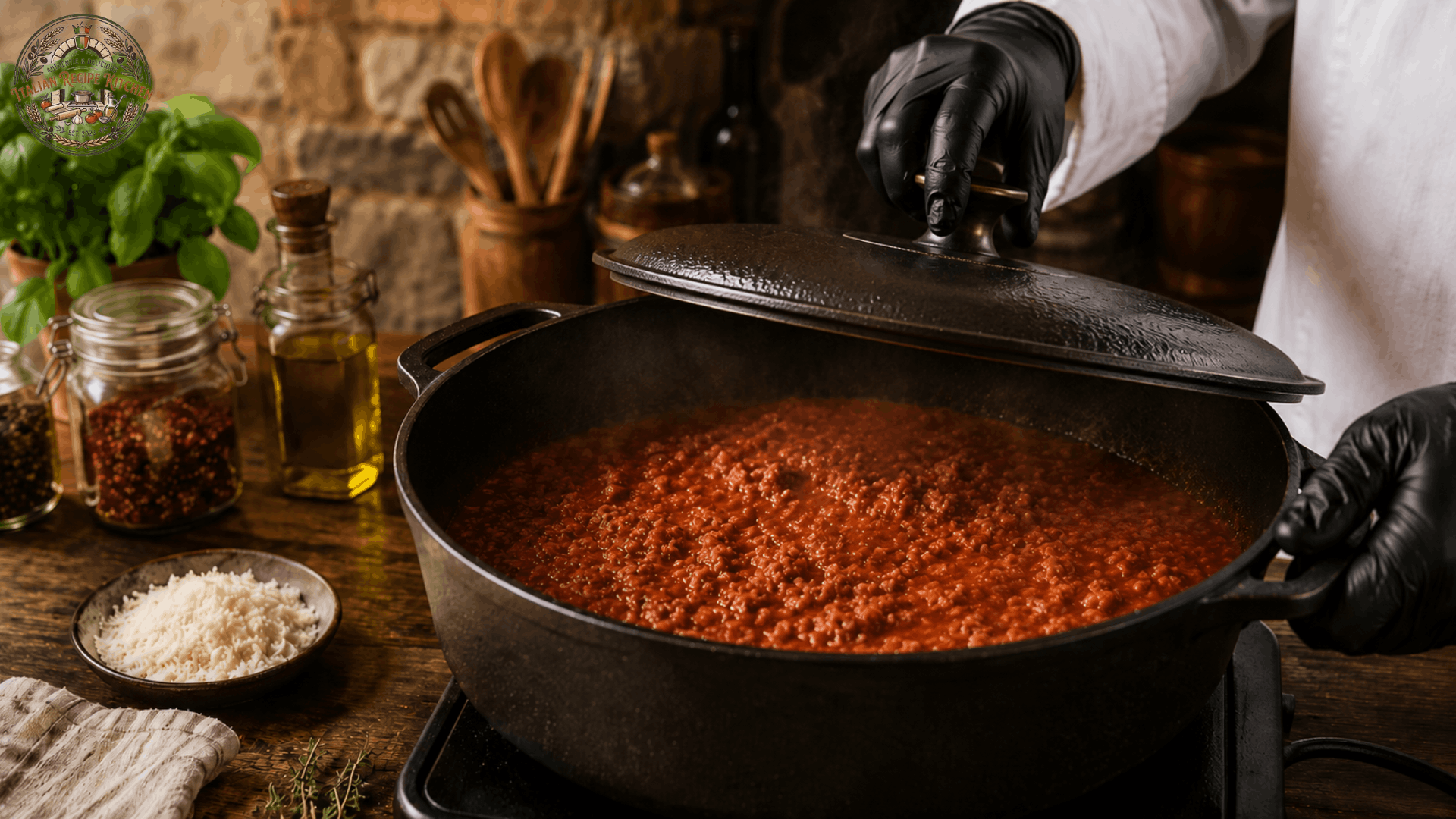
Reduce the heat to low and cover the pot partially. Let the sauce simmer gently for 3 to 4 hours. Stir occasionally and add a little stock if the sauce becomes too thick.
Step 8: Final Seasoning and Finish
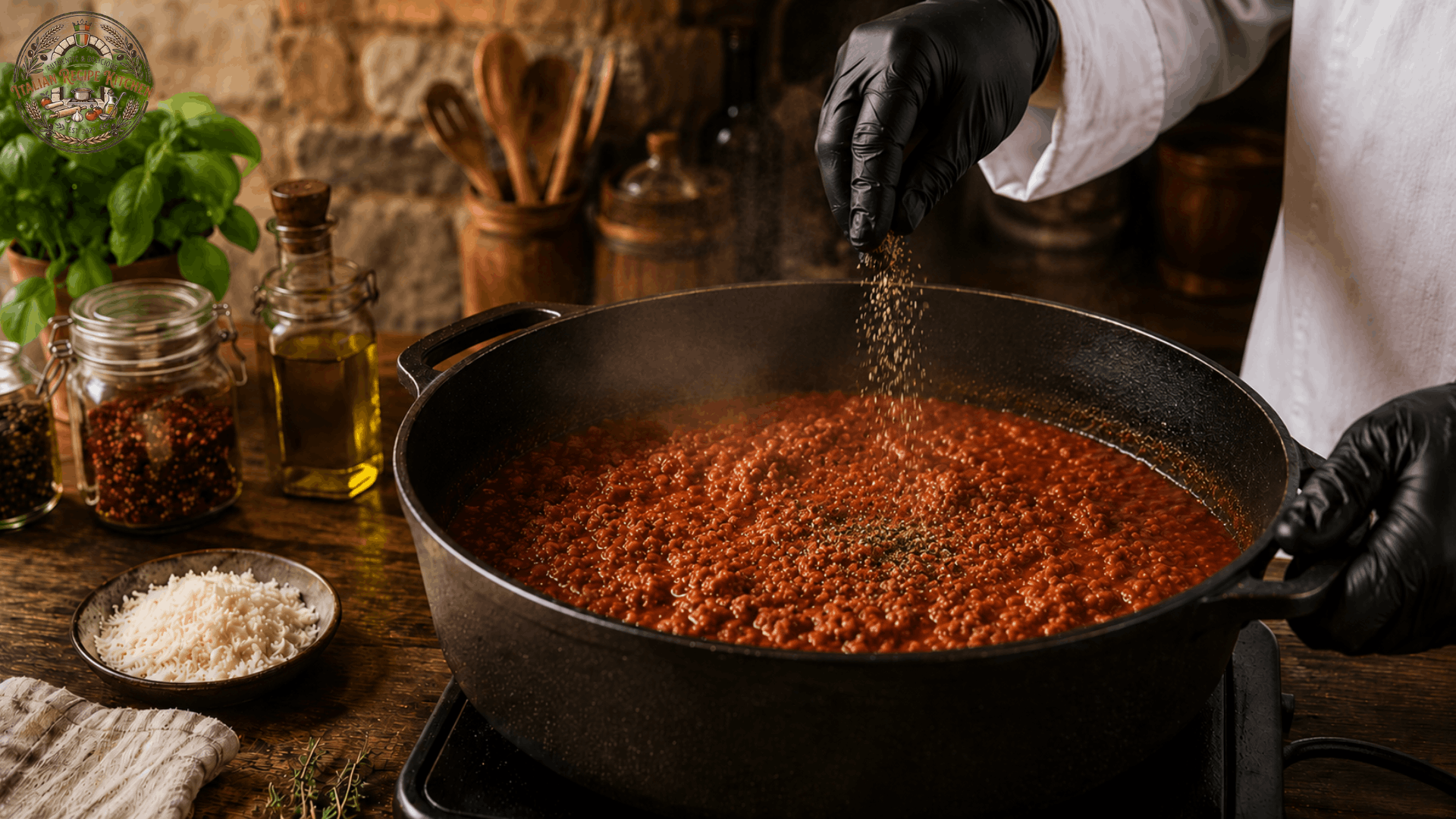
Taste the sauce and adjust with salt and black pepper near the end of cooking. The Bolognese is ready when it becomes thick, glossy, and deeply flavorful.
Browning the Meat Properly
Browning the meat slowly, rather than searing it hard and fast, keeps it tender instead of tough. Cook over medium heat and resist the urge to rush this stage.
Slow Simmering Technique
Keep the heat low enough that the sauce barely bubbles. A rolling boil will toughen the meat and cook off the flavor too quickly.
Pro Tips for Best Results
These small details separate an average sauce from a genuinely authentic one.
- Use a heavy pot so the bottom never scorches during the long cook
- Mince vegetables finely so they melt into the sauce rather than standing out
- Add milk before the tomatoes to mellow the acidity from the start
- Stir every 20 to 30 minutes during simmering to prevent sticking
- Let the sauce rest for 10 minutes before serving so the flavors settle
Pasta with Bolognese Sauce
Tagliatelle is the traditional pairing in Bologna, not spaghetti. Its wide, flat shape holds the thick meat sauce far better than thin noodles do.
| Pasta Shape | Why It Works |
| Tagliatelle | Wide ribbons grip the thick sauce, the classic pairing |
| Pappardelle | Even wider, great for an extra-hearty ragù |
| Fettuccine | A close substitute when tagliatelle is unavailable |
| Rigatoni | Tubes trap chunks of meat sauce nicely |
Serving Suggestions
Toss the cooked pasta directly in the sauce with a splash of pasta water, rather than spooning sauce over a plain pile of noodles. This helps the sauce coat every strand evenly.
Finish with freshly grated Parmesan and a drizzle of olive oil. A simple green salad and crusty bread round out the meal nicely.
Storage and Make-Ahead Tips
Bolognese tastes even better the next day, once the flavors have had time to settle. It is an ideal sauce to make ahead for busy weeknights.
- Refrigerate in an airtight container for up to 4 days
- Freeze in portions for up to 3 months
- Reheat gently on the stove, adding a splash of water or stock if it has thickened too much
- Avoid microwaving on high, since it can make the meat rubbery
Nutrition Information
Approximate values per serving, based on a standard recipe divided into six portions, sauce only.
| Nutrient | Amount per Serving |
| Calories | 420 kcal |
| Protein | 24 g |
| Carbohydrates | 9 g |
| Fat | 30 g |
| Saturated Fat | 11 g |
| Sodium | 480 mg |
Final Thoughts
An authentic Bolognese Sauce Recipe is not a quick weeknight shortcut, and that is exactly the point. The slow build of sofrito, browned meat, and a gentle simmer creates a depth of flavor that no jarred sauce can match.
Once you make it the traditional way in a Dutch oven, it is hard to go back to the rushed version. Keep this Bolognese Sauce Recipe method in your regular rotation for cold evenings and special dinners alike.
FAQs
How long should bolognese simmer for the best flavor?
Three to four hours on low heat gives the best texture and depth. Shorter cooking times will still taste good but lack the same richness.
Can I make bolognese without wine?
Yes, you can replace the wine with extra stock and a splash of vinegar for acidity. The flavor will be slightly less complex but still enjoyable.
What is the difference between bolognese and regular meat sauce?
Bolognese relies on a sofrito base, milk, and a long simmer, while typical meat sauce is usually quicker and more tomato-forward.
Is it better to use ground beef or a meat blend?
A blend of beef and pork gives the most traditional flavor and texture. Beef alone works fine but can taste slightly leaner.
Can I cook bolognese in a slow cooker instead of a Dutch oven?
Yes, after browning the meat and sofrito on the stove, you can transfer everything to a slow cooker on low for 6 to 8 hours.
Why does my bolognese taste too acidic?
This usually happens when the tomatoes are added before the milk, or when not enough liquid is reduced properly. Adding a splash of milk or cream at the end can balance it out.