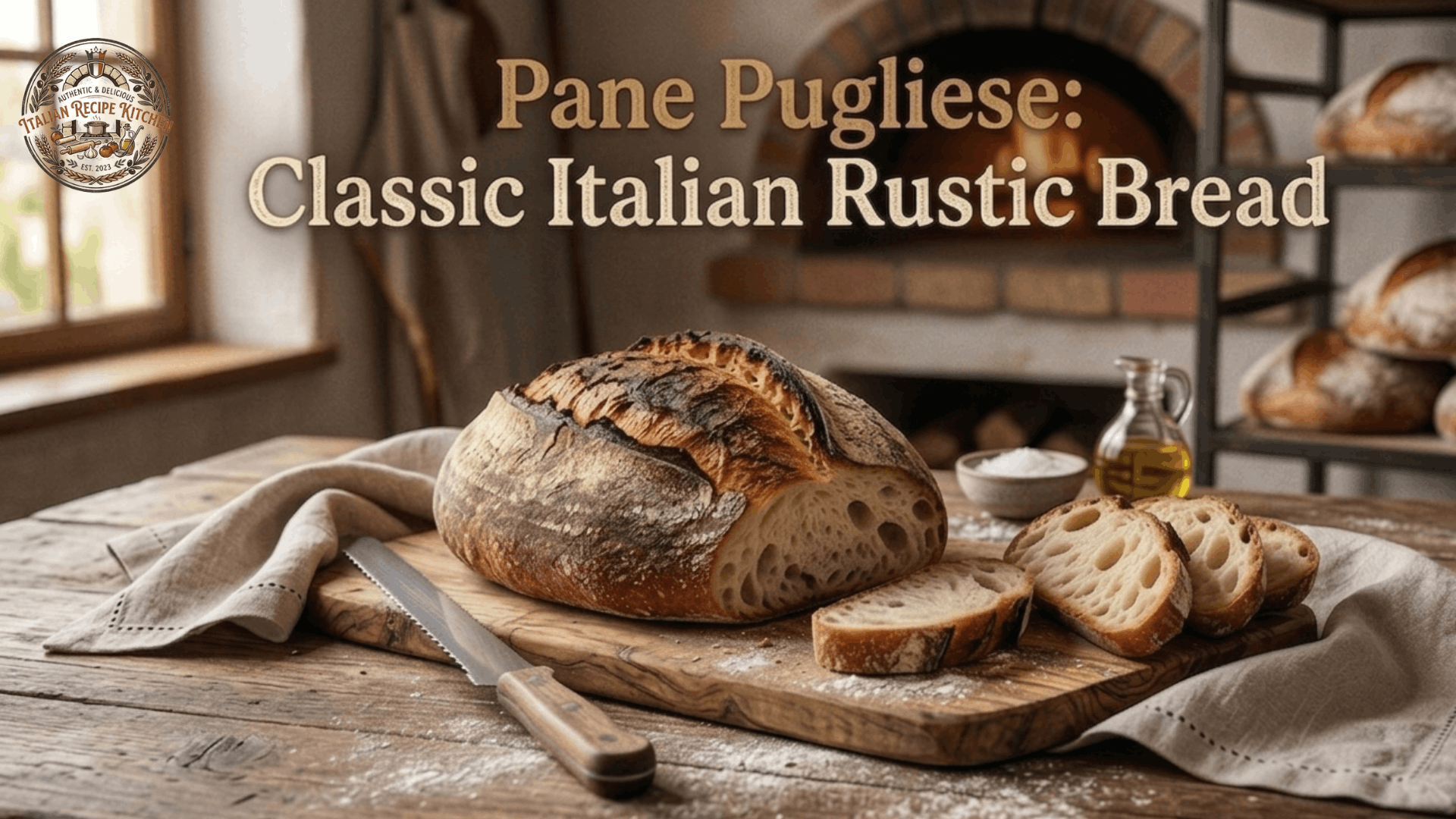
Pane Pugliese
Ingredients
Equipment
Method
- In a large bowl, combine the warm water, honey, and yeast. Let stand for 5–10 minutes until foamy.
- Add the bread flour, semolina flour, and salt. Mix until a shaggy dough forms.
- Knead by hand for 10–12 minutes or with a stand mixer for 8 minutes, until the dough becomes smooth and elastic.
- Place the dough in a lightly oiled bowl, cover, and let it rise for 2 hours, or until doubled in size.
- Turn the dough onto a lightly floured surface and gently shape it into a round loaf.
- Place the dough seam-side up in a floured banneton or towel-lined bowl.
- Cover and let it proof for another 1 hour.
- Preheat the oven to 450°F (230°C) with the Dutch oven or baking stone inside for at least 30 minutes.
- Carefully transfer the dough onto parchment paper, score the top with a sharp blade, and place it into the hot Dutch oven.
- Bake covered for 25 minutes.
- Remove the lid and bake for another 15 minutes, until the crust is deep golden brown and the internal temperature reaches 205–210°F (96–99°C).
- Transfer the bread to a cooling rack and allow it to cool completely before slicing.
Notes
- The 3-hour resting and proofing time develops the bread's airy texture and rich flavor.
- Use bread flour with high protein for the best rise and chewy crumb.
- Steam during the first part of baking creates a crisp artisan crust.
- Allow the bread to cool completely before slicing to prevent a gummy interior.
- Store in a paper bag or bread box for up to 3 days, or freeze for up to 3 months.
There is something deeply frustrating about spending hours making homemade bread only to end up with a loaf that is dense, pale, and completely lacks the character of real Italian bread. Most beginner recipes skip the most important step in the entire process: the biga.
Without a proper pre-ferment, you simply cannot achieve the deep, nutty flavor, the large open holes, or the thin crackling crust that defines Pane Pugliese. This guide walks you through the complete two-day process in simple, clear steps so you can bake a loaf of authentic rustic Italian bread from Puglia that looks, smells, and tastes exactly the way it should. If you enjoy homemade Italian baking, Cheesy Italian Sausage Bread with Pizza Dough is another recipe worth trying.
Why This Rustic Italian Bread Belongs in Your Baking Rotation
Before you begin, here is why home bakers keep coming back to this recipe again and again:
- The two-day biga method creates a flavor that same-day bread simply cannot match
- The open crumb structure makes every slice perfect for soaking up olive oil, soups, and stews
- It uses just four basic ingredients: flour, water, yeast, and salt
- The baking technique is forgiving once you understand hydration and fermentation
- The result is a thick, crackling crust with a soft, chewy, hole-filled interior
- It freezes beautifully and stays fresh longer than commercial bread, thanks to the pre-ferment
- Baking Pane Pugliese at home connects you to a centuries-old Southern Italian tradition
The Rich History Behind Pane Pugliese
Puglia, known as the heel of the Italian boot, has been producing wheat for over two thousand years. The region was historically one of the most important grain-growing areas in the entire Mediterranean, and bread has always been at the center of its food culture.
Pane Pugliese is the bread that came from this land, shaped by necessity, tradition, and the particular mineral character of southern Italian durum wheat.
Traditionally, this bread was baked in communal wood-fired ovens where entire villages would gather to bake their weekly supply. Each family would bring their risen loaves and stamp them with a personal mark to identify them after baking.
The bread was designed to last for days, and a well-made Pane Pugliese with a proper biga fermentation still stays fresh and flavorful far longer than a standard yeast loaf.
The Mysterious Origins of Biga: Italy’s Secret Pre-Ferment
What Is Biga and Why Does It Matter?
Biga is the Italian term for a stiff pre-ferment used in traditional Italian bread baking. It is made by combining flour, a small amount of yeast, and water into a firm dough, then allowing it to ferment slowly for 12 to 18 hours at room temperature or in the refrigerator.
The long, cold fermentation develops complex organic acids and flavor compounds that are impossible to create in a fast, same-day dough.
Almost all rustic Italian breads, including the classic Italian Focaccia Recipe, contain only four basic ingredients: flour, water, yeast, and salt. The other secret ingredient is time. Time is necessary for the flour to fully absorb the water and expand, releasing the rich, nutty flavors of the wheat
The biga is what gives Pane Pugliese its characteristic mild tang, deep wheat aroma, and superior crust development.
Biga vs Poolish: Which Pre-Ferment Is Right for You?
Both biga and poolish are Italian pre-ferments, but they behave differently in the final dough:
| Feature | Biga | Poolish |
| Hydration | Stiff, around 50 to 60% water | Loose, equal parts flour and water |
| Texture | Firm, holds its shape | Liquid, pourable consistency |
| Flavor | Deep, nutty, complex | Lighter, more open, and mild |
| Crumb result | Strong structure, easier shaping | More open crumb with larger holes |
| Best for | Beginners and warm kitchens | Experienced bakers seeking maximum airiness |
| Fermentation time | 12 to 18 hours | 12 to 16 hours |
Biga is often easiest for a first bake because it adds strength and makes shaping more forgiving, especially in warm kitchens. Poolish can boost extensibility and openness for bigger holes, but it can over-ripen faster. For most home bakers making Pane Pugliese for the first time, biga is the better choice.
The Right Flour for Authentic Pane Pugliese
Choosing the correct flour is one of the most important decisions in this recipe. Just like most of the traditional bread from Puglia, Pane Pugliese is made with durum wheat semolina flour or a mix of white flour and semolina.
The combination of bread flour and fine semolina produces a loaf with a golden interior color, a slightly sweet wheat flavor, and a crust that sets crisp and stays crisp.
Here is what each flour contributes to the final bread:
- Bread flour: High protein content builds strong gluten structure and gives the loaf its chew and rise
- Fine semolina (semola rimacinata): Adds golden color, a nutty aroma, and the characteristic coarse texture of Southern Italian breads
- All-purpose flour: Works as a substitute for bread flour but produces a slightly less chewy result
- Mashed potato (optional): Some traditional recipes add a small amount of cold mashed potato to the dough for extra moisture and tenderness in the crumb
Complete Ingredients for Pane Pugliese
For the Biga (Day One)
- 1 and a half cups bread flour
- Half a cup of warm water (around 95 to 100 degrees Fahrenheit)
- Quarter teaspoon of instant or active dry yeast
For the Pugliese Bread Dough (Day Two)
- All of the biga from day one, cut into 10 small pieces
- 2 and a quarter cups bread flour
- Half a cup of fine semolina flour (semola rimacinata)
- 1 and a quarter cups warm water
- 1 teaspoon instant yeast
- 1 and a half teaspoons fine sea salt
- Optional: half a cup of cold mashed potato for a more tender crumb
Equipment You Will Need
Good equipment makes the process much more enjoyable:
- A large mixing bowl or stand mixer with a dough hook
- A kitchen scale for accurate flour and water measurements
- A bench scraper for handling the wet dough
- A Dutch oven or covered baking vessel for creating oven steam
- A lame or sharp razor for scoring the top before baking
- A digital thermometer for checking internal bread temperature
- Parchment paper for transferring the loaf to the oven
Step-by-Step Instructions: Day One, Making the Biga
Step 1: Mix the Biga
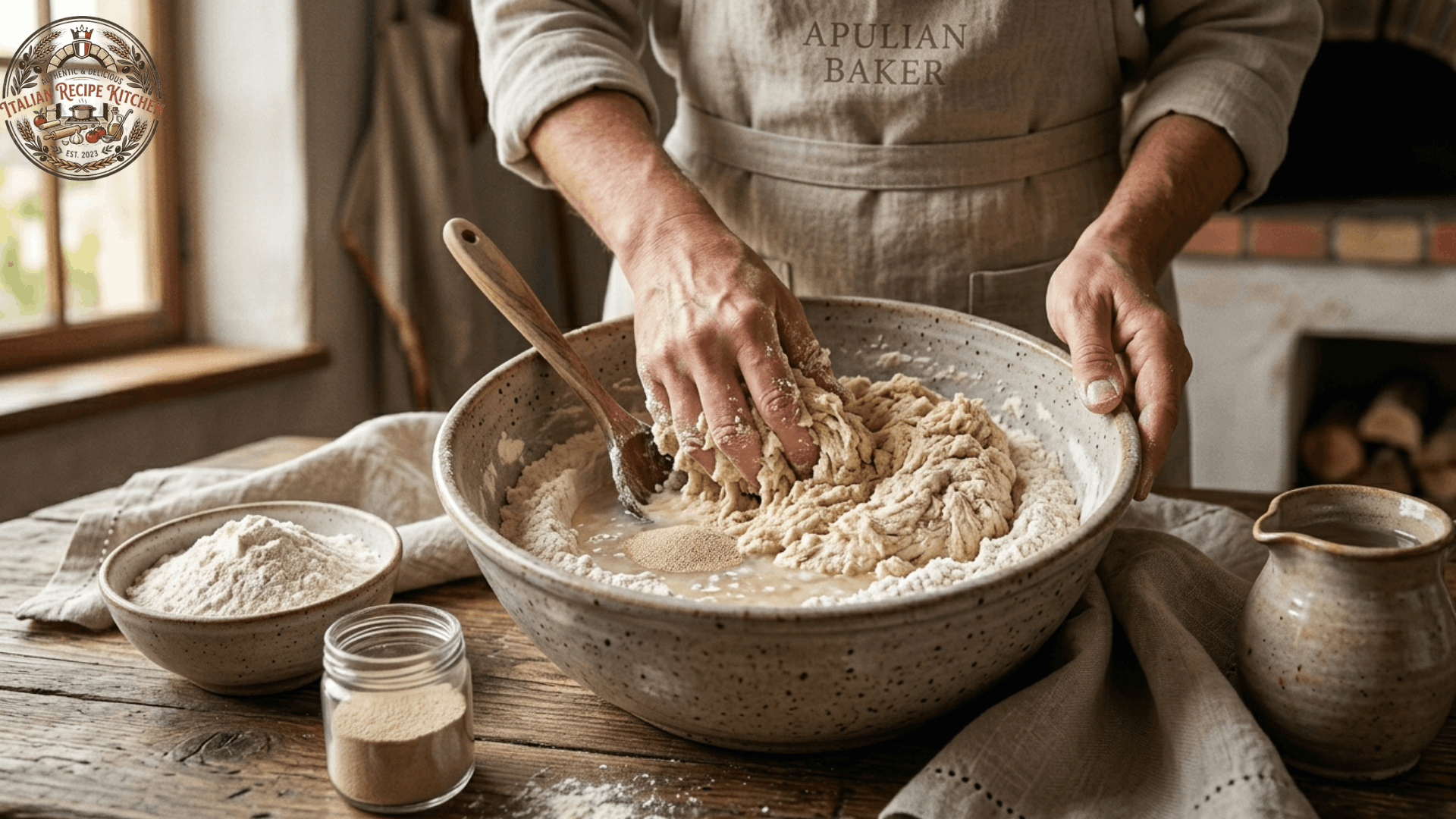
Combine the bread flour, yeast, and warm water in a large bowl. Mix with a wooden spoon or your hands until a rough, stiff dough forms. The biga should feel firm but not dry. It will be much stiffer than regular bread dough, which is completely correct. Shape it into a rough ball.
Step 2: Ferment the Biga
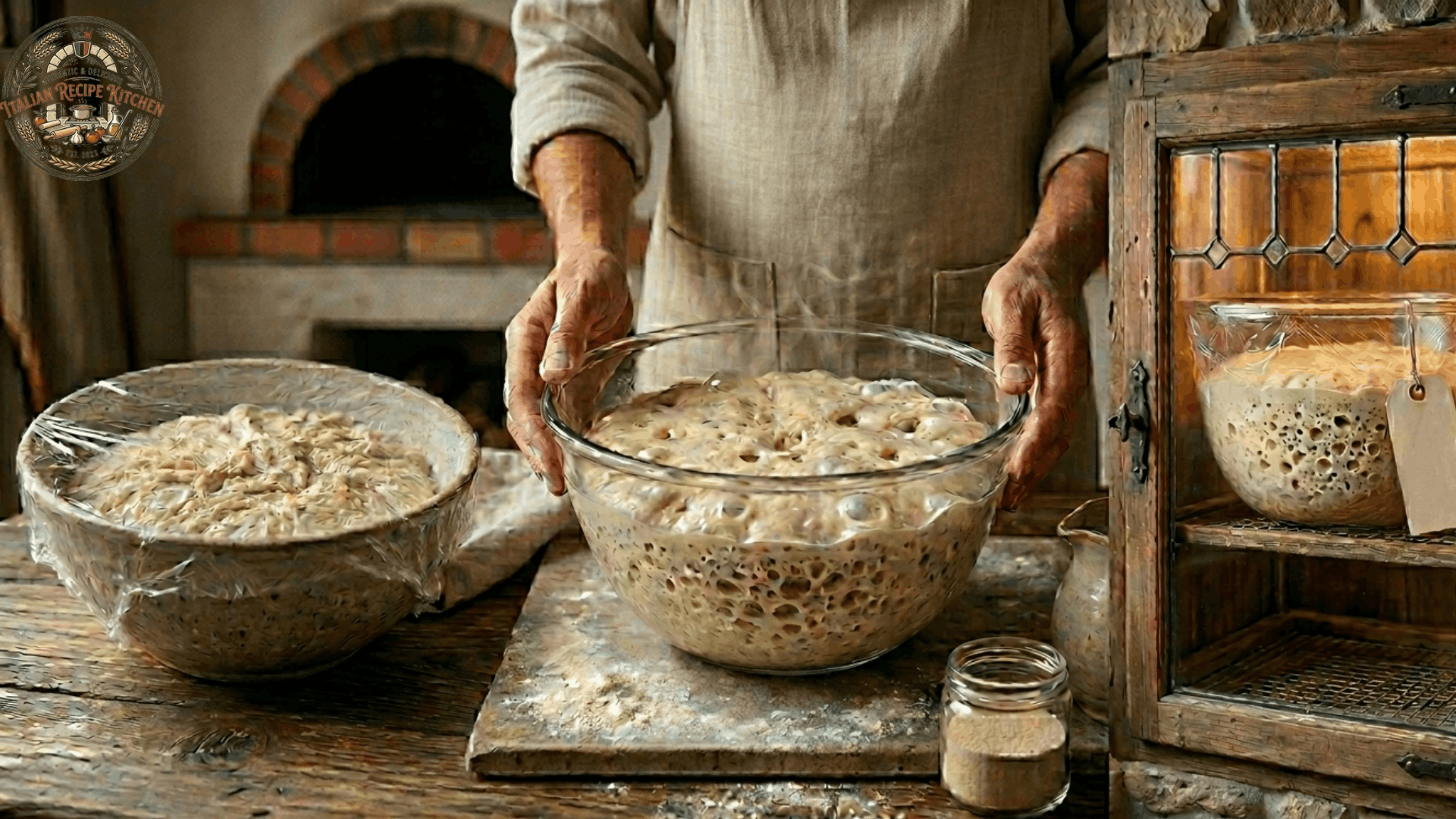
The dough ferments in the bowl for 2 to 4 hours, and then the biga is removed from the bowl, gently kneaded to degas it, and then placed back into the bowl and refrigerated overnight. Cover the bowl tightly with plastic wrap after the initial room temperature fermentation. The biga is ready to use the next day when it smells slightly tangy and yeasty, and the surface shows small bubbles.
Step-by-Step Instructions: Day Two, Building the Dough
Step 3: Prepare the Biga
Remove the biga from the refrigerator one full hour before you plan to mix the dough. Let it come to room temperature on the counter. Cut it into 10 small pieces using a bench scraper or sharp knife. This allows it to incorporate evenly into the new dough without leaving large unmixed chunks.
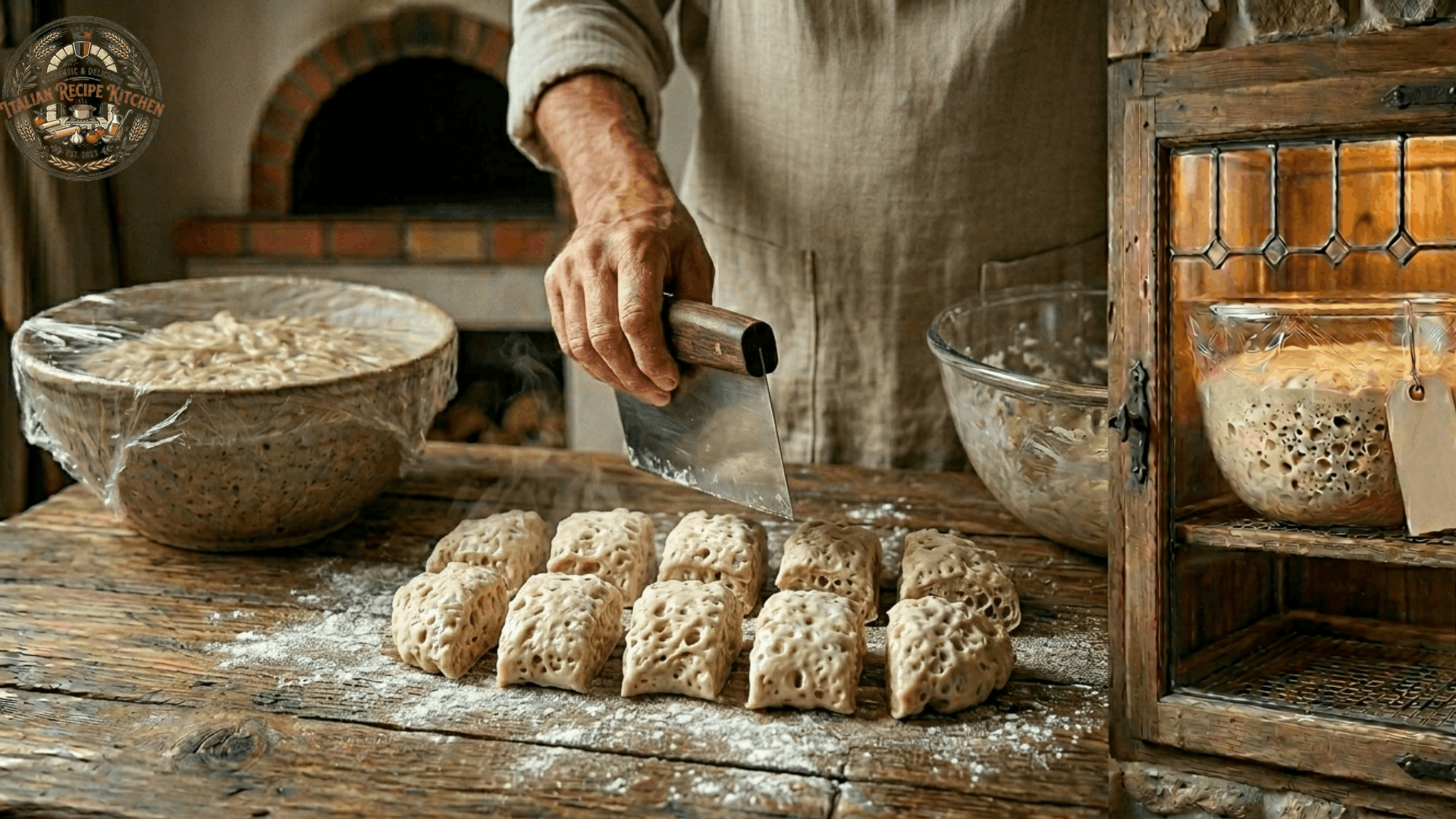
Step 4: Mix the Pugliese Dough
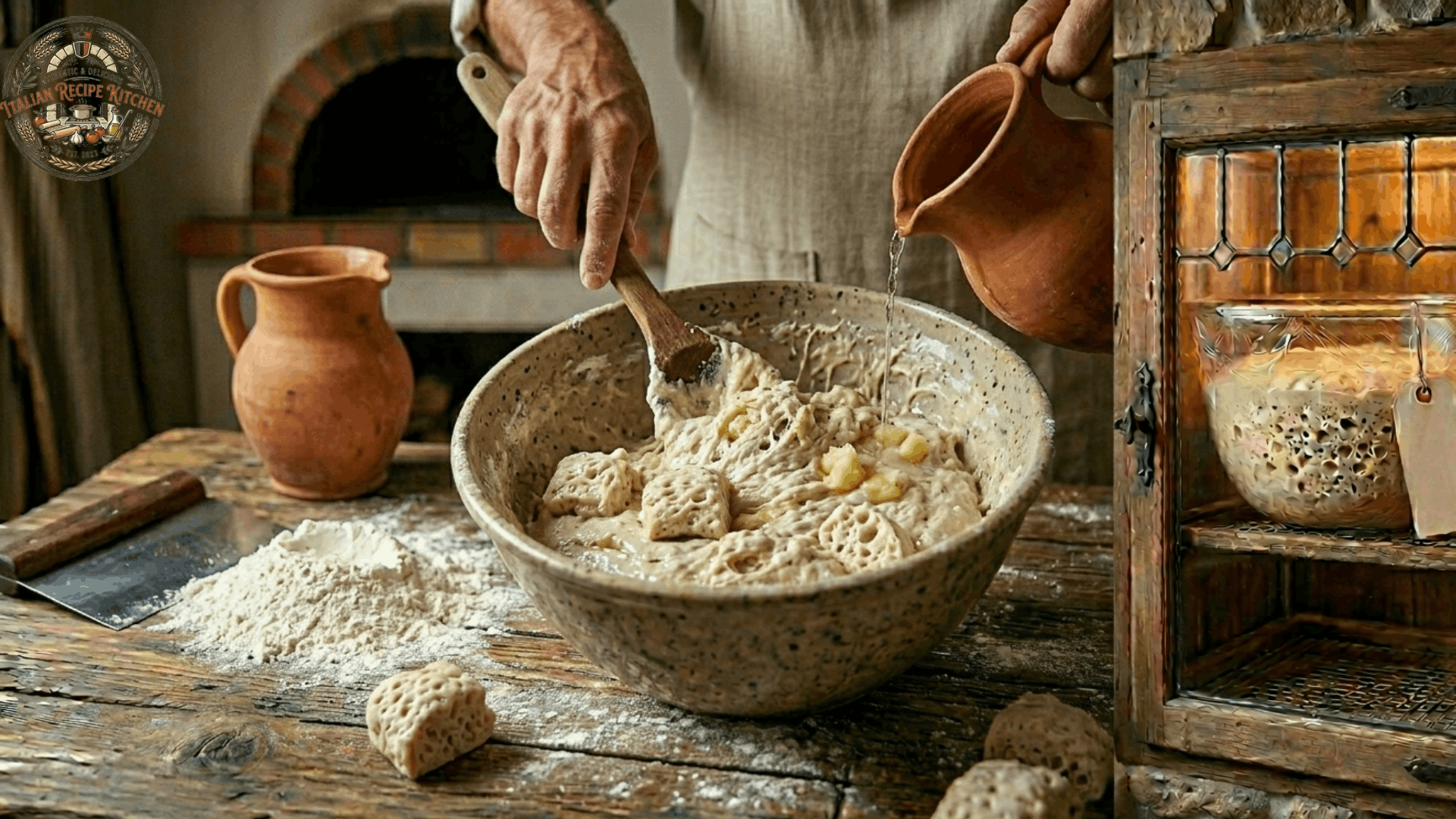
Whisk together the bread flour, semolina, salt, and yeast in a large bowl. Add the biga pieces, mashed potato if using, and most of the warm water. Mix until a rough dough forms. Add the remaining water gradually and continue mixing.
The dough will be very sticky and should just pull away from the sides of the mixing bowl. This high hydration is what creates the open, hole-filled crumb of a proper Pugliese loaf.
Step 5: Strengthen the Dough with Stretch and Fold
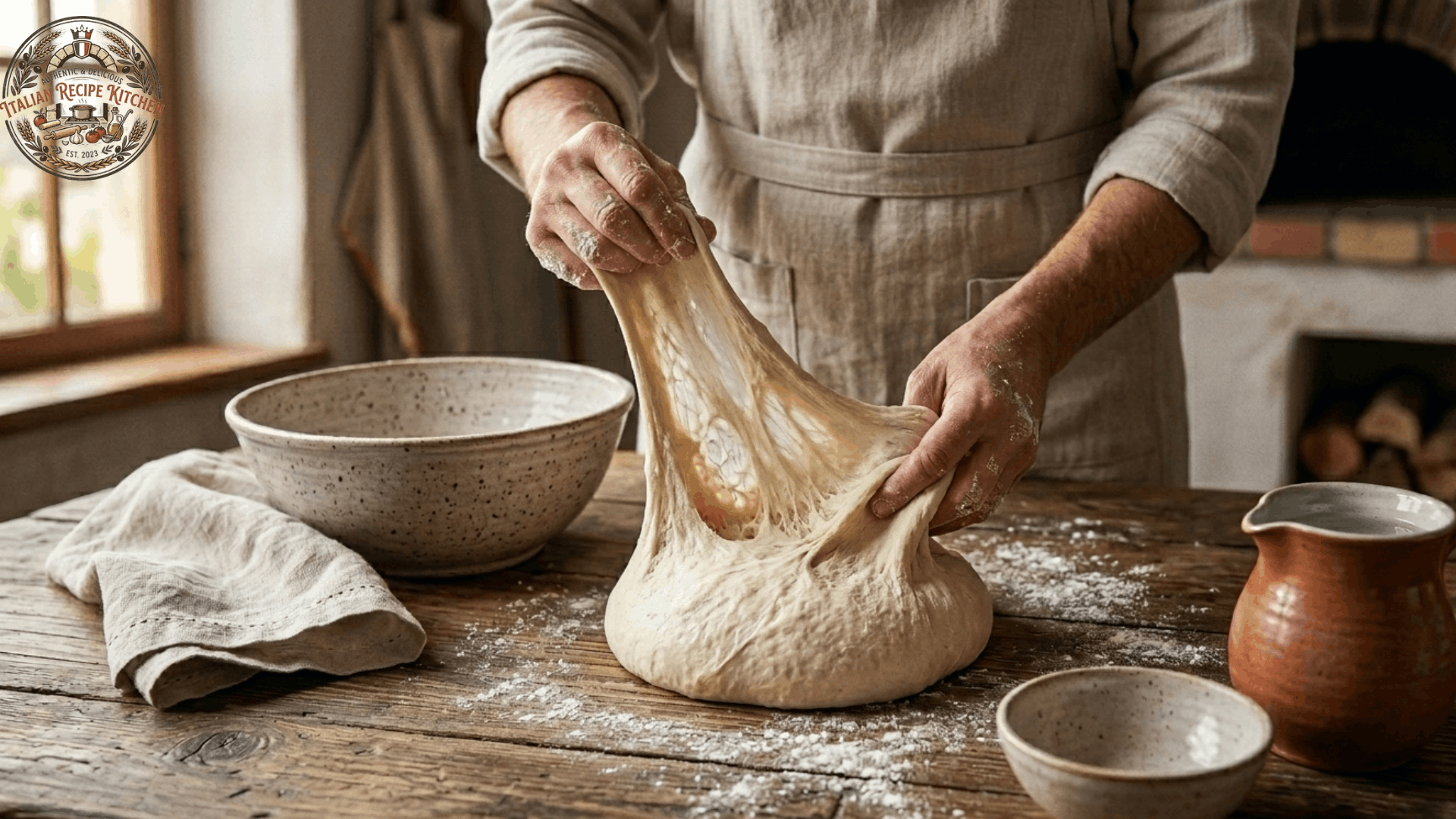
Instead of traditional kneading, build structure through stretch and fold sets. Every 30 to 45 minutes during the first 90 minutes of bulk fermentation, wet your hands and perform a complete set of stretches. Grab one side of the dough, stretch it upward, and fold it over the center.
Rotate the bowl and repeat four times around the entire dough. Look for a dough rise of about 60%, visible bubbles along the sides, and a jiggly, set pudding feel. Bulk fermentation is typically 3 to 4 hours at around 74 to 78 degrees Fahrenheit.
Step 6: Shape the Loaves
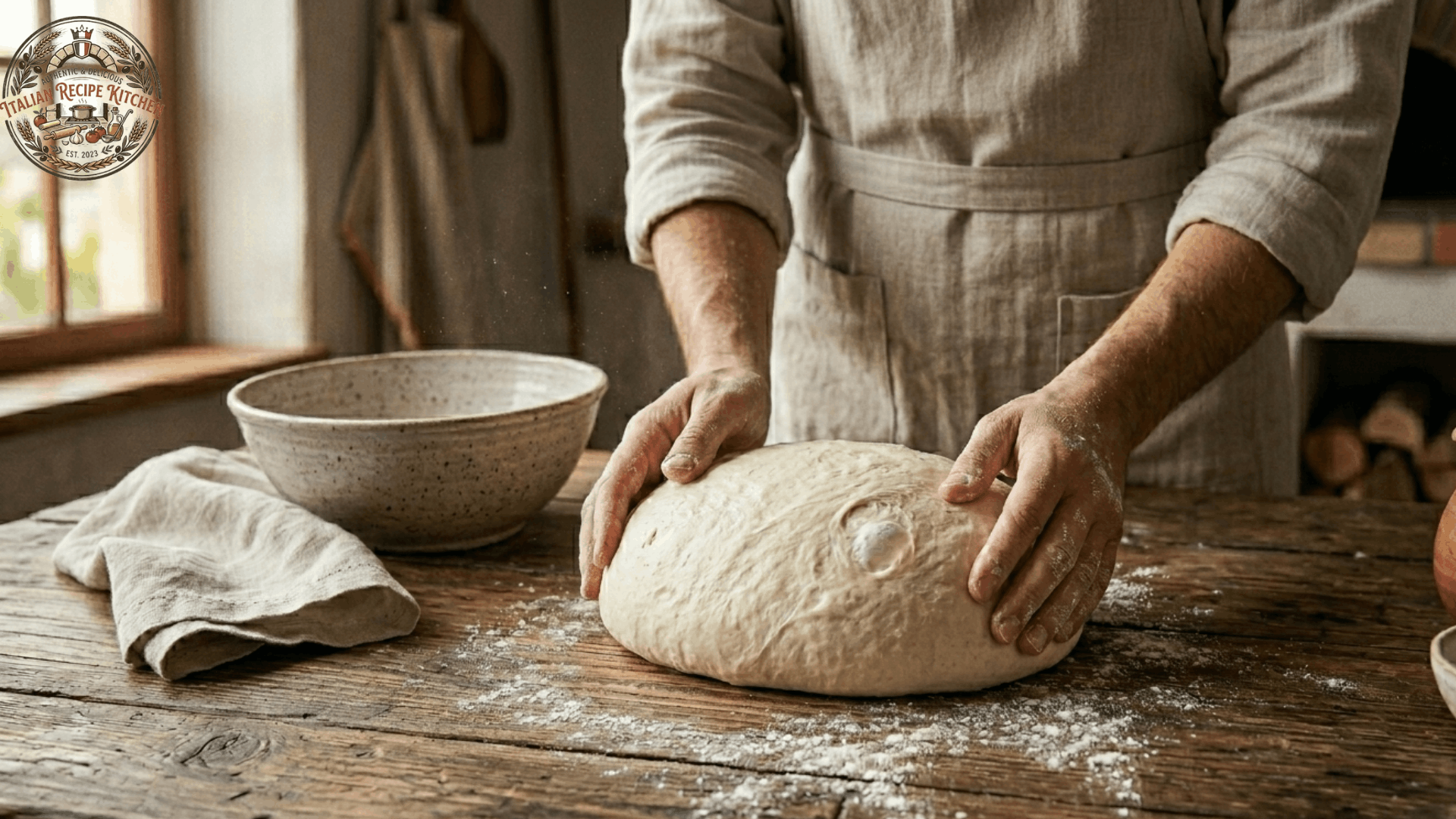
Turn the fermented dough gently onto a lightly floured surface. Handle it carefully to preserve the gas bubbles that have formed. Shape it into an oval batard by folding the sides toward the center and rolling the dough toward you with gentle tension.
The Pugliese is typically shaped as a batard (oval) and slashed with a single cut running lengthwise. Place the shaped loaf seam-side down on parchment paper dusted with semolina. Cover and allow a final rest of 30 to 45 minutes.
Step 7: Score and Bake the Pugliese Bread
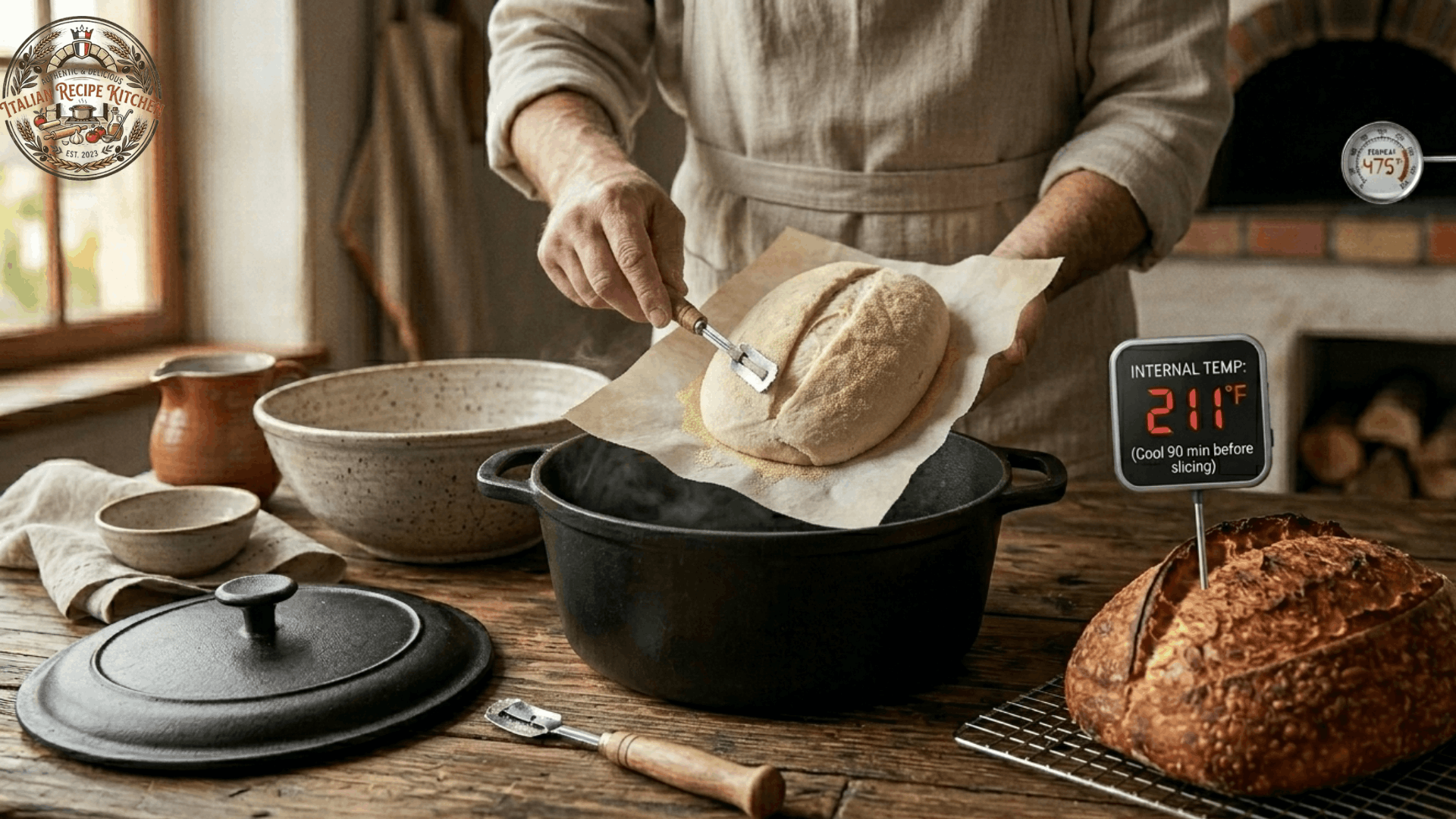
Place your Dutch oven in the oven and preheat to 475 degrees Fahrenheit for at least 45 minutes. When the loaf is ready, use a lame or very sharp blade to slash the top with one long confident cut down the length of the oval.
Carefully lower the loaf on the parchment paper into the hot Dutch oven and cover immediately with the lid. Bake covered for 20 minutes, then remove the lid and bake for an additional 20 to 25 minutes until the crust is deep golden brown and caramelized.
Prevent a gummy crumb by baking to 208 to 212 degrees Fahrenheit internal temperature and cooling for at least 90 minutes before slicing. This cooling time is not optional. Cutting into a hot loaf allows steam to escape and leaves the crumb gummy and underdeveloped.
Pro Tips for the Best Pane Pugliese You Have Ever Made
These details separate a good loaf from an extraordinary one:
- Always weigh your flour and water rather than using volume measurements for consistent results
- Keep the dough temperature between 74 and 78 degrees Fahrenheit during bulk fermentation for the best rise
- Do not skip the Dutch oven. The trapped steam in the first 20 minutes is what creates the thin, crackling crust
- Score the loaf confidently with one swift motion rather than sawing slowly, which deflates the dough
- The stickier the dough feels, the more open the crumb will be. Resist adding extra flour
- Cool the finished loaf on a wire rack for at least 90 minutes before slicing for the best texture
What to Serve with Pane Pugliese
This bread was made to accompany bold, flavorful food. Here are the best pairings:
- A generous drizzle of high-quality extra virgin olive oil with a pinch of flaky sea salt
- Thick ribollita or minestrone for soaking up every last drop
- Classic bruschetta with ripe tomatoes, garlic, and fresh basil
- Slow-cooked Bolognese sauce or Italian meat ragù spooned directly over thick slices
- Burrata cheese with roasted red peppers and Sicilian olives
- A simple cheese board with aged provolone, pecorino, and Italian cured meats
Nutrition Information (Per Slice, Approximately One Twelfth of the Loaf)
| Nutrient | Approximate Amount |
| Calories | 169 kcal |
| Carbohydrates | 34g |
| Protein | 6g |
| Fat | 1g |
| Fiber | 2g |
| Sodium | 333mg |
| Iron | 1mg |
| Potassium | 84mg |
Values are approximate and vary based on flour type, hydration level, and slice thickness.
Final Thoughts
Pane Pugliese is one of those breads that genuinely changes how you think about home baking. Yes, it takes two days. Yes, the dough is wetter and stickier than what most bakers are used to. But the result is something that cannot be bought in any supermarket.
The deep wheat aroma, the crackling crust, the large open holes in the crumb, and the complex mild flavor that only a long-fermented biga can produce are exactly what make an Italian Focaccia Recipe so special and every minute of the process feel completely worthwhile. Make this bread once, and the two-day routine starts to feel less like an effort and more like a ritual worth protecting.
Frequently Asked Questions
What makes Pane Pugliese different from regular white bread?
Pane Pugliese uses a biga pre-ferment, high-hydration dough, and semolina flour, giving it a more complex flavor, open crumb, and crispier crust than standard white bread.
Can I make Pane Pugliese without a Dutch oven?
You can bake it on a preheated baking stone with a pan of hot water on the lower rack to create steam, though a Dutch oven gives the best crust results.
How long does Pane Pugliese stay fresh?
Thanks to the long biga fermentation, it stays fresh at room temperature for two to three days when stored cut-side down or loosely wrapped in a clean kitchen towel.
Can I freeze Pane Pugliese?
Yes. Slice the cooled loaf, wrap portions tightly in plastic wrap, and freeze for up to three months. Toast slices directly from frozen for best results.
What does biga mean in Italian bread baking?
Biga is the Italian term for a stiff pre-ferment made from flour, water, and a small amount of yeast that ferments slowly overnight to develop deep flavor and structure.
Why is my Pugliese bread dense and flat?
The most common causes are under-fermented biga, overworked dough that lost its gas bubbles, dough that was too dry, or a baking vessel that was not hot enough before the loaf went in.
Is Pane Pugliese the same as ciabatta?
They are similar in style but different in character. Ciabatta is typically flatter and wetter, while Pane Pugliese is taller, shaped as an oval, and uses semolina flour for a more robust wheat flavor.