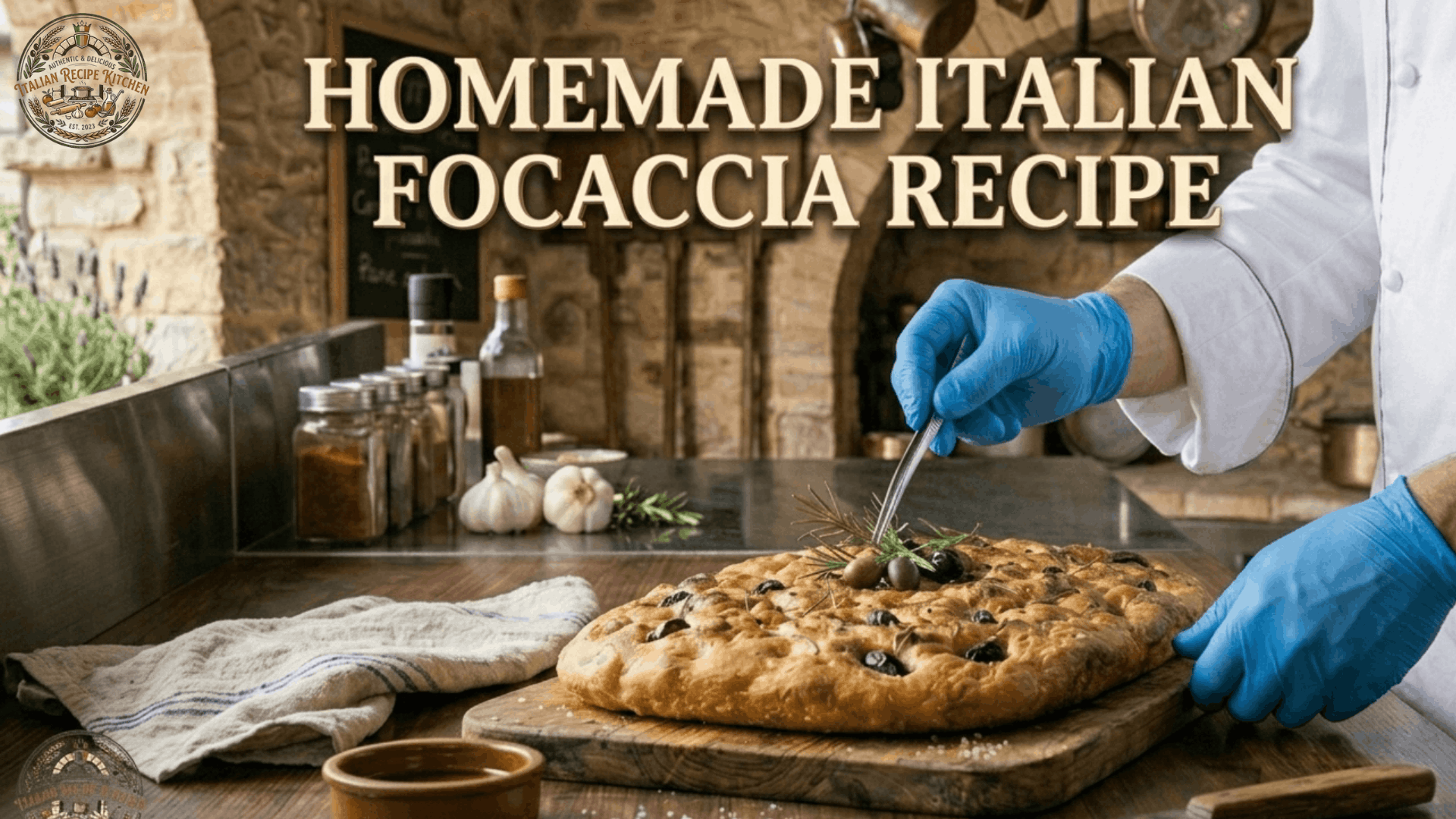
Italian Focaccia Recipe
Ingredients
Equipment
Method
- In a large mixing bowl, combine the bread flour, instant yeast, and salt.
- Add the warm water and olive oil, then mix until a sticky dough forms.
- Knead the dough by hand for 8–10 minutes or with a stand mixer for 6–8 minutes until smooth and elastic.
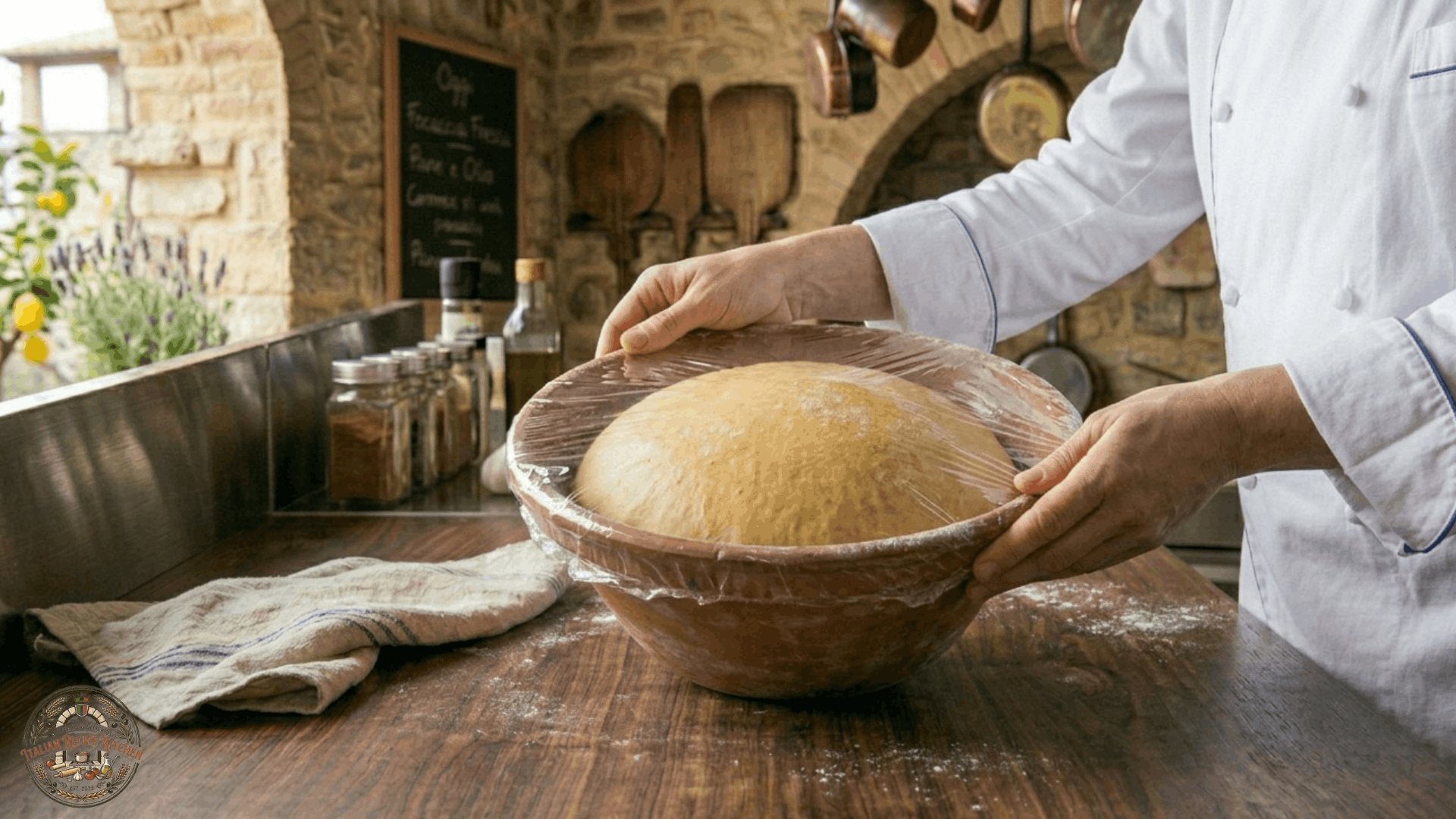
- Transfer the dough to a lightly oiled bowl, cover, and let it rise for 2 hours, or until doubled in size.
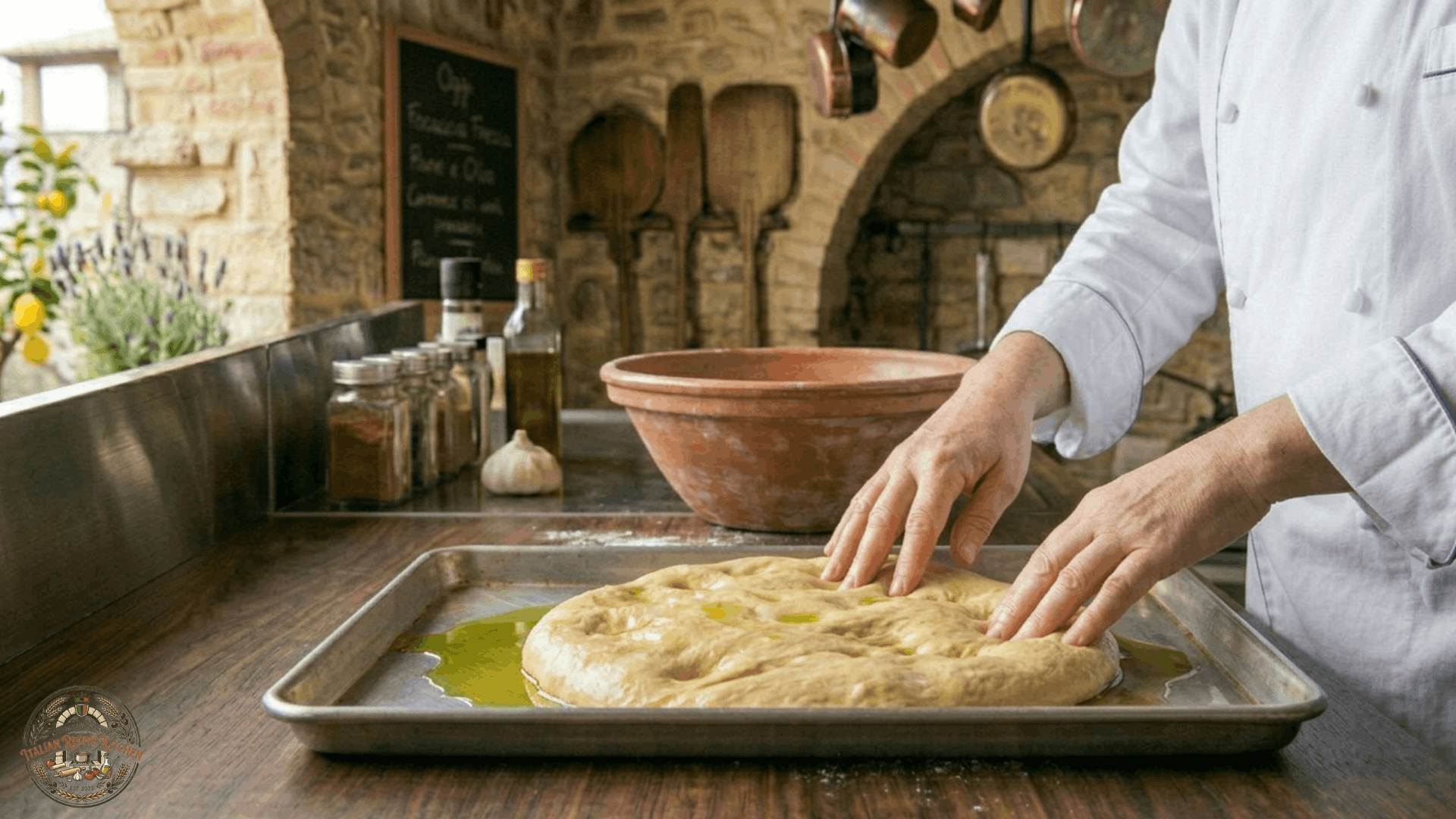
- Generously oil a 9×13-inch baking pan and transfer the dough into the pan.
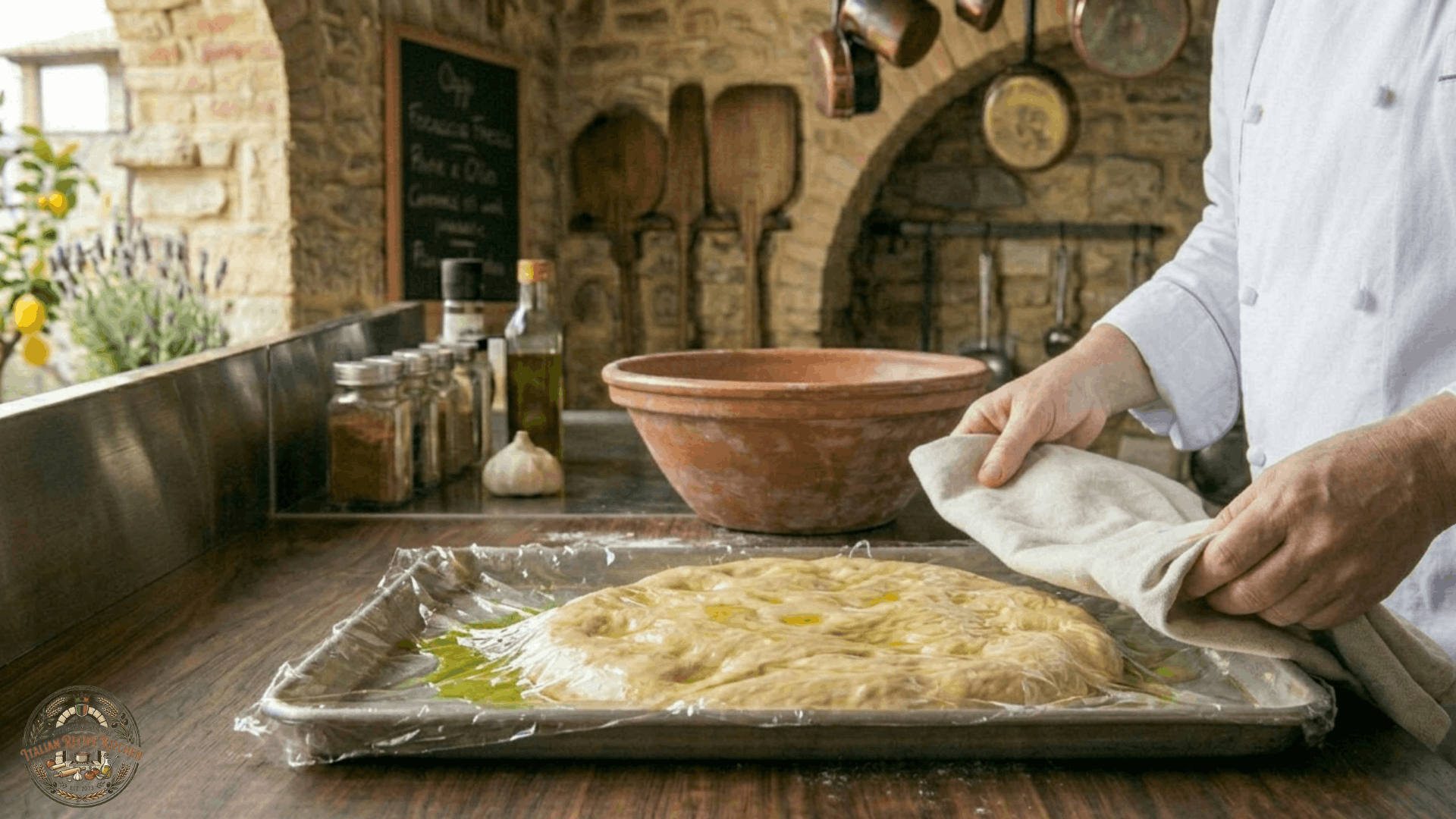
- Gently stretch the dough to fill the pan. Cover and let it rest for 30 minutes.
- Preheat the oven to 425°F (220°C).
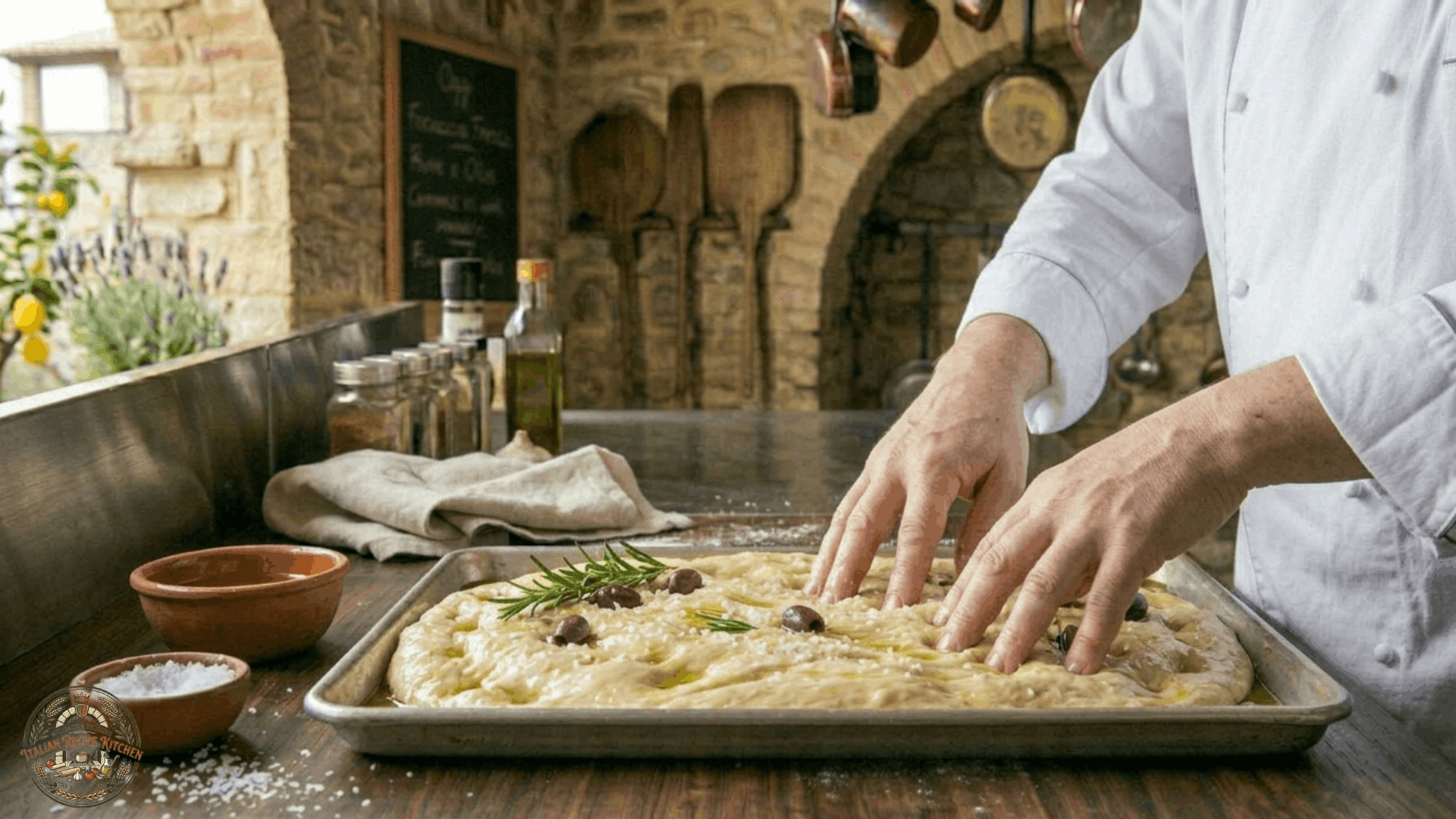
- Drizzle the dough with the remaining olive oil and use your fingertips to press deep dimples across the surface.
- Sprinkle with chopped rosemary, flaky sea salt, and black pepper.
- Bake for 22–25 minutes, or until the top is golden brown and the edges are crisp.
- Remove the focaccia from the pan and cool on a wire rack for 10 minutes before slicing.
Notes
- Bread flour gives focaccia its signature chewy texture.
- Use plenty of olive oil to create a crispy, flavorful crust.
- Add cherry tomatoes, olives, caramelized onions, garlic, or grated Parmesan for delicious variations.
- Store at room temperature in an airtight container for up to 2 days or refrigerate for 5 days.
- Freeze sliced focaccia for up to 3 months and reheat before serving.
Most people who try making an Italian focaccia recipe at home end up with something flat, dense, or completely flavorless. They follow a recipe, the bread does not rise properly, and the whole effort feels wasted. The problem is rarely the baker. It is almost always the method. Authentic Italian focaccia is actually one of the most beginner-friendly breads in the world once you understand what each step does and why.
This guide walks you through the complete process, covers the mistakes that ruin focaccia before it even hits the oven, and gives you everything you need to bake a soft, dimpled, golden Genovese focaccia that rivals anything you would find in an Italian bakery. If you enjoy homemade Italian baking, Easy Vegetable Stromboli with Pizza Dough is another simple and satisfying recipe to try.
What Is Italian Focaccia and Where Does It Come From?
Focaccia is a flat, oven-baked Italian bread with a soft, airy interior and a crispy, olive oil-rich crust. The word focaccia comes from Latin, where “focus” means fire and “panis focacius” literally means a flatbread baked in the coals. The most celebrated version is Focaccia Genovese, also called Fugassa in the local Genoese dialect, which originates from the Liguria region of northern Italy.
Focaccia Genovese is recognized as a Slow Food Presidium, a symbol of craftsmanship and respect for time-honored methods. In Genoa, people eat it at any time of day, for breakfast dipped in cappuccino, as a midday snack, or straight from the bakery oven warm and fragrant. It is simplicity at its most perfect.
Why This Is the Only Focaccia Recipe You Will Ever Need
Before you start, here is why home cooks keep returning to this recipe over and over:
- It requires no fancy equipment and can be made entirely by hand
- The ingredient list is short, and everything is already in your pantry
- The dough is forgiving and beginner-friendly, unlike most bread recipes
- The result is soft and spongy inside, with a beautifully crispy, golden crust
- It works as a side dish, sandwich base, snack, or appetizer
- You can customize the toppings endlessly with whatever you have on hand
- Leftovers freeze well and reheat beautifully in just a few minutes
How Is Focaccia Different from Regular Bread?
Many people wonder how focaccia stands apart from other breads, and the differences are more significant than most expect.
| Feature | Focaccia | Regular Bread |
| Shape | Flat, sheet pan baked | Loaf or round shaped |
| Olive oil | Very generous, inside and on top | Little or none |
| Texture | Soft, spongy, slightly chewy | Varies widely |
| Crust | Thin, golden, slightly crispy | Thick or chewy |
| Toppings | Sea salt, herbs, and vegetables | Usually plain |
| Serving style | Torn, sliced, or used for sandwiches | Sliced |
| Hydration | High, wetter dough than most breads | Lower hydration generally |
Focaccia is also different from pizza dough in that it uses more olive oil, rises longer, and is baked thicker with toppings pressed in rather than layered on top.
Ingredients for the Perfect Italian Focaccia
For the Dough
- 3 and a half cups bread flour or a mix of all-purpose and Manitoba flour
- 1 and a quarter cups lukewarm water
- 2 teaspoons active dry yeast or 0.6 oz fresh yeast
- 1 teaspoon honey or malt
- 4 tablespoons extra virgin olive oil
- 1 and a half teaspoons fine sea salt
For the Topping
- 3 tablespoons extra virgin olive oil
- 3 tablespoons warm water
- 1 teaspoon coarse sea salt or flaky sea salt
- Optional: fresh rosemary sprigs, halved cherry tomatoes, sliced olives, or caramelized onions
Fresh Yeast vs Dry Yeast: Which One to Use?
To make a real Genovese Focaccia, you need a medium-strength flour with about 12% protein. Since most supermarket flours do not report the strength of the flour, the trick is to look at the nutritional table under the heading “protein.” The same careful approach applies to your yeast choice.
Both fresh and dry yeast work well in this recipe, but they behave differently:
- Fresh yeast dissolves faster, activates slightly quicker, and gives a more complex, traditional flavor
- Active dry yeast is more widely available, longer-lasting, and equally effective when activated properly in warm water
- Instant yeast can be mixed directly into the flour without proofing first, making it the most convenient option
- Never use water hotter than 110 degrees Fahrenheit, as it will kill the yeast, and the dough will not rise
Why Mixing Two Different Flours Makes Better Focaccia
Since most common supermarket flours do not reach the ideal protein level for Genovese focaccia, combining a part of Manitoba type bread flour with all-purpose flour produces the right balance. Bread flour brings structure and chew while all-purpose flour keeps the crumb tender and light.
If you can find Italian tipo 00 flour, use it. Tipo 00 flour is a finely milled soft wheat flour with a protein content of approximately 9 to 11% that produces a more tender, extensible dough and contributes to the characteristic soft crumb. All-purpose flour is a perfectly acceptable substitute for home bakers who cannot find it.
Step-by-Step Instructions to Make Italian Focaccia
Step 1: Activate the Yeast
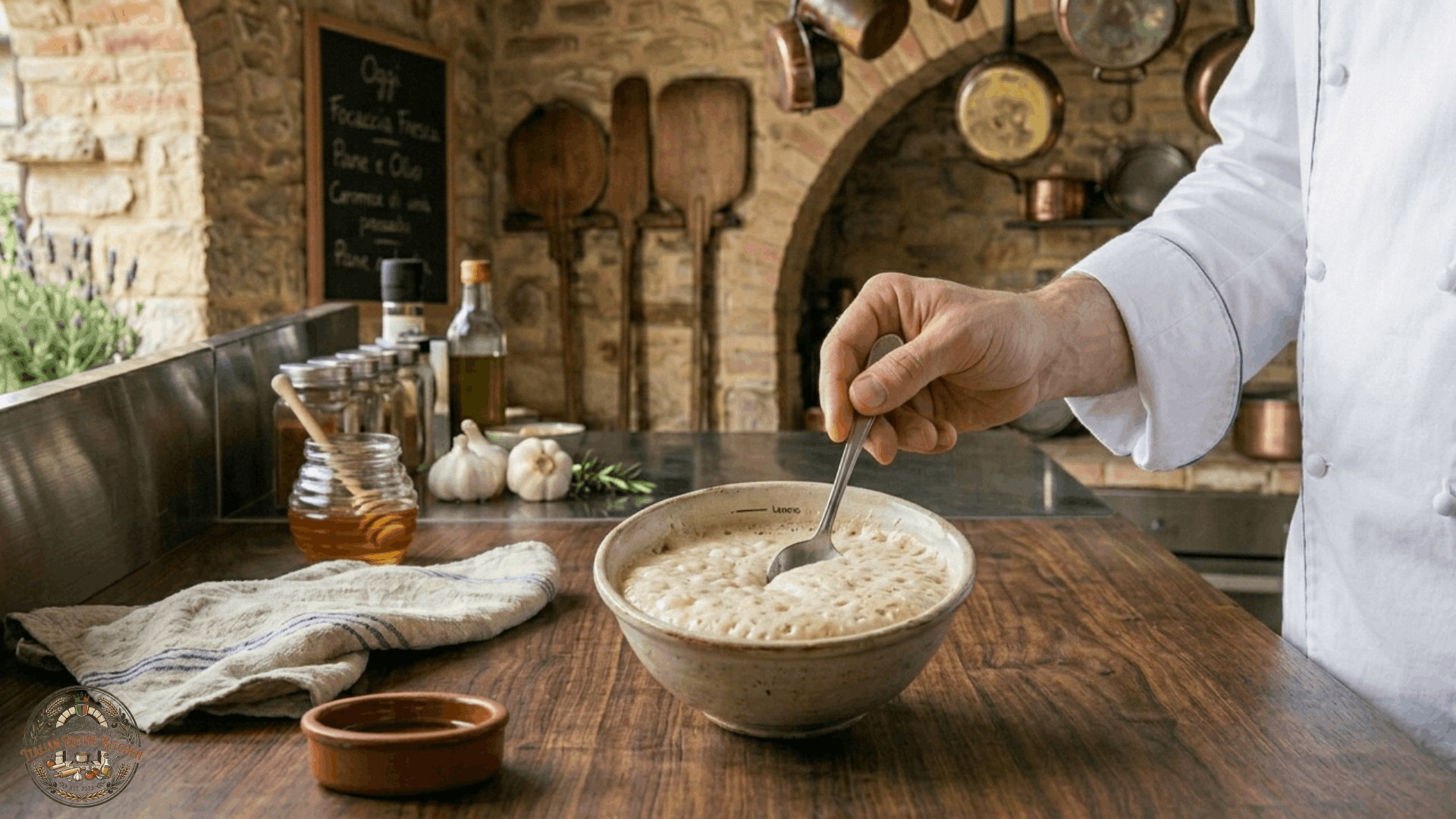
Combine the lukewarm water, honey, and yeast in a small bowl. Stir gently and let it sit for five to ten minutes. The mixture should become frothy and bubbly on the surface. If you do not see bubbles or froth, discard the mixture and start again with fresh yeast. A yeast that does not activate means your focaccia will not rise, no matter what else you do correctly.
Step 2: Mix and Knead the Dough
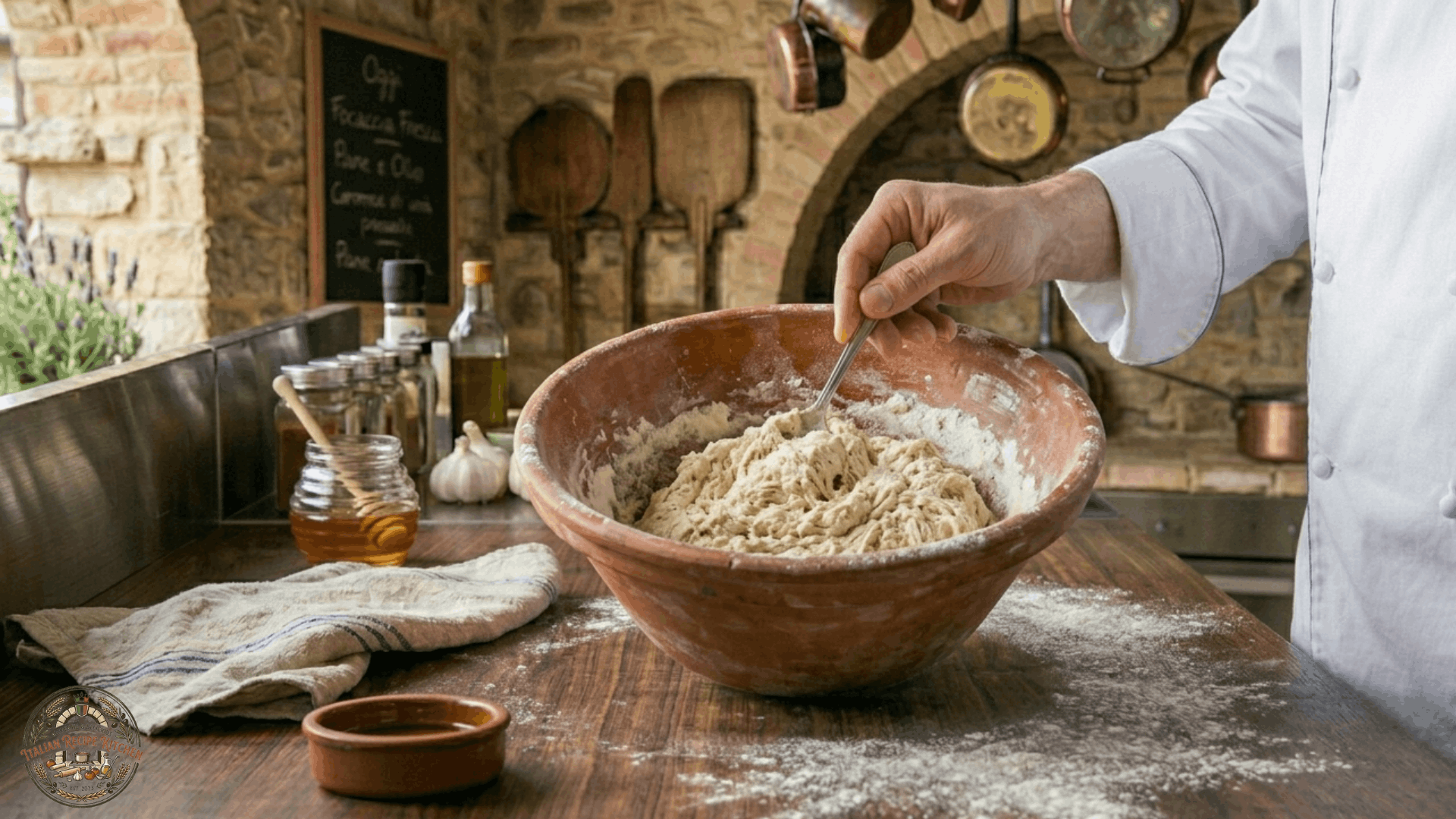
Combine the flour and salt in a large bowl. Pour the activated yeast mixture and olive oil into the flour. Mix with a spoon until a rough dough forms, then turn it out onto a clean surface and knead for eight to ten minutes until the dough feels smooth, soft, and slightly tacky but not sticky. If you have a stand mixer, follow the same recipe and let the mixer do the work instead of your hands. Your focaccia will turn out just as delicious.
Step 3: First Rise
Shape the dough into a ball and place it in a lightly oiled bowl. Cover tightly with plastic wrap or a clean kitchen towel. Let it rise at room temperature for one to two hours until it has doubled in size. For a deeper, more complex flavor, do a long rise for more flavor and let the dough proof in the refrigerator overnight.
Step 4: Stretch Into the Pan
Pour two tablespoons of olive oil into a rimmed baking sheet, roughly 9 by 13 inches. Transfer the risen dough to the pan and use your fingertips to gently stretch and press it toward the edges. Do not force it. If it springs back, cover it and let it rest for ten minutes before stretching again. The dough will relax and spread more easily with patience.
Step 5: Second Rise
Cover the stretched dough loosely with oiled plastic wrap and let it rest for another 30 to 45 minutes. This second rise is what creates the light, airy texture and the characteristic large bubbles inside. Always make sure the dough is covered during rising so the surface does not dry out and form a tough skin.
Step 6: Prepare the Brine Topping and Dimple the Dough
Mix three tablespoons of olive oil with three tablespoons of warm water to create a simple brine. Topping the focaccia with an olive oil brine gives the best moisture and crust. Pour it evenly over the surface of the dough. Use all ten fingertips to press firmly into the dough, creating the signature deep dimples all across the surface. Scatter the coarse sea salt generously over everything. Add any optional toppings like rosemary, cherry tomatoes, or sliced olives now.
Step 7: Bake to Golden Perfection
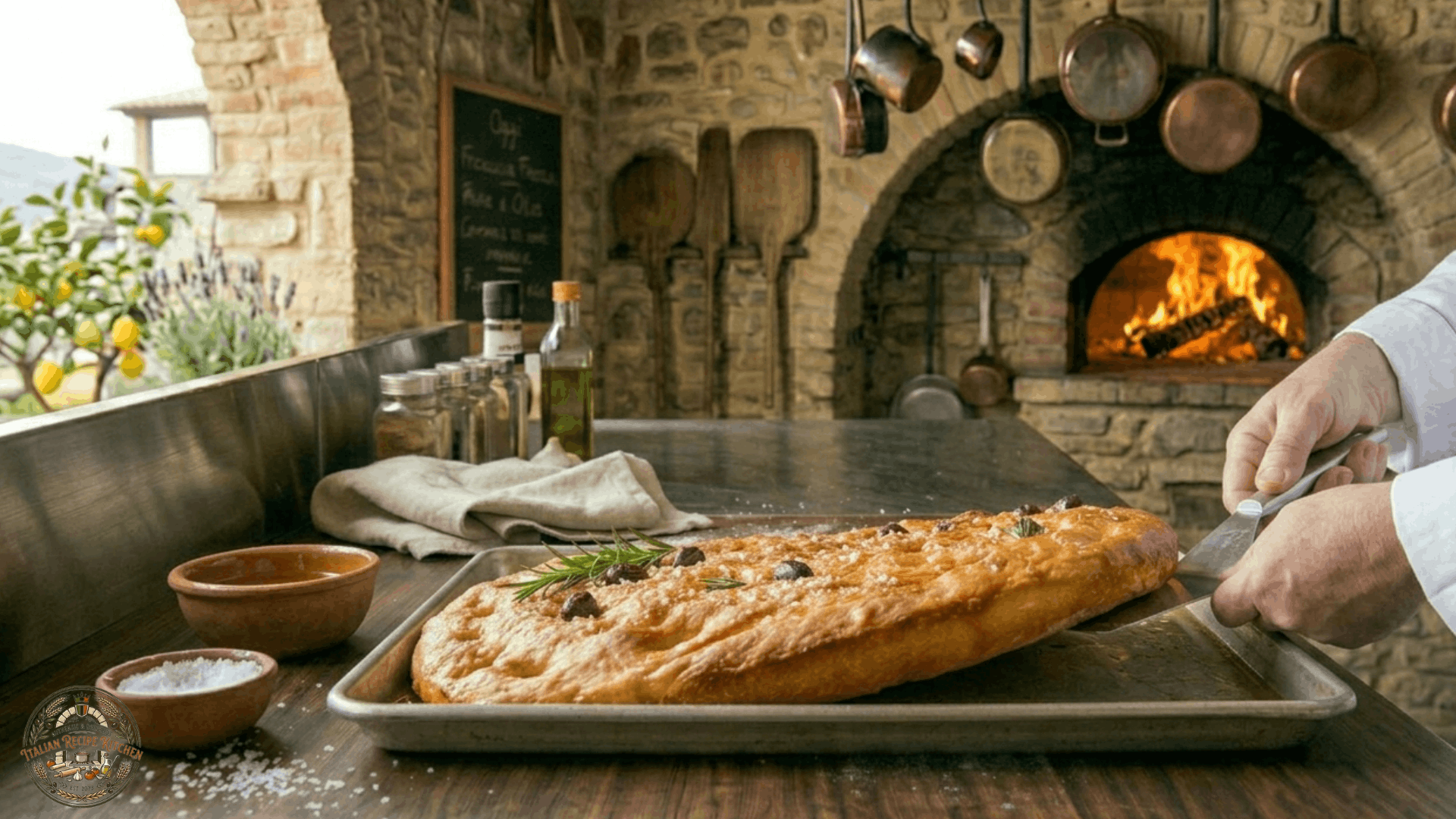
Preheat your oven to 430 to 450 degrees Fahrenheit. Bake the focaccia for 20 to 25 minutes until the surface is deeply golden and the edges are crisp. The bottom should be golden brown as well, which you can check by lifting a corner with a spatula. Remove from the oven and let it cool in the pan for five minutes before transferring to a wire rack.
Pro Tips for the Best Genovese Focaccia Every Time
These expert habits make a real difference between average focaccia and something extraordinary:
- Use extra virgin olive oil generously and never try to reduce it. The oil is the soul of focaccia
- Proof the dough overnight in the refrigerator for best flavor, and bake in a fully preheated oven at high temperature
- Press the dimples deep enough, so they hold the olive oil brine and do not spring back during baking
- Always cover the dough at every resting stage so the surface stays moist and the rise is even
- Use a light-colored metal baking pan rather than a dark non-stick for more even heat distribution
- Let the focaccia cool for at least five minutes before slicing, or the interior will be gummy
Why Your Focaccia Did Not Rise and How to Fix It
This is the most common problem and almost always has a simple cause:
- Dead yeast: Always proof your yeast first. If it does not bubble, start with a fresh packet.
- Water too hot or too cold: Use water between 95 and 110 degrees Fahrenheit, warm but not hot to the touch
- Not enough rising time: Do not rush the first or second rise. Both are essential for proper texture
- Dough not covered: Exposed dough develops a dry skin that prevents proper rising
- Too much flour added: A sticky dough is normal and correct for focaccia. Resist the urge to add more flour
How to Eat Focaccia: Serving Ideas That Actually Work
Focaccia is one of the most versatile breads in the world. Here are the best ways to enjoy it:
- Serve warm alongside pasta, soup, or a simple antipasto platter
- Slice in half horizontally and fill with mozzarella, prosciutto, and fresh basil for a focaccia sandwich
- Tear into pieces and serve with olive oil and balsamic vinegar for dipping
- Cut focaccia in half and stuff with your favorite cured meat or cheese for a simple and satisfying meal
- Serve as a side to roasted vegetables, grilled fish, or a cheese board
- Use as a base for a quick flatbread pizza with fresh tomatoes and mozzarella
Creative Variations Worth Trying
Once you are confident with the classic version, explore these popular Italian regional variations:
- Focaccia al Pomodoro: Top with halved cherry tomatoes, sea salt, and fresh oregano before baking
- Focaccia con le Cipolle: Scatter thinly sliced caramelized onions across the surface for a sweet and savory result
- Focaccia con Olive: Press whole or sliced olives deep into the dimples before the second rise
- Focaccia Dolce: A sweet version with sugar, raisins, and anise seeds, popular in certain Italian regions
- Focaccia di Recco: A completely different style filled with fresh cheese rather than topped
How to Store and Freeze Leftover Focaccia
Storing at Room Temperature
If you have leftovers, wrap every piece in plastic wrap and store at room temperature for one day. Focaccia dries out quickly and is always best eaten the day it is baked, while the crust is still slightly crispy and the inside is soft.
Freezing Focaccia
Focaccia can be frozen for up to three months. Let it cool completely, slice into portions, wrap each piece tightly in plastic wrap, and place in a freezer bag. To reheat, unwrap and place directly in a 350-degree oven for eight to ten minutes. It comes back remarkably well and tastes almost freshly baked.
Nutrition Information (Per Slice, Approximately One Eighth of the Pan)
| Nutrient | Approximate Amount |
| Calories | 230 kcal |
| Carbohydrates | 34g |
| Protein | 5g |
| Fat | 9g |
| Saturated Fat | 1.3g |
| Fiber | 1.5g |
| Sodium | 380mg |
| Iron | 1.8mg |
Values are approximate and vary based on toppings added and specific olive oil quantity used.
Pairs Well With
Focaccia is incredibly versatile alongside other dishes:
- Minestrone or ribollita for a hearty Italian meal
- A classic Caprese salad with buffalo mozzarella and fresh basil
- Charcuterie boards with Italian salami, prosciutto, and aged cheeses
- Roasted garlic and whipped ricotta as a simple appetizer spread
- A glass of light Italian white wine like Vermentino or Pinot Grigio
Final Thoughts
Italian focaccia is one of those rare recipes that rewards both patience and confidence. The ingredients cost very little, the technique is learnable in a single afternoon, and the result is genuinely impressive every time. The secret is patience, good olive oil, and letting the dough develop its beautiful texture naturally. Once you understand why each step matters, from the long rise to the generous olive oil to the brine topping, focaccia stops feeling like a baking challenge and starts feeling like a weekly ritual you genuinely look forward to.
Frequently Asked Questions
What makes focaccia soft and fluffy inside?
A proper rise, high-hydration dough, and generous olive oil are the three things that create a soft, airy interior every time.
Can I make focaccia without a stand mixer?
Yes, focaccia dough is easy to knead by hand in eight to ten minutes. A stand mixer simply saves effort, but is not required at all.
Why does authentic focaccia use so much olive oil?
Olive oil is what gives focaccia its signature crispy crust, rich flavor, and moist interior. Reducing it produces a drier, less flavorful result.
How do I know when the focaccia is fully baked?
The surface should be deep golden brown, and the edges crispy. Lift one corner with a spatula to check that the bottom is golden, not pale.
Can I add toppings before or after baking?
Fresh toppings like tomatoes, olives, and rosemary go on before baking and are gently pressed into the dough. Delicate toppings like fresh herbs or cheese can be added right after baking.
What is the white brine poured over the focaccia before baking?
It is a simple mixture of olive oil and warm water that keeps the surface moist during baking and creates the signature glossy, golden crust.
Can I make focaccia dough ahead of time?
Yes. After the first rise, refrigerate the dough overnight in a covered container. Bring it to room temperature for one hour before stretching it into the pan.