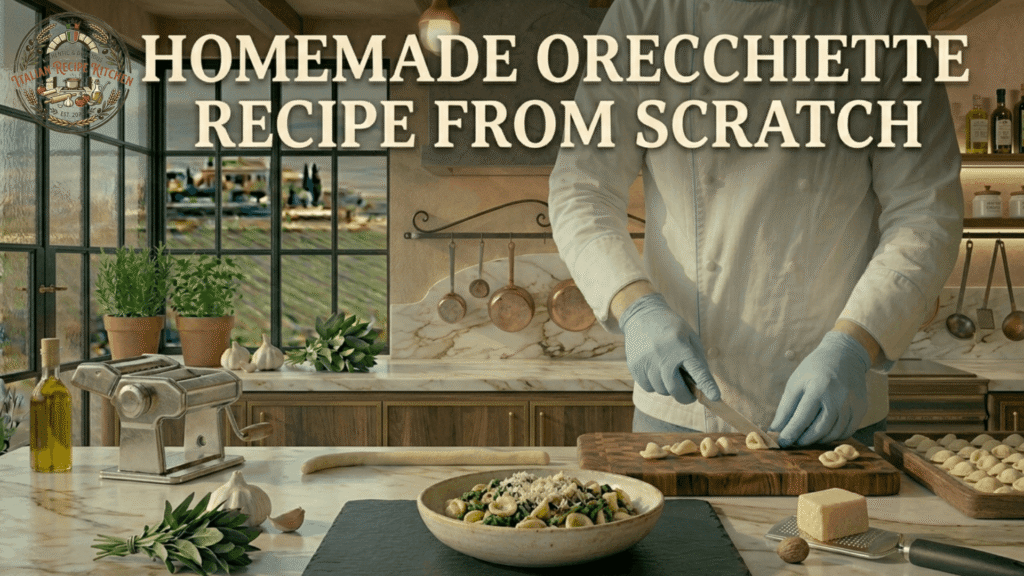
I have seen many people around me who do not know how to make fresh pasta. Either they do not know the proper method, or they do not have all the ingredients available, which makes it very difficult for them.
In my experience, making fresh pasta at home is not a big project, and once you try it, you will find it easier than anything else. If you have all the ingredients for making pasta, then you can add them all and make noodles that are silky, healthy, and taste better than those in the market. In this article, I can guide you step by step through everything you need to know to make pasta so you become an expert at it. Let’s start.
Homemade Fresh Pasta Recipe Ingredients
You do not need a long shopping list to make great fresh pasta in your kitchen. The beauty of this dish is in its simplicity, and the quality of what you use matters far more than the quantity. This is the difference in quality because you know about all things.
For Egg Pasta (serves 4)
| Ingredient | Amount |
| 00 flour or all-purpose flour | 300g (about 2¼ cups) |
| Large eggs (room temperature) | 3 whole eggs |
| Fine sea salt | 1 pinch |
| Extra virgin olive oil (optional) | 1 teaspoon |
For Eggless Pasta (serves 4)
| Ingredient | Amount |
| Fine semolina flour | 300g |
| Warm water | 130ml–150ml |
| Fine sea salt | 1 pinch |
Room-temperature eggs are not just a suggestion. Cold eggs tighten the gluten too fast, making the dough stiff and hard to knead. Take the eggs out of the fridge at least 30 minutes before you start making pasta.
Tools You Will Need
You do not need a fancy and unique kitchen to make fresh pasta. Most of the equipment is already sitting in your home.
- A large, clean work surface (wood or marble is ideal)
- A fork or bench scraper
- Plastic wrap or a clean bowl for resting the dough
- A rolling pin or pasta machine
- A sharp knife or pastry wheel for cutting
A pasta machine is not required, but it does make rolling out thin, even sheets much faster. If you use one, a KitchenAid pasta attachment works brilliantly and saves a lot of elbow work.
Which Flour Is Best for Making Fresh Pasta?
Flour is the most important decision in making pasta before you even crack an egg. The type you pick changes everything about the final texture.
Italian 00 flour
It is the gold standard for egg-based pasta. It is milled so finely that it hydrates almost instantly upon meeting the egg, creating a smooth, elastic dough that rolls into paper-thin sheets without cracking. This is your go-to for tagliatelle, pappardelle, ravioli, and lasagna.
Semolina flour
is milled from hard durum wheat and has a noticeably higher protein content, often above 13%. This gives the dough strength and structure, producing that satisfying al dente chew that makes a bowl of pasta feel substantial. It works best in eggless doughs and sturdier shapes like orecchiette, cavatelli, and gnocchetti.
All-purpose flour
is a perfectly fine substitute if you cannot find either. It produces a softer result, but with proper kneading and resting, you can still achieve a beautiful dough.
Quick Flour Guide:
| Pasta Type | Best Flour Choice |
| Egg pasta (tagliatelle, ravioli) | Italian 00 flour |
| Eggless pasta (orecchiette, cavatelli), pasta without egg | Semolina flour |
| Everyday home cooking | All-purpose flour |
| Best of both worlds | 50/50 blend of 00 and semolina |
Many home cooks swear by a 50/50 blend of 00 and semolina flour. The 00 keeps the dough easy to roll while the semolina adds enough bite to satisfy any pasta lover.
Should You Use Eggs or Water in Fresh Pasta Dough?
This is the real fork in the road of Italian pasta making. The answer comes down to the shape you want to make and the texture you are chasing.
Eggs bring fat, protein, and richness. A dough made with whole eggs is soft, pliable, and produces noodles with a golden colour and silky finish. It rolls thin easily, which is why it is the preferred choice for stuffed pasta and delicate ribbon shapes.
Water-based dough, by contrast, relies entirely on the gluten in the flour for its structure. It is firmer, chewier, and better suited to thick, rustic shapes common in southern Italy. Neither style is better. They are just built for different purposes.
The Three Italian Pasta Dough Types
Pasta all’Uovo: Traditional Egg Pasta
This is the most common fresh pasta across northern Italy, especially in regions like Emilia-Romagna and Tuscany. It uses both the egg white and yolk, combined with 00 flour, in a classic ratio of one egg per 100 grams of flour.
The result is a golden, silky dough that handles beautifully and cooks in as little as two to three minutes. Use it for tagliatelle, fettuccine, pappardelle, lasagna sheets, ravioli, tortellini, and cannelloni.
Pasta Bianca: White Pasta Without Egg
Pasta bianca is the eggless tradition of southern Italy, born from the sun-drenched kitchens of Puglia and Sicily. Water replaces the egg entirely, and semolina flour provides the structure. Because there is less fat in the dough, it has more bite and holds its shape well during longer cooking times. It is the right choice for orecchiette, strozzapreti, and other thick, hand-shaped forms. It is also the ideal option for vegans or anyone watching their cholesterol.
Pasta al Tuorlo d’Uovo: Egg Yolk Pasta
This is where things get luxurious. Using only the egg yolks, with no whites at all, creates a dough that is richer, deeper in colour, and stronger in structure. Since egg yolks contain about 33% fat and only 17% protein compared to egg whites, which are mostly water, the resulting pasta is remarkably silky and dense.
It holds up well under heavy sauces and is stunning when cut into wide ribbons like pappardelle or mafaldine. However, it is not recommended for stuffed shapes, as the richer dough can become fragile at the seams during cooking.
Step-by-Step Directions: How to Make Fresh Pasta
Step 1: Make the Dough
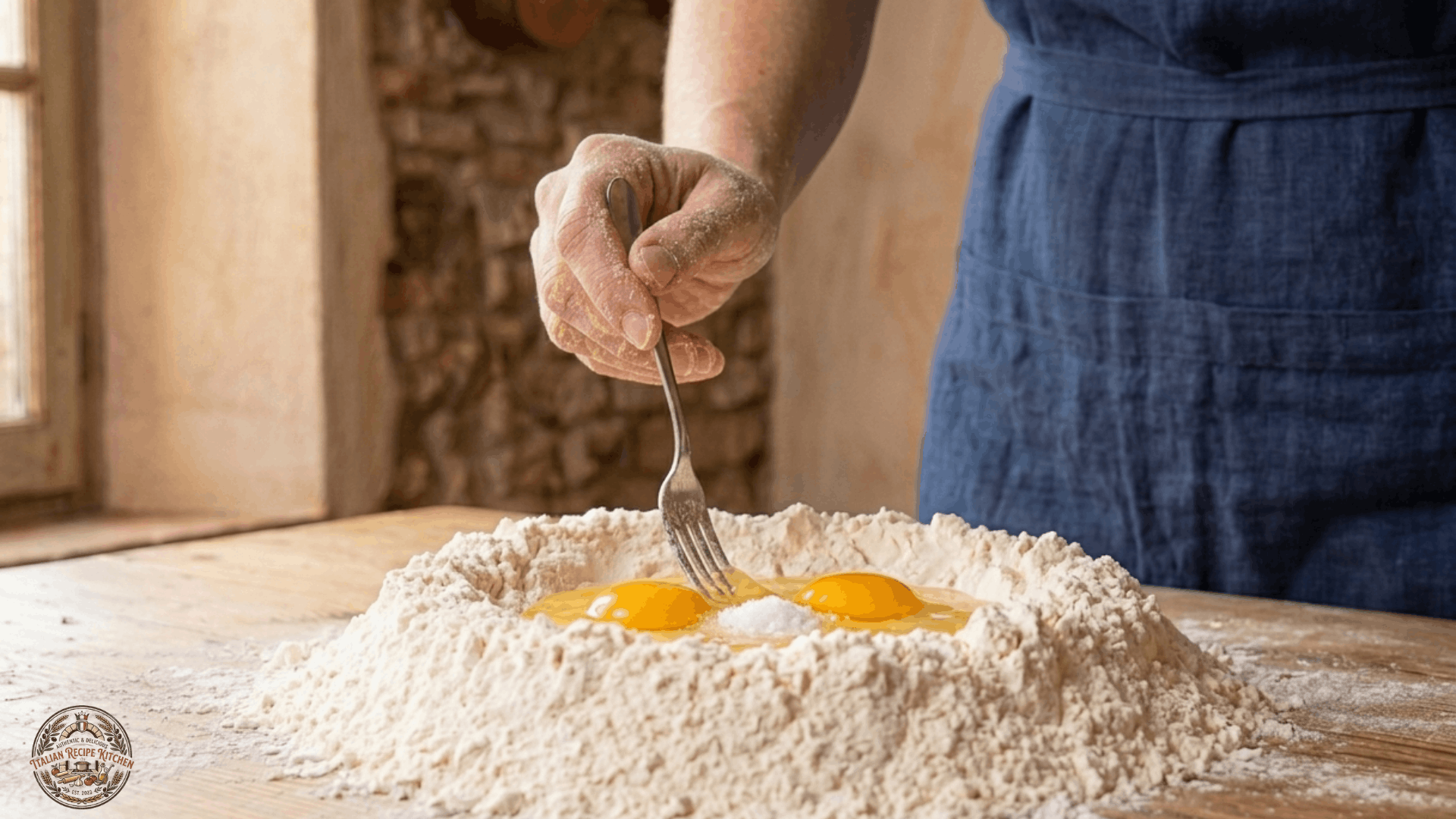
Mound your flour on a clean work surface and use your fist to create a wide well in the centre. Crack your eggs directly into the well and add the salt. Use a fork to beat the eggs lightly, then begin pulling in flour from the inner walls of the mound a little at a time. Keep working inward until the mixture becomes too thick for the fork.
Step 2: Knead the Dough
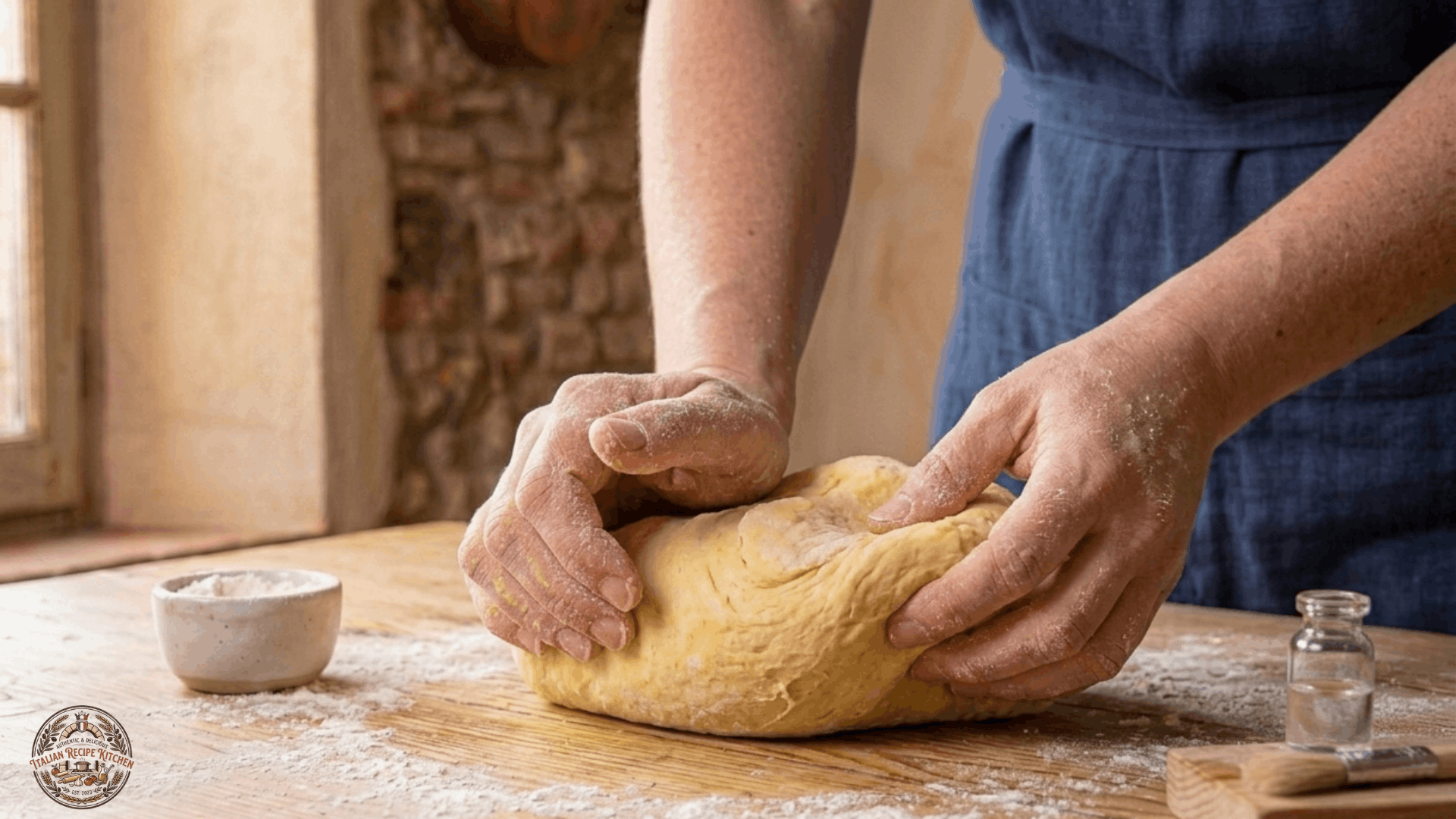
Switch to your hands and begin kneading. Push the dough forward with the heel of your palm, fold it back, and rotate a quarter turn. Repeat this rhythmically for 8 to 10 minutes until the dough feels smooth, elastic, and slightly tacky but not sticky. If the dough is too dry, add half a teaspoon of water; if it clings to your hands, dust lightly with flour.
Step 3: Rest the Dough
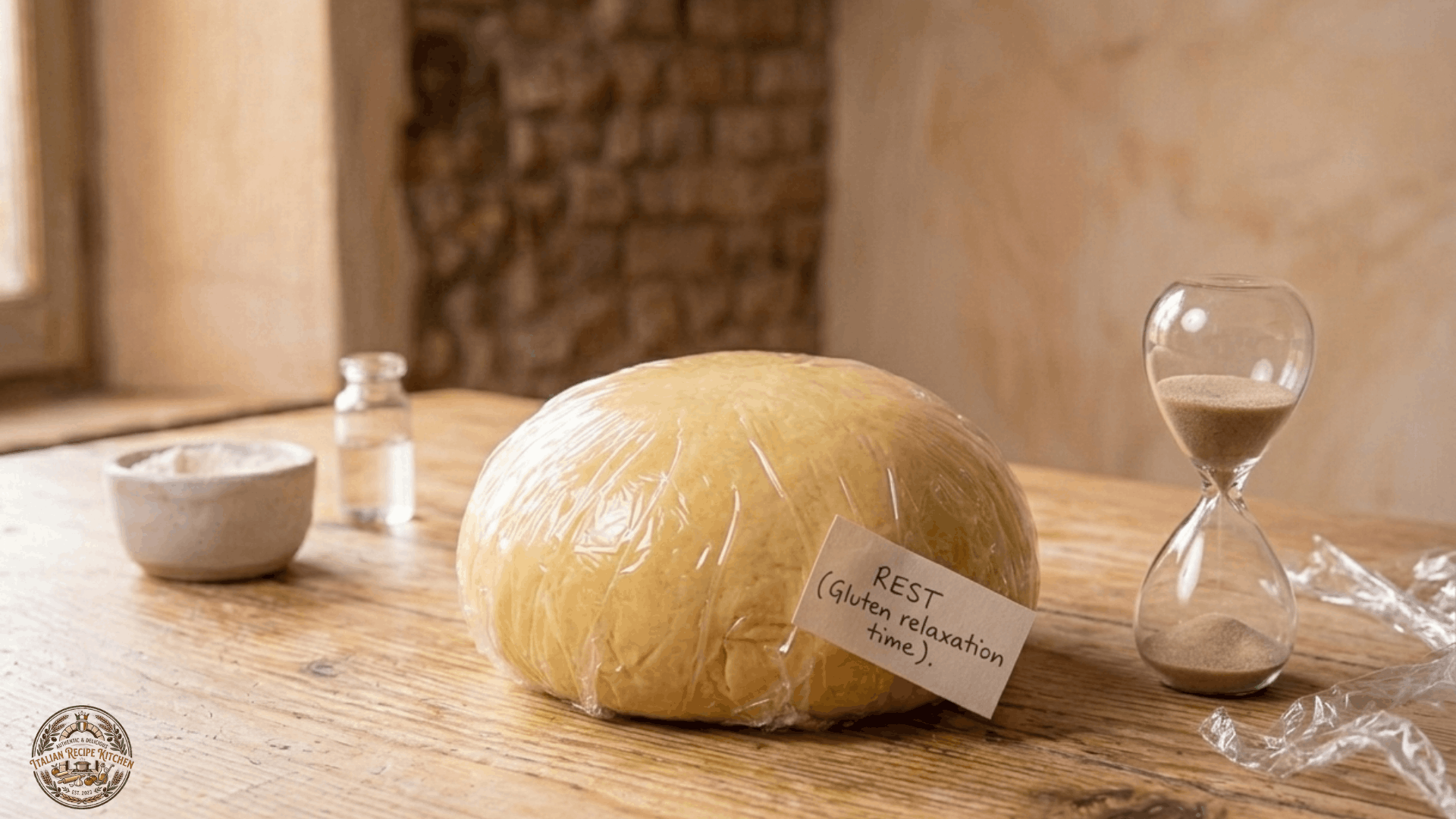
Wrap the dough tightly in plastic wrap and let it rest at room temperature for at least 30 minutes. This is not optional. Resting allows the gluten to relax so the dough rolls out without springing back. Do not skip this step, or you will be fighting the dough for the next hour.
Step 4: Roll and Cut the Pasta
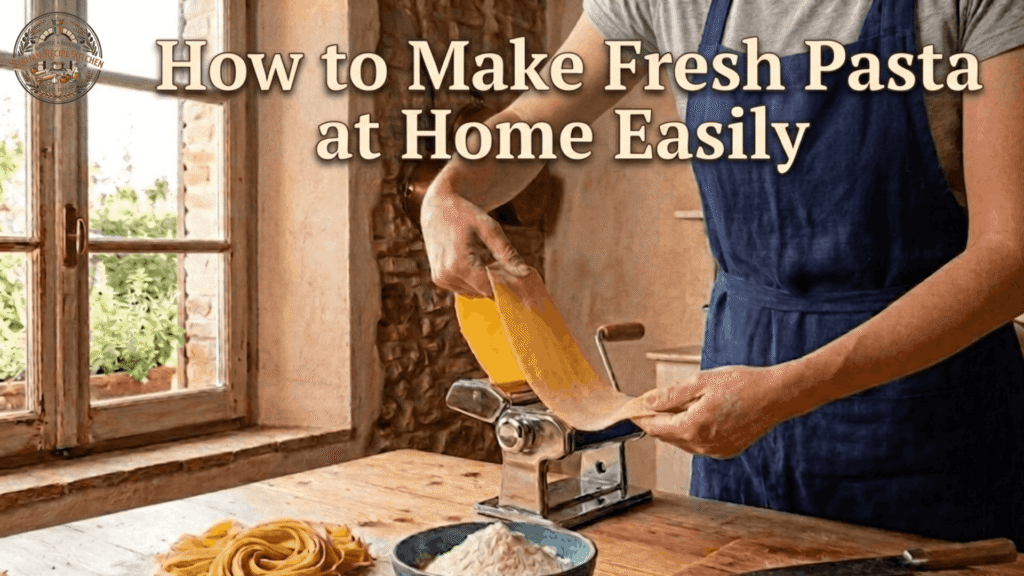
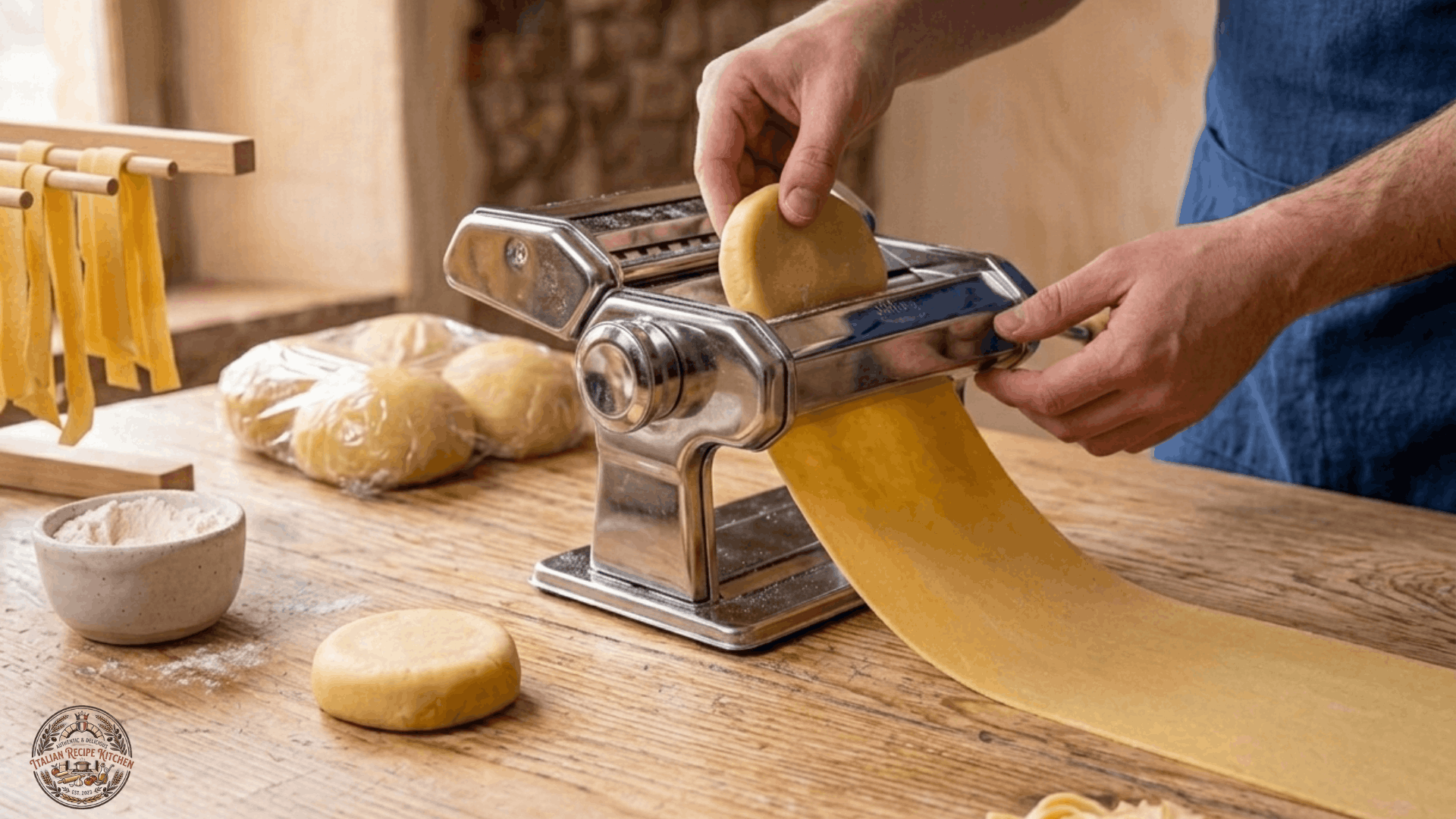
Divide the remaining dough into four pieces. Working with one piece at a time and keeping the rest wrapped, flatten the dough into a thick disk and begin rolling. If using a pasta machine, start at the widest setting and pass the dough through several times, folding it over itself each time before moving to a thinner setting. Aim for about 2mm thickness for most noodles. Cut into your desired shape immediately after rolling, as the dough dries quickly.
Step 5: Cook the Pasta
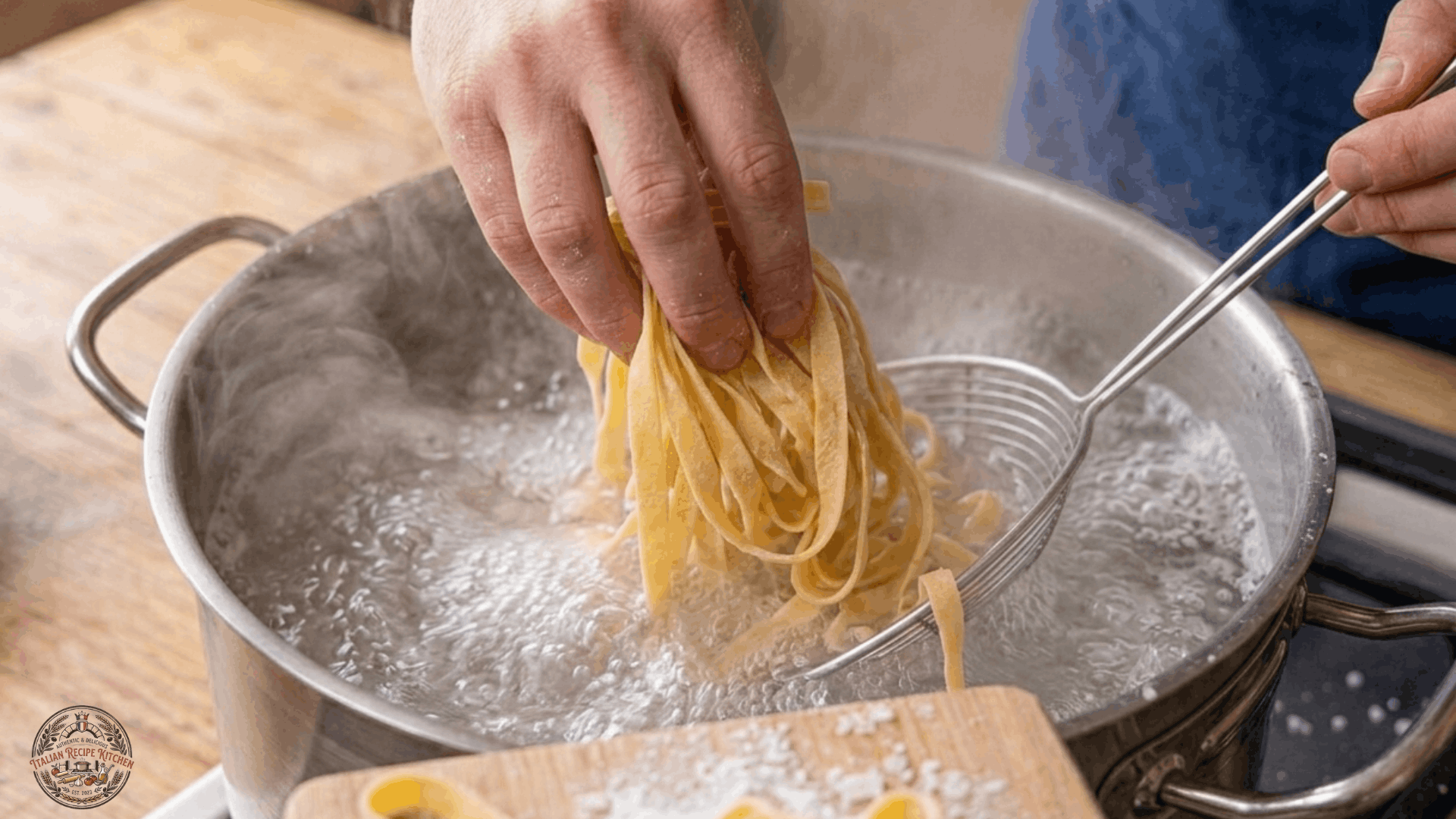
Bring a large pot of water to a rolling boil and add a generous amount of salt. Fresh pasta cooks very fast, usually in just 2 to 4 minutes. Taste it from the one-minute mark onward and pull it as soon as it reaches al dente. Do not walk away from the pot.
Homemade Pasta Serving Suggestions
Fresh pasta pairs beautifully with sauces that match its delicate texture. Heavy, chunky sauces can overpower it, while light, silky ones let the pasta itself shine.
- Egg pasta: Butter and sage, classic Bolognese, carbonara, cacio e pepe, or a light cream sauce
- Pasta bianca: Rustic tomato ragù, olive oil, and garlic, or a thick lamb sauce from the south
- Egg yolk pasta: Brown butter and Parmesan, truffle oil, or a slow-cooked wild mushroom sauce
Serve immediately after cooking. Fresh pasta does not wait well, and it is at its absolute best the moment it comes out of the pot.
FAQs
How long does fresh pasta dough last in the fridge?
You can store uncooked pasta dough wrapped tightly in plastic for up to 24 hours in the refrigerator, though it is best used within 8 hours before oxidation changes its colour from yellow to grey.
Can you freeze fresh pasta?
Yes. Lay cut pasta in loose nests on a floured tray, freeze until solid, then transfer to a freezer bag. Cook straight from frozen and add 1 to 2 extra minutes to the cooking time.
Do I need a pasta machine to make fresh pasta?
No, a rolling pin works fine. A pasta machine just speeds things up and gives you more consistent thickness, especially for thin sheets like lasagna or ravioli.
Why is my pasta dough too tough to knead?
It is most likely too dry. Add a few drops of water and keep kneading. Tough dough can also mean the flour protein level is very high, so try using 00 flour for a more manageable dough.
How much pasta dough do I need per person?
A good starting point is 100 grams of flour and 1 egg per person for a main course portion. If pasta is your only dish and you are hungry, aim for 150 grams of flour per person.
Can I make fresh pasta without a scale?
Yes, though a scale gives the best results. As a rough guide, use about ¾ cup of flour per egg. Adjust by feel, adding flour or a few drops of water until the dough comes together smoothly.
Why does my pasta stick together after cutting?
It needs more flour dusting. Toss cut pasta with a little semolina or all-purpose flour immediately after cutting, and spread it loosely on a floured tray rather than piling it up.
Final Thoughts
Making fresh pasta at home is one of those kitchen skills that pays off every single time. The ingredients are inexpensive, the process is genuinely satisfying, and the result is something you simply cannot replicate from a packet. Start with a classic egg pasta using 00 flour and three eggs, master the kneading and resting routine, and you will have a skill for life. Once you are comfortable with the basics, experiment with egg yolk pasta for a richer noodle, or try your hand at a semolina dough for rustic southern shapes. The kitchen is yours.