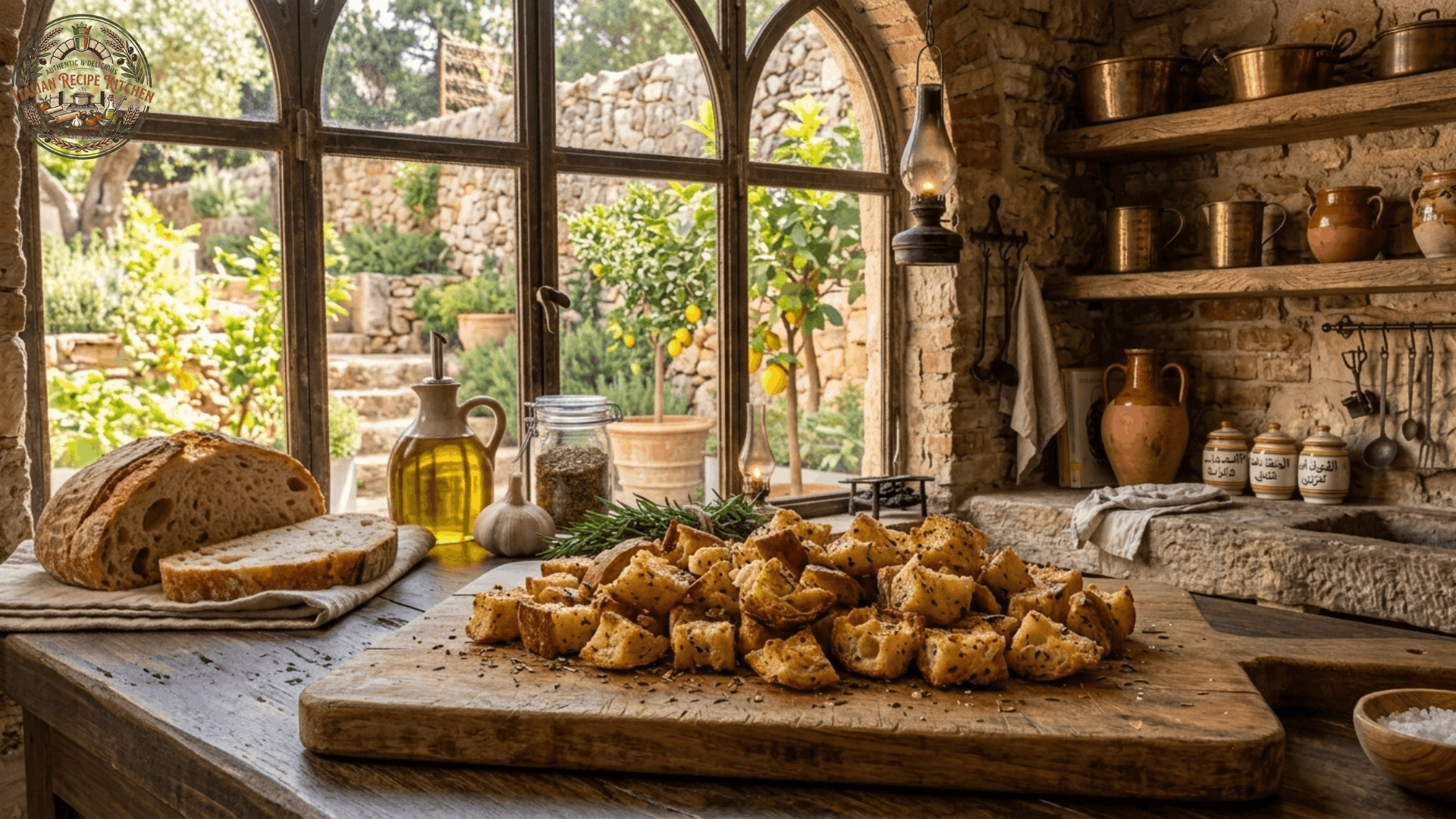
Homemade Croutons
Ingredients
Equipment
Method
- Preheat the oven to 375°F (190°C).
- Line a baking sheet with parchment paper or lightly grease it.
- Place the bread cubes in a large mixing bowl.
- Add the olive oil, minced garlic, Italian seasoning, garlic powder, onion powder, salt, pepper, and Parmesan cheese (if using).
- Toss well until every bread cube is evenly coated.
- Spread the bread cubes into a single layer on the prepared baking sheet.
- Bake for 18–20 minutes, stirring halfway through, until golden brown and crisp.
- Remove from the oven and let the croutons rest for 5 minutes to finish crisping as they cool.
- Sprinkle with fresh parsley if desired.
- Cool completely before storing in an airtight container.
Notes
- Day-old bread makes the crispiest croutons.
- Cut the bread into evenly sized cubes for even baking.
- Store in an airtight container at room temperature for up to 1 week.
- Freeze for up to 2 months and reheat in the oven before serving.
- Add smoked paprika, dried oregano, or red pepper flakes for extra flavor.
That half loaf of bread going stale on the counter always feels like a waste, but tossing it out seems wrong too. At the same time, store-bought croutons often taste stale, greasy, or oddly bland straight out of the bag.
Homemade croutons solve both problems at once. In under thirty minutes, you can turn leftover bread into golden, crunchy croutons that taste far better than anything from a plastic tub, and you get to control every bit of the flavor. They also make a perfect crunchy topping for Sausage and Cheese Quiche, adding extra texture and flavor to every bite.
Why You Will Love These Homemade Croutons
Once you make your own croutons, it is hard to go back to the store-bought version.
- They come together in under thirty minutes with minimal hands-on work.
- They use up leftover or stale bread instead of letting it go to waste.
- They taste fresher, crunchier, and far less greasy than packaged croutons.
- They are easy to customize with different herbs, spices, or cheese.
- They cost only a fraction of what bagged croutons charge per pound.
Homemade Croutons Ingredients
You only need a few basic items to make a great batch of croutons at home.
| Ingredient | Purpose |
| Bread, cubed or torn | The base of every crouton |
| Olive oil or melted butter | Adds flavor and helps browning |
| Garlic, fresh or powder | Adds savory depth |
| Salt and pepper | Essential seasoning |
| Italian seasoning or herbs | Optional, for extra flavor |
| Parmesan cheese | Optional, for a salty finish |
Best Bread for Homemade Croutons
Not every loaf makes a great crouton, so choosing the right bread matters more than people expect.
Sturdy, crusty breads like French bread, sourdough, ciabatta, or a baguette hold up best in the oven. Their firmer texture crisps up nicely without turning into dense, chewy nuggets.
Soft sandwich bread can still work, but it tends to produce smaller, more delicate croutons. Slightly stale bread is actually ideal here, since it holds its shape better and absorbs oil without turning soggy.
Should You Tear or Cube Your Bread?
This small decision actually changes the final texture quite a bit, so it comes down to personal preference.
Cubing the bread with a knife gives neat, even pieces that cook at the same rate and look tidy on a salad. This method works well when you want a more polished, restaurant-style presentation.
Tearing the bread by hand creates rougher, more rustic edges. Those jagged surfaces catch more oil and seasoning, which often results in extra crispy, craggy corners that many home cooks actually prefer.
Butter or Olive Oil for Croutons?
Both fats work well, but each one brings something a little different to the final result.
Olive oil gives a lighter, slightly fruity flavor and tends to help croutons stay fresh longer, sometimes for a couple of weeks in a sealed container. Butter, on the other hand, creates a richer, more indulgent flavor, though butter-based croutons usually stay fresh for only a few days.
Some cooks like to combine both, using butter for flavor and a touch of olive oil for extra crispness. Either option produces delicious results, so feel free to pick based on what you have on hand.
Step by Step: How to Make Homemade Croutons
Making croutons from scratch is simple, and the oven does most of the work while you prepare the rest of your meal.
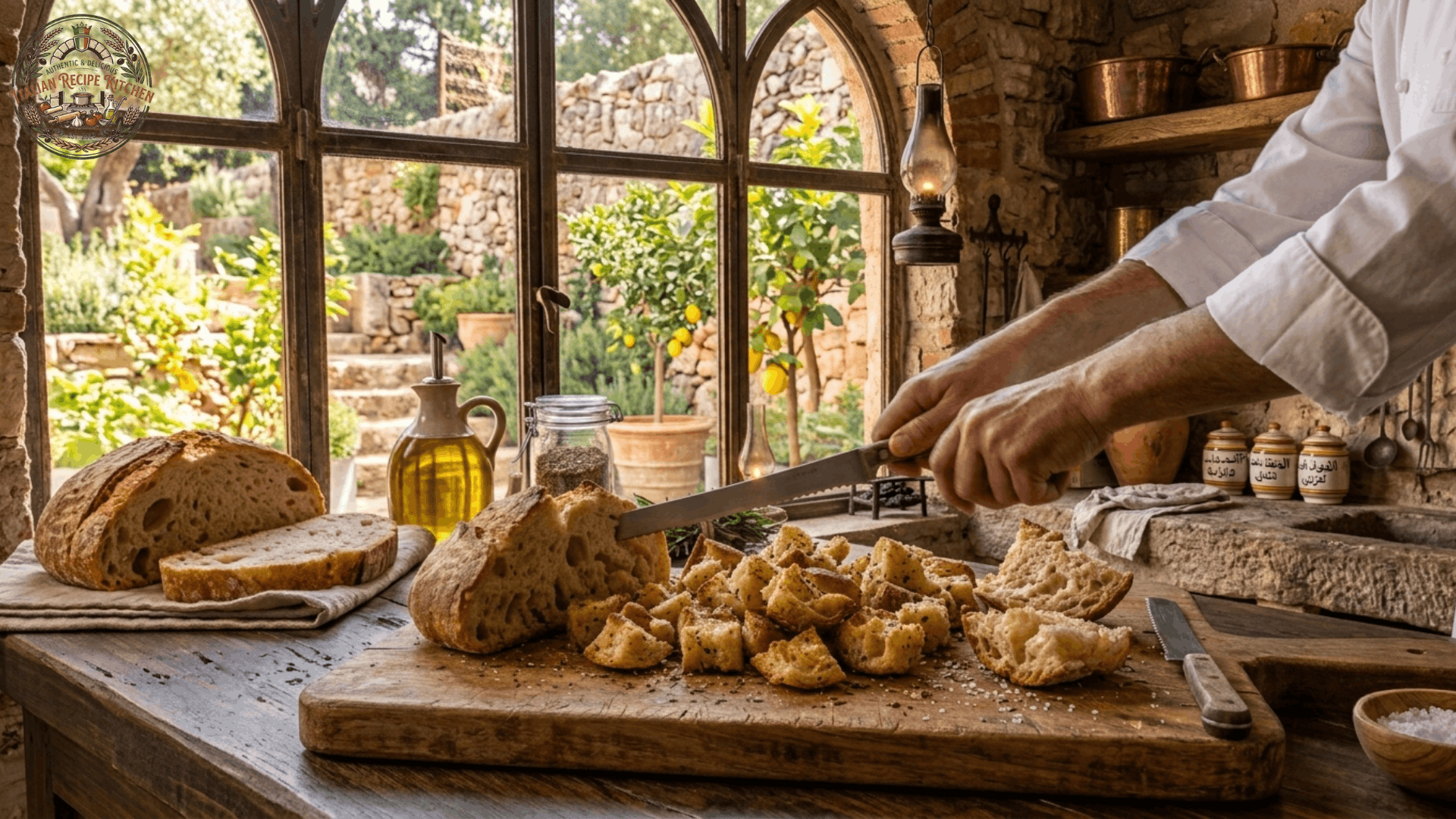
Step 1: Choose and Cut the Bread
Use day-old bread for the best texture. Cut it into evenly sized cubes or tear it into bite-sized pieces for a more rustic look.
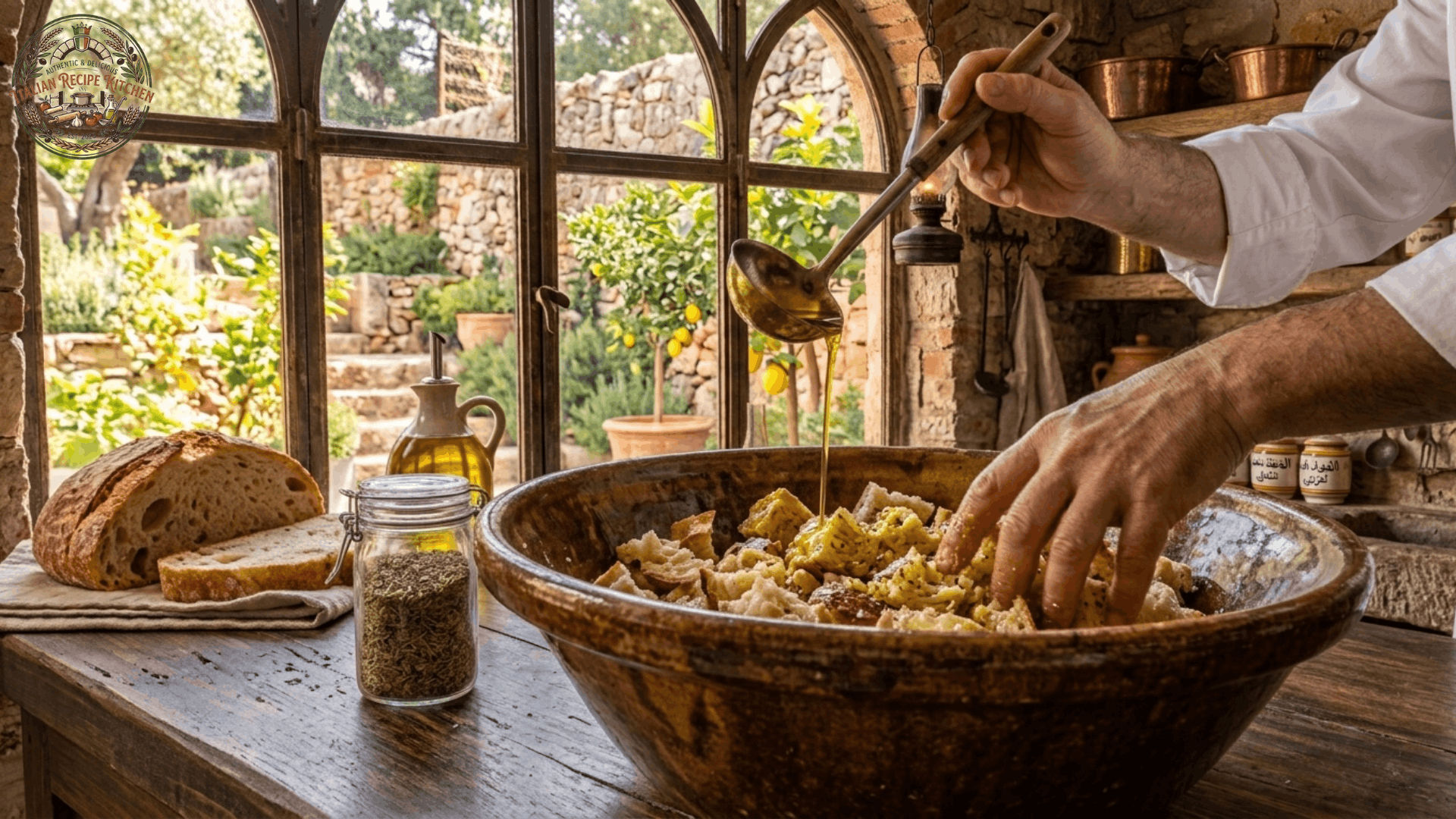
Step 2: Season the Bread
Place the bread in a large bowl and toss it with olive oil or melted butter, garlic, salt, black pepper, and your favorite dried herbs until evenly coated.
Step 3: Arrange on a Baking Sheet
Spread the seasoned bread cubes in a single layer on a parchment-lined baking sheet, leaving a little space between each piece so they crisp up evenly.
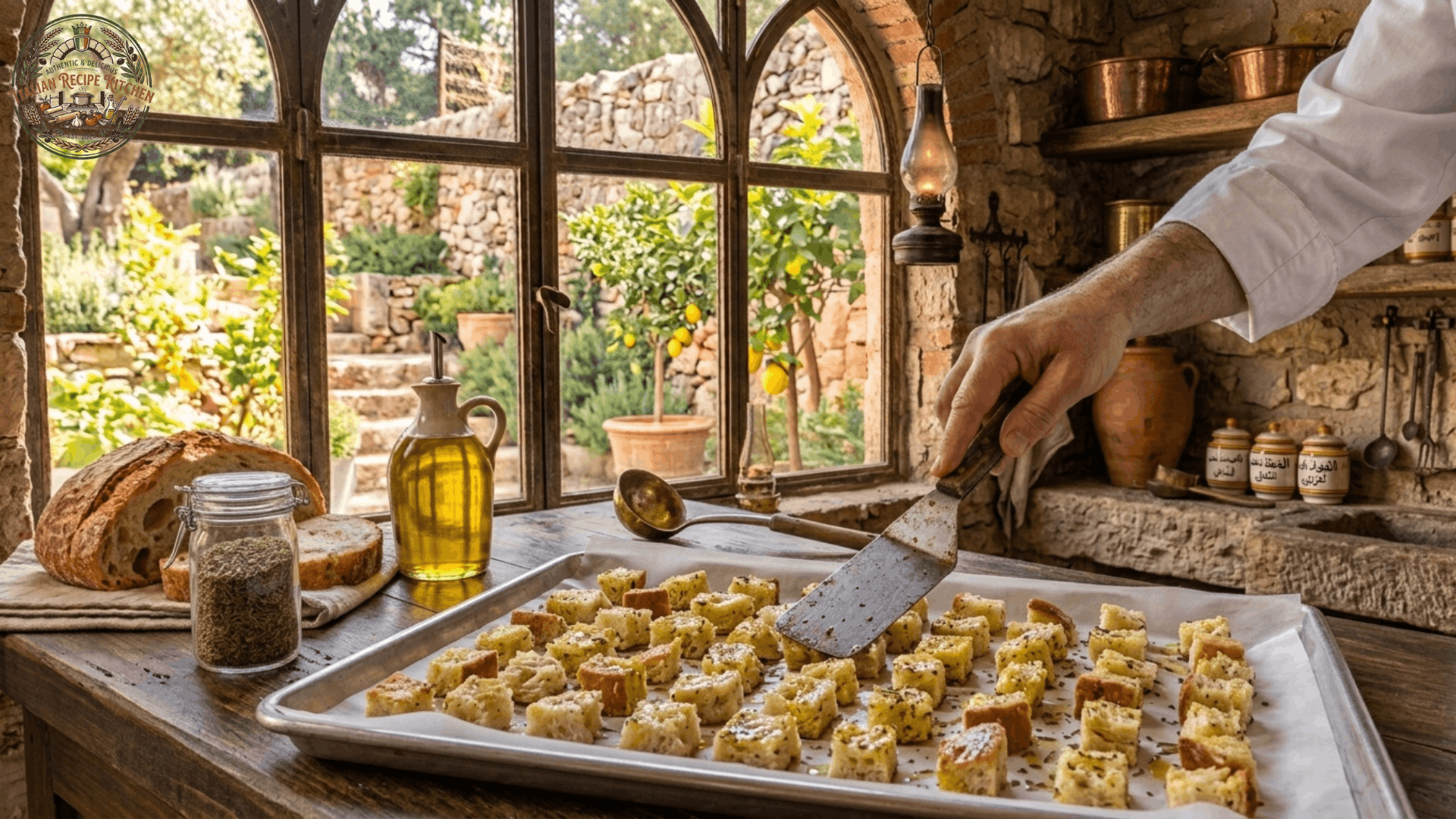
Step 4: Bake Until Golden
Bake in a preheated oven, stirring halfway through, until the croutons are golden brown and crisp on all sides.
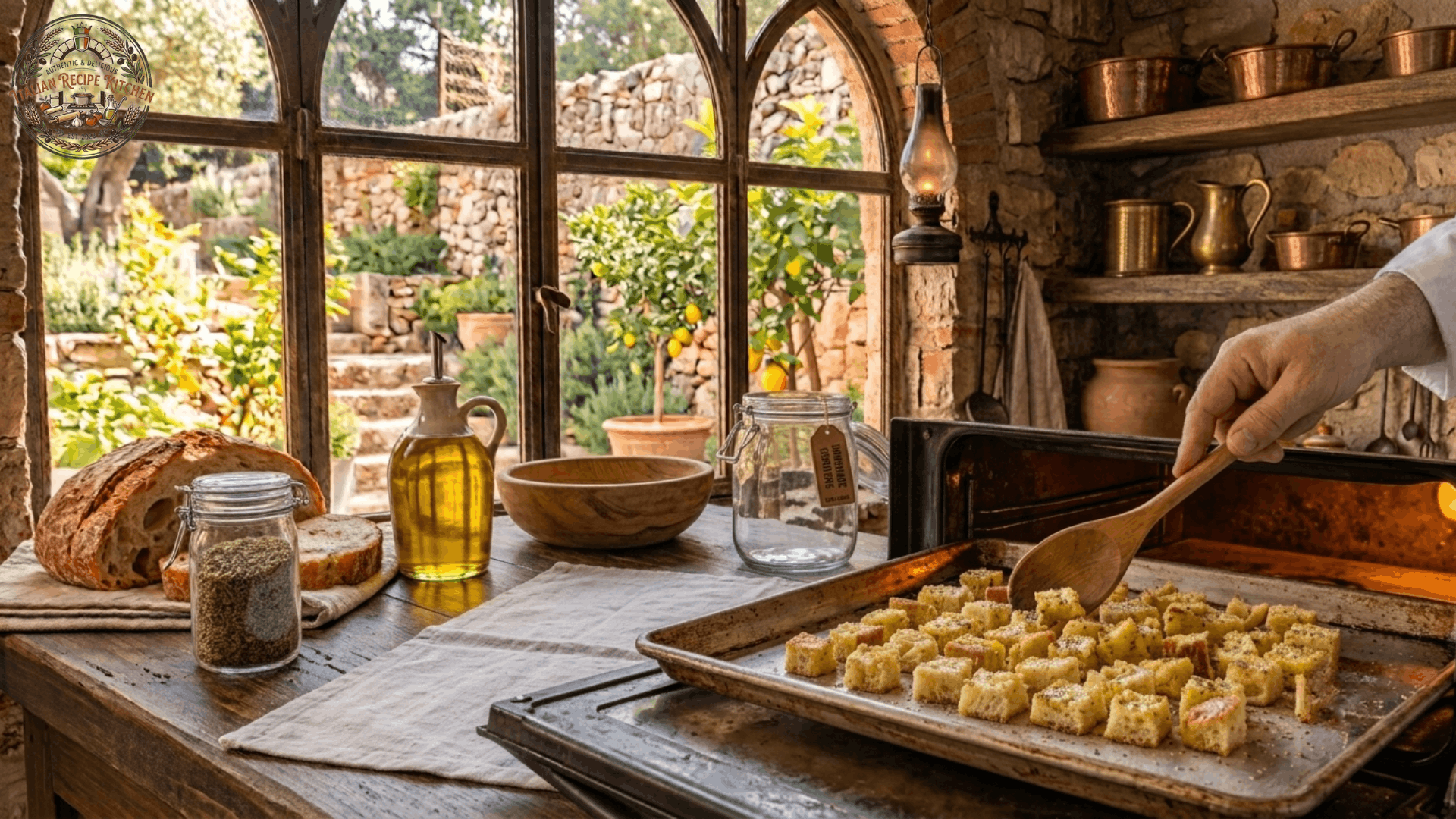
Step 5: Cool and Store
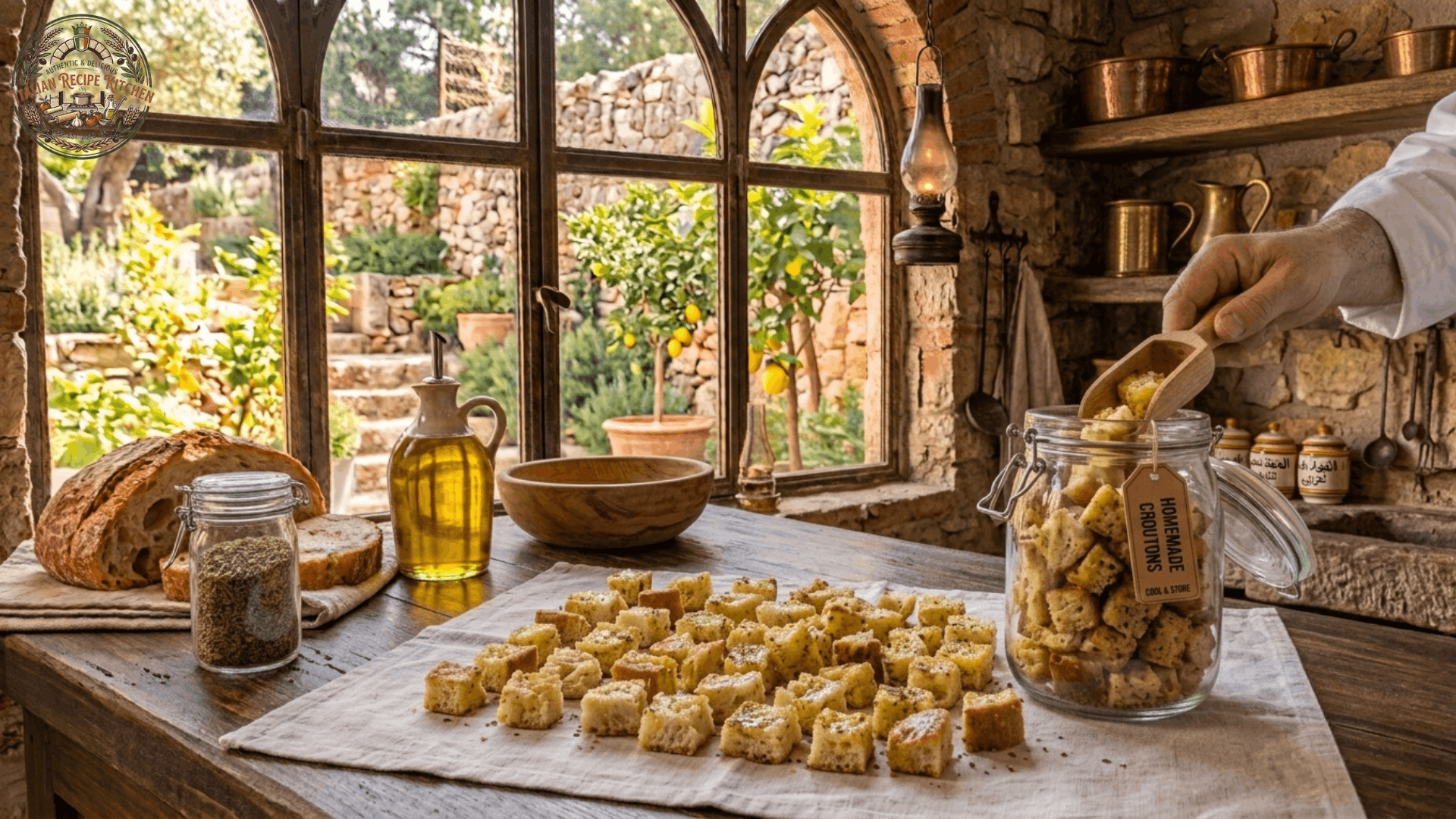
Let the croutons cool completely before serving or storing them in an airtight container to keep them fresh and crunchy.
Ingredients
- 4 to 6 cups bread, torn or cubed into bite-sized pieces
- 3 tablespoons olive oil or melted butter
- 1 to 2 cloves garlic, minced, or ½ teaspoon garlic powder
- ½ teaspoon salt
- ¼ teaspoon black pepper
- 1 teaspoon Italian seasoning or dried herbs, optional
- ¼ cup grated Parmesan, optional
Instructions
- Preheat the oven to 375°F and line a large baking sheet with parchment paper.
- Place the torn or cubed bread pieces into a large mixing bowl.
- Drizzle the olive oil or melted butter evenly over the bread, then sprinkle in the garlic, salt, pepper, and any herbs.
- Toss everything together gently until the bread is evenly coated.
- Spread the bread out in a single layer on the prepared baking sheet, making sure the pieces are not overlapping.
- Bake for 15 to 20 minutes, tossing halfway through, until the croutons turn golden brown and crisp on all sides.
- Remove from the oven and let the croutons cool completely before serving or storing.
Ways to Use Homemade Croutons
Once you have a batch ready, there are plenty of delicious ways to put them to use.
- Sprinkle over a classic Caesar salad or any leafy green salad.
- Float them on top of tomato soup, gazpacho, or minestrone.
- Mix into stuffing or holiday casseroles for extra texture.
- Crush them into fresh breadcrumbs for coating or topping other dishes.
- Enjoy them straight from the pan as a crunchy, savory snack.
What to Serve with Homemade Croutons
Croutons naturally pair with a wide range of dishes, making them a handy staple to keep on hand.
| Dish | Why Croutons Work Well |
| Caesar salad | The classic crunchy topping for creamy dressing |
| Tomato soup | Adds texture to a smooth, warm bowl |
| Grain bowls | Brings extra crunch to soft grains and greens |
| Roasted vegetable salads | Balances tender vegetables with crispness |
| Charcuterie boards | Works as a simple, crunchy snack alongside cheese |
How to Store Homemade Croutons
Proper storage keeps your croutons crisp and flavorful for as long as possible.
Let the croutons cool completely before storing, since trapping warm air can create moisture and softness. Store them in an airtight container or resealable bag at room temperature.
Olive oil-based croutons generally stay fresh for up to two weeks, while butter-based croutons are best used within about three to five days. If they ever lose some crunch, a quick few minutes back in a warm oven will crisp them right up again.
Final Thoughts
Homemade croutons are proof that a simple kitchen staple does not need to come from a bag. With just bread, oil or butter, and a few basic seasonings, you get a crunchy, flavorful topping that instantly upgrades salads, soups, and snacks.
Once you see how easy and affordable they are to make, store-bought croutons will feel completely unnecessary. Keep a batch on hand, and you will always have a simple way to use up leftover bread while adding great texture to your meals.
Frequently Asked Questions
What is the best bread to use for croutons?
Sturdy, crusty breads like sourdough, French bread, or ciabatta work best, since they crisp up without becoming too dense.
Should croutons be baked or pan-fried?
Baking is the easiest method and gives even, golden results, though pan-frying works too if you prefer a stovetop option.
How long do homemade croutons last?
Olive oil-based croutons can last up to two weeks, while butter-based versions are best eaten within three to five days.
Can I make croutons without an oven?
Yes, croutons can be pan-fried in a skillet with oil or butter over medium heat until golden and crisp.
Why are my croutons soggy instead of crunchy?
This usually happens from overcrowding the baking sheet or using bread that is too fresh, so spread pieces out and let stale bread work in your favor.
Can I use gluten-free bread for croutons?
Yes, gluten-free bread works well and follows the same method as regular bread.