

Traditional Caesar Dressing Recipe
Ingredients
Equipment
Method
- In a medium mixing bowl, combine the mayonnaise, Parmesan cheese, anchovies, garlic, lemon juice, Dijon mustard, Worcestershire sauce, and olive oil.
- Whisk until the dressing is smooth and creamy.
- Season with salt and black pepper.
- If the dressing is too thick, whisk in the cold water one tablespoon at a time until it reaches your desired consistency.
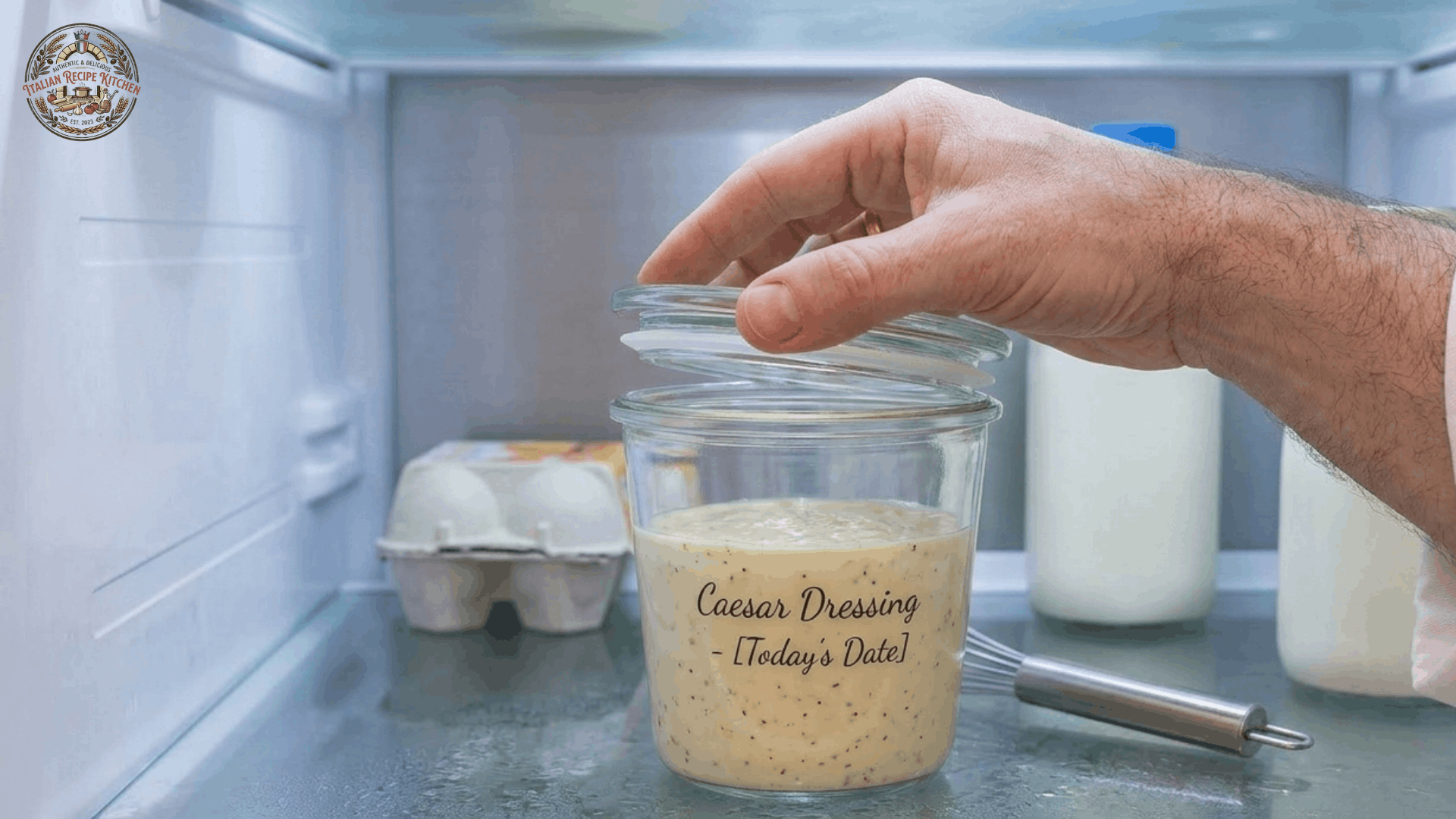
- Transfer the dressing to an airtight container.
- Refrigerate and let it rest for 30 minutes to allow the flavors to fully develop.
- Stir well before serving over Caesar salad, grilled chicken, wraps, or as a vegetable dip.
Notes
- Freshly grated Parmesan provides the best flavor and texture.
- Resting the dressing enhances the garlic and anchovy flavors.
- Store in the refrigerator for up to 4 days in an airtight container.
- Do not freeze, as dairy-based dressings may separate after thawing.
- For an authentic Caesar dressing, use anchovy fillets instead of anchovy paste whenever possible.
Bottled Caesar dressing always seems to fall short, tasting either too tangy, too thick, or oddly artificial compared to the version you get at a good restaurant. It is hard to recreate that rich, garlicky flavor from a jar off the shelf. Many store-bought options also contain preservatives and stabilizers that change the texture, making the dressing feel heavy instead of fresh and creamy.
While they may be convenient, they rarely capture the balanced flavor that makes a classic Caesar salad so memorable. This traditional Caesar dressing recipe brings that authentic steakhouse flavor right into your kitchen. With just a handful of classic ingredients and a little whisking, you get a creamy, tangy dressing that tastes far better than anything store-bought.
The combination of fresh garlic, Parmesan cheese, lemon juice, and anchovies creates a rich dressing that is both bold and balanced. Whether you are tossing it with crisp romaine lettuce, spreading it on a sandwich, or using it as a dip for vegetables, this homemade version is simple to prepare and delivers restaurant-quality results every time. If you enjoy bright, citrusy flavors, Creamy Lemon Sauce is another versatile recipe that pairs beautifully with pasta, chicken, and seafood.
A Quick Look at the Recipe
Before jumping into the full method, here is a quick snapshot of what this recipe involves.
- Prep time: 10 minutes
- Chill time: 15 minutes (optional)
- Total time: About 25 minutes
- Yield: About 1 cup of dressing
This recipe requires no cooking and comes together in one bowl, making it perfect for busy weeknights or when you need a quick homemade dressing for a fresh salad.
Why You Will Love This Homemade Caesar Dressing
This recipe has stood the test of time because it delivers bold, balanced flavor every single time you make it. Once you taste the fresh ingredients working together, it becomes difficult to go back to bottled dressing.
Another reason to love this recipe is how easy it is to customize. Add a little more lemon juice if you enjoy a brighter dressing, or increase the Parmesan for a richer finish. You can also adjust the garlic to suit your family’s taste. Beyond salads, this dressing works wonderfully as a sandwich spread, a dipping sauce for vegetables, or a flavorful drizzle over grilled chicken and roasted vegetables.
Ingredient Notes and Substitutions
Every ingredient in this dressing plays an important role, and knowing what each one does helps you get the flavor just right.
Egg yolks. Raw egg yolks help emulsify the oil into a thick, creamy texture. Using pasteurized eggs is recommended, since the yolks are not cooked in this recipe. They create the smooth consistency that gives Caesar dressing its signature richness.
Anchovies or anchovy paste. This is the ingredient that gives Caesar dressing its deep, savory flavor. Anchovy paste is easier to measure, though finely minced anchovy fillets work just as well. Even people who do not usually enjoy anchovies often love them in Caesar dressing because they blend into the background and provide umami rather than a fishy taste.
Garlic. Fresh garlic, minced or pressed into a paste, adds a sharp, aromatic bite. Reduce the amount slightly if you prefer a milder flavor, or add an extra clove if you enjoy a more pronounced garlic taste.
Lemon juice. Fresh lemon juice adds brightness and balances the richness of the oil and egg yolks. Bottled juice is not recommended, since the flavor is noticeably weaker and lacks the fresh citrus aroma.
Dijon mustard. Mustard helps bind the oil and egg together while adding a subtle tang. It plays a key role in keeping the dressing smooth and stable, making it easier to achieve a creamy consistency.
Parmesan cheese. Freshly grated Parmesan adds a salty, nutty depth. Pre-grated cheese tends to blend less smoothly, so grating your own cheese from a block produces the best texture and flavor.
Oil. A mix of good olive oil and a neutral oil, like avocado or vegetable oil, keeps the dressing rich without an overpowering olive taste. If you use only extra virgin olive oil, choose one with a mild flavor so it does not dominate the dressing.
Salt and black pepper. These simple seasonings help bring all the flavors together. Taste the dressing before adding extra salt because Parmesan cheese and anchovies already contribute natural saltiness.
Kitchen Equipment You Will Need
You do not need any special tools to make this dressing, just a few kitchen basics that most home cooks already have.
- A medium mixing bowl
- A sturdy whisk
- A garlic press or fine grater
- A citrus juicer
- Measuring cups and spoons
- A rubber spatula for scraping the bowl
- A small jar or airtight container for storage
Having everything prepared before you start makes the process smoother and helps the dressing come together without interruptions.
Step by Step: How to Make Traditional Caesar Dressing
This dressing comes together in just a few simple stages. Take your time, especially when adding the oil, since that step determines how creamy the final dressing turns out. Slow whisking creates a stable emulsion that gives the dressing its smooth, luxurious texture.
Step 1: Prepare the Garlic and Anchovies
Mince the garlic and anchovy fillets together with a small pinch of salt until they form a smooth paste. This helps the flavors blend evenly throughout the dressing instead of leaving larger pieces behind.
Taking a few extra minutes to create a fine paste makes a noticeable difference in the finished texture. The smoother the mixture, the more evenly the savory flavor spreads through every bite.

Step 2: Measure the Ingredients
Juice the lemon, grate the Parmesan cheese, and measure out the remaining ingredients before you begin. Having everything ready makes the dressing easier to prepare.
This simple preparation step allows you to focus on whisking without stopping to measure ingredients midway through the recipe. It also helps prevent mistakes and keeps the process quick and organized.

Step 3: Whisk the Base
In a medium bowl, whisk together the egg yolks and Dijon mustard until the mixture is smooth and slightly pale. Stir in the garlic and anchovy paste until fully combined.
Whisking thoroughly at this stage creates a stable base that will hold the oil properly. The mixture should look creamy before moving on to the next step.

Step 4: Add the Olive Oil
Slowly drizzle in the olive oil while whisking constantly. Start with just a few drops at a time, then gradually pour a thin stream once the dressing begins to thicken. This creates a smooth, creamy emulsion.
Patience is important here. Adding the oil too quickly is the most common reason homemade Caesar dressing separates. Steady whisking helps the oil blend smoothly with the egg yolks for a rich, velvety consistency.

Step 5: Finish the Dressing
Whisk in the fresh lemon juice, then add the grated Parmesan cheese. Mix until the dressing is smooth and creamy.
The lemon juice brightens the rich ingredients, while the Parmesan adds body and a delicious savory finish. Continue whisking until no lumps remain and the dressing has an even consistency.

Step 6: Adjust the Seasoning
Taste the dressing and season with salt, black pepper, or extra lemon juice if needed. If you prefer a thinner consistency, whisk in a teaspoon of water at a time until it reaches your desired texture.
Remember that the flavors will continue to develop as the dressing rests. It is usually better to make small adjustments rather than adding too much seasoning all at once.

Step 7: Chill and Store
For the best flavor, refrigerate the dressing for 15 minutes before serving. Chilling allows the garlic, Parmesan, anchovies, and lemon juice to blend into a more balanced dressing.
Transfer any leftovers to an airtight container and keep refrigerated. Because the dressing contains raw egg yolks, it should always be stored in the refrigerator and enjoyed within a few days. Before serving again, give it a quick whisk or stir, as slight separation is completely normal.
Best Ways to Use Caesar Dressing
While it is famous for classic Caesar salad, this dressing works well in several other dishes too. Its creamy texture and bold, savory flavor make it a versatile addition to many meals. Once you have a batch ready in the refrigerator, you will probably find yourself reaching for it far more often than you expected.
| Dish | Why It Works |
|---|---|
| Classic Caesar salad | The traditional pairing with crisp romaine lettuce, crunchy croutons, and freshly grated Parmesan cheese. |
| Grilled chicken sandwiches | Adds a creamy, tangy layer of flavor that pairs perfectly with juicy chicken. |
| Roasted vegetables | Works as a rich drizzle over broccoli, asparagus, Brussels sprouts, or roasted potatoes. |
| Grain bowls | Brings bold flavor to quinoa, rice, or farro bowls filled with fresh vegetables. |
| Dipping sauce | Pairs well with crispy chicken tenders, fries, roasted potatoes, or fresh vegetables. |
You can also spread it on wraps, burgers, or turkey sandwiches instead of mayonnaise for extra flavor. It even makes a delicious topping for grilled shrimp or salmon, adding richness without overpowering the main ingredients.
Storage Tips
Because this dressing contains raw egg yolks, proper storage really matters for both safety and flavor.
Store the dressing in an airtight container or a tightly sealed glass jar in the refrigerator as soon as you finish making it. Keeping the container sealed helps preserve its freshness and prevents it from absorbing odors from other foods.
For the best quality, use the dressing within three to four days. Homemade Caesar dressing does not contain preservatives, so it has a shorter shelf life than bottled varieties.
Before each use, give the dressing a good stir or whisk since natural separation can happen over time. This is completely normal and does not affect the quality.
Pro Tips for the Best Results
A few small habits can make a big difference in how smooth and flavorful your dressing turns out.
Add the oil slowly, especially at the beginning, since rushing this step is the top reason homemade dressings separate. A slow, steady stream allows the egg yolks to properly emulsify the oil, creating the rich, creamy texture that makes Caesar dressing so satisfying.
If you prefer not to use raw egg, pasteurized eggs are a safer substitute while still producing the classic creamy consistency. You can also use a small food processor or immersion blender instead of whisking by hand if you want an even quicker preparation.
Finally, always taste the dressing before serving. Parmesan cheese, anchovies, and lemons can vary slightly in flavor, so making small adjustments at the end helps you achieve the perfect balance.
Final Thoughts
This traditional Caesar dressing proves that homemade truly does taste better than anything from a bottle. With simple ingredients like garlic, anchovies, egg yolks, lemon juice, and Parmesan cheese, you can create a rich, creamy, and tangy dressing that instantly elevates salads and many other dishes.
Once you master this recipe, it is easy to customize it to your own preferences by adjusting the garlic, lemon juice, or Parmesan. Keep a jar in your refrigerator for salads, sandwiches, wraps, grain bowls, or as a flavorful dip whenever you want something fresh and homemade.
Frequently Asked Questions
Is it safe to use raw egg yolks in Caesar dressing?
Using pasteurized eggs is the safest option, since the yolks in this recipe are not cooked before serving. They provide the same creamy texture while reducing food safety concerns.
Why did my Caesar dressing separate or break?
This usually happens when the oil is added too quickly. Drizzle it in slowly while whisking constantly to create a stable emulsion and a smooth, creamy dressing.
Can I make Caesar dressing without anchovies?
Yes. A teaspoon of fish sauce or Worcestershire sauce can provide a similar savory, umami flavor if you do not have anchovies on hand. The taste will be slightly different but still delicious.
How long does homemade Caesar dressing last?
When stored in an airtight container in the refrigerator, homemade Caesar dressing stays fresh for about three to four days. Stir it well before each use.
Can I make this dressing without raw eggs?
Yes. Mayonnaise can replace the raw egg yolks for a similar creamy texture while eliminating concerns about using uncooked eggs.
What is the best oil to use for Caesar dressing?
A combination of olive oil and a neutral oil, such as avocado or vegetable oil, provides the best balance of flavor and creaminess. Using only strong extra virgin olive oil can sometimes make the dressing taste slightly bitter.