
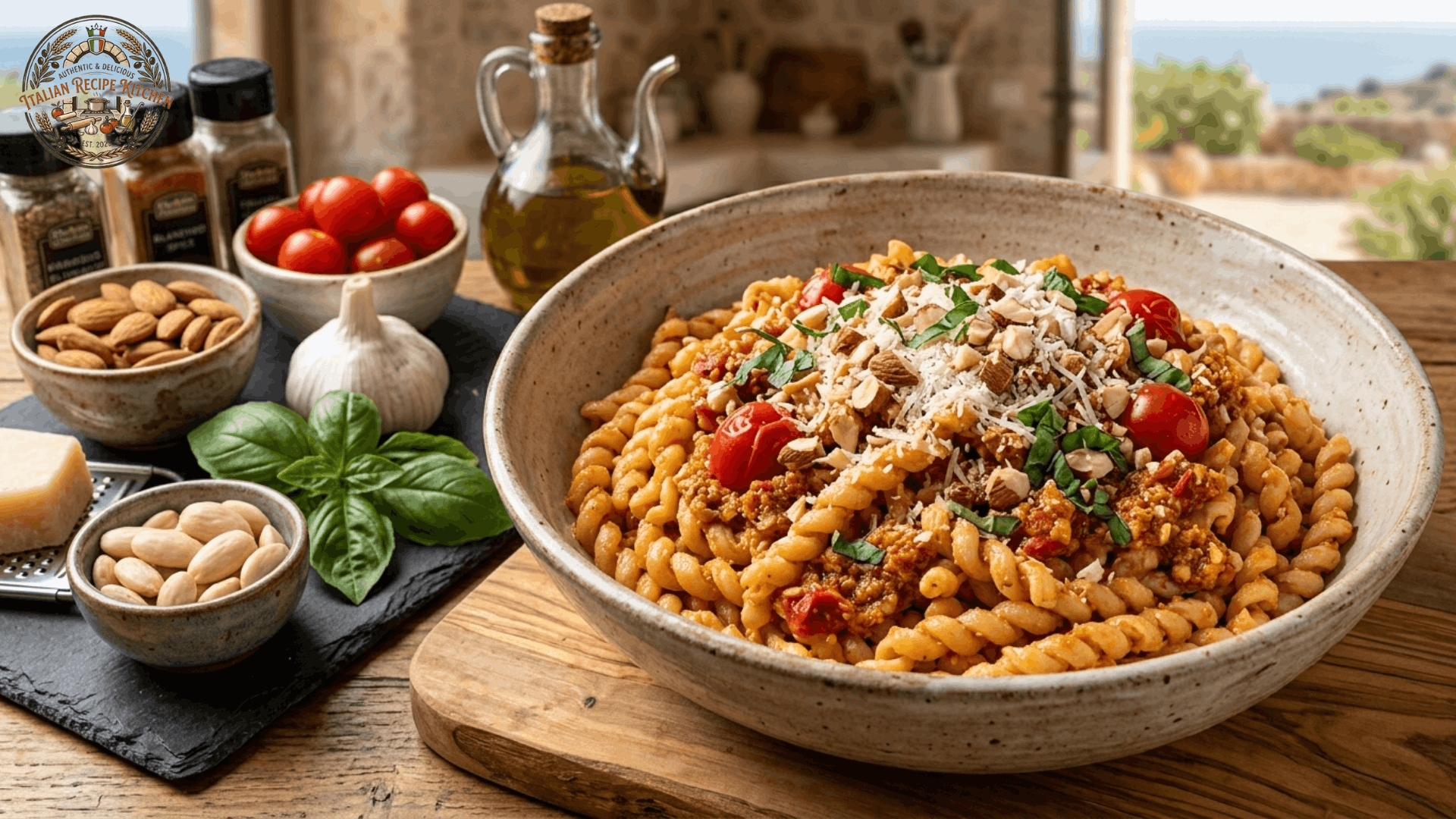
Busiate with Trapanese Pesto
Ingredients
Equipment
Method
- Bring a large pot of generously salted water to a boil.
- Cook the busiate pasta according to the package directions until al dente.
- While the pasta cooks, add the tomatoes, almonds, basil, garlic, Pecorino Romano, olive oil, lemon juice (if using), salt, and pepper to a food processor.
- Pulse until a slightly chunky pesto forms. Do not over-process.
- Let the pesto rest for 10 minutes so the flavors can blend.
- Reserve ½ cup of the pasta water, then drain the pasta.
- Transfer the hot pasta to a large mixing bowl.
- Add the Trapanese pesto and toss gently until the pasta is evenly coated.
- Add a splash of reserved pasta water if needed to loosen the sauce.
- Garnish with extra Pecorino Romano and fresh basil.
- Serve immediately while warm.
Notes
- Use the ripest tomatoes for the sweetest, most authentic flavor.
- Avoid heating the pesto directly to preserve its fresh taste.
- Toast the almonds lightly for a deeper nutty flavor.
- Substitute casarecce or fusilli if busiate is unavailable.
- Store leftover pesto in the refrigerator for up to 3 days.
Most people know only one kind of pesto, the bright green Genovese version made with basil and pine nuts. It is delicious, but it represents just one small corner of Italy’s pesto tradition.
Artichoke Pesto Pasta is a delicious Italian favorite, but Busiate with Trapanese Pesto from western Sicily is something else entirely. It is rustic, red, and made with fresh tomatoes, toasted almonds, basil, garlic, and good olive oil. Served over bucatini, the spiral-corkscrew pasta that is practically a symbol of Trapani, it is one of the most satisfying summer pasta dishes you will ever make.
The best part is that the sauce requires zero cooking. Everything comes together in a mortar and pestle or food processor in minutes, then gets tossed with hot pasta for a complete meal in under 30 minutes. Here is everything you need to make it well.
Busiate with Trapanese Pesto (Authentic Sicilian Pasta Recipe)
Fresh tomatoes, toasted almonds, fragrant basil, garlic, and extra virgin olive oil come together to create one of Sicily’s most beloved pasta dishes. Busiate with Trapanese Pesto is a simple yet flavorful recipe that celebrates the fresh ingredients and rustic traditions of western Sicily.
Unlike the famous green pesto from Genoa, Pesto alla Trapanese has a rich red color thanks to ripe tomatoes and almonds. The sauce requires no cooking, making it one of the easiest authentic Italian pasta recipes to prepare during the warmer months.
Traditionally served with busiate, a spiral-shaped pasta that captures every bit of the chunky pesto, this dish delivers restaurant-quality flavor in less than 30 minutes. Whether you’re looking for a quick weeknight dinner or want to explore regional Italian cuisine, this recipe is a delicious place to start, just like Easy Creamy Orzo with Spinach and Lemon for a fast and satisfying homemade meal.
The History Behind Trapanese Pesto
The story of Pesto alla Trapanese reflects Sicily’s long history as a crossroads of Mediterranean cultures.
During the Middle Ages, Arab traders introduced almonds to Sicily, where they quickly became an important ingredient in local cooking. Around the same time, Genoese sailors regularly visited the busy port of Trapani while traveling through the Mediterranean.
Inspired by the famous Ligurian basil pesto, the people of Trapani adapted the recipe, using ingredients abundant in their region. They replaced expensive pine nuts with locally grown almonds and added ripe tomatoes, giving the sauce its distinctive color and sweeter flavor.
The result was Pesto alla Trapanese—a rustic tomato and almond pesto that has remained a staple of Sicilian cuisine for centuries.
Together, busiate and Trapanese pesto form one of the most iconic regional dishes in Italy.
Why This Recipe
This dish gives you genuine Italian regional flavor with a very short ingredient list and almost no active cooking time. It is one of those recipes that rewards you far more than the effort you put in.
- No cooking required for the sauce, which makes it ideal for summer
- Comes together in under 30 minutes start to finish
- Costs significantly less than classic Genovese pesto, since almonds replace pine nuts
- Naturally vegan if you skip the cheese or serve it on the side
Ingredient Notes and Substitutions
Each ingredient in this pesto serves a specific purpose, and a few small choices can change the final flavor noticeably. Here is what to know before you start.
- Fresh tomatoes: Cherry or grape tomatoes are ideal since they are sweeter and less watery than large varieties. Roma tomatoes also work well.
- Almonds: Use blanched, slivered, or toasted whole almonds. Toasting them first deepens their nutty flavor significantly.
- Basil: Fresh basil leaves are essential. Dried basil cannot replace the bright, herbal character that fresh basil brings.
- Garlic: One or two cloves is enough. Raw garlic in a no-cook sauce is sharp, so do not overdo it.
- Pecorino Romano: This is the traditional cheese. Parmesan works as a substitute, though the flavor will be slightly less sharp.
- Extra virgin olive oil: Use the best quality you have, since it is a primary flavor in this sauce.
| Original Ingredient | Substitute | Notes |
|---|---|---|
| Busiate pasta | Fusilli, rotini, or spaghetti | Short shapes hold the sauce best |
| Almonds | Pine nuts or pistachios | Pine nuts are more traditional in Genoa; pistachios add a Sicilian twist |
| Pecorino Romano | Parmesan | Parmesan is milder and less sharp |
| Cherry tomatoes | Roma or vine tomatoes | Use the sweetest, ripest tomatoes available |
Recipe Variations
Once you know the base recipe, Trapanese pesto is easy to adapt. Here are some popular variations that cooks in Sicily and beyond often try.
- Add a pinch of red pepper flakes for gentle heat, which is a common Sicilian touch
- Use mint leaves in place of some of the basil for a slightly cooler, more refreshing flavor
- Stir in a spoonful of ricotta for a creamier, richer version of the sauce
- Add tinned tuna or grated bottarga for a briny, coastal character that is traditional in parts of Trapani
- Skip the cheese entirely to make the dish fully vegan
Here is that section reformatted with individual step headings:
Step-by-Step: How to Make Trapanese Pesto with Busiate
This recipe moves quickly, so start the pasta water before you begin the pesto. Both will be ready at about the same time.
Step 1: Bring the Pasta Water to a Boil
Fill a large pot with water and bring it to a rolling boil. Add a generous amount of salt—the water should taste slightly salty like the sea. Properly seasoned pasta water is one of the secrets to authentic Italian cooking. While the water is heating, prepare the pesto ingredients.
Place the almonds in a dry skillet over medium heat. Toast for 3–4 minutes, stirring frequently, until they become lightly golden and fragrant. Remove them from the pan immediately and allow them to cool completely.
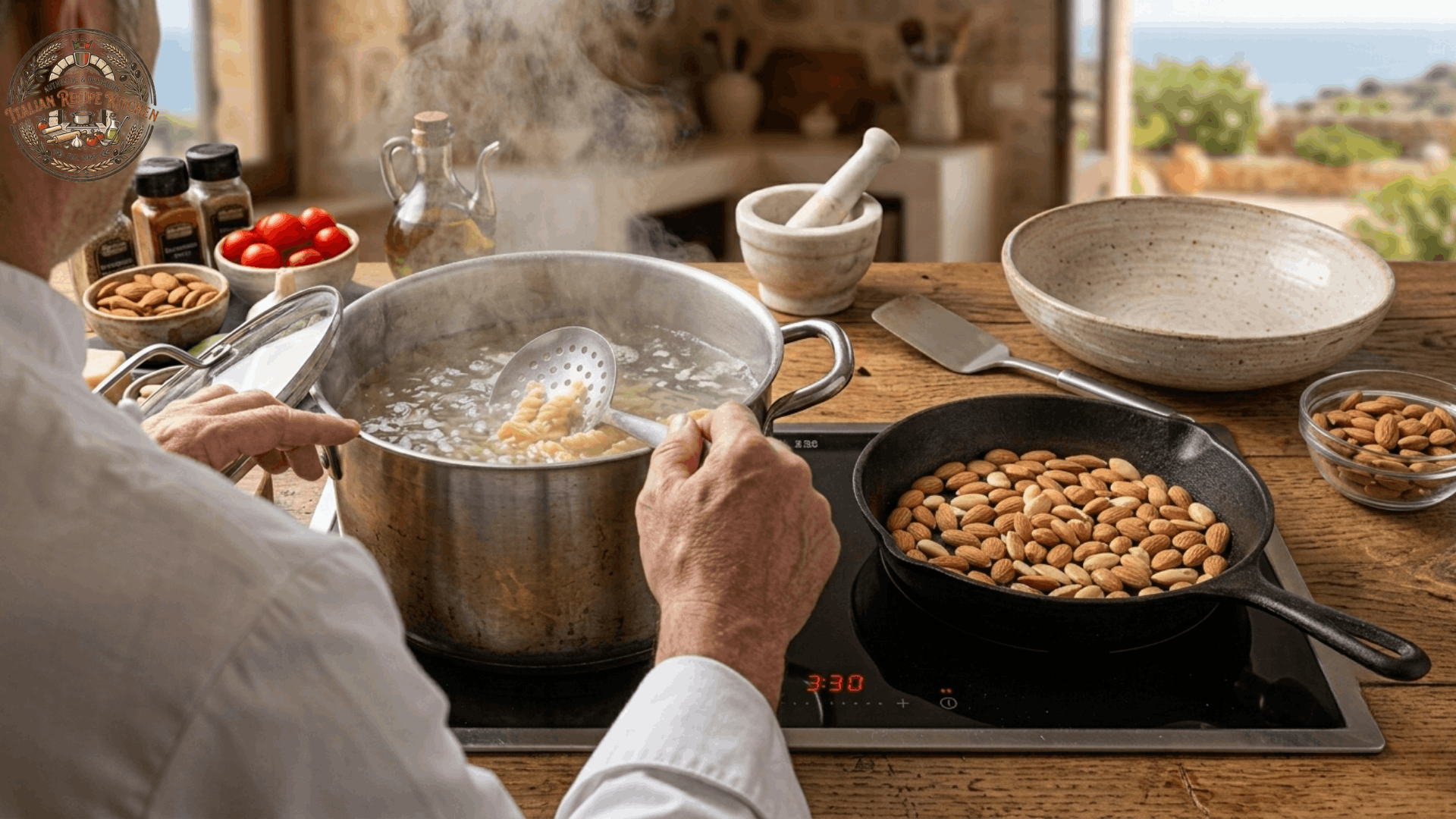
Pro Tip: Avoid over-toasting the almonds, as burnt almonds can make the pesto bitter.
Step 3: Prepare the Tomatoes
Wash and halve the cherry tomatoes. If they’re especially juicy, gently squeeze out some of the seeds to prevent the pesto from becoming watery. Using ripe, sweet tomatoes makes a noticeable difference in the final flavor.
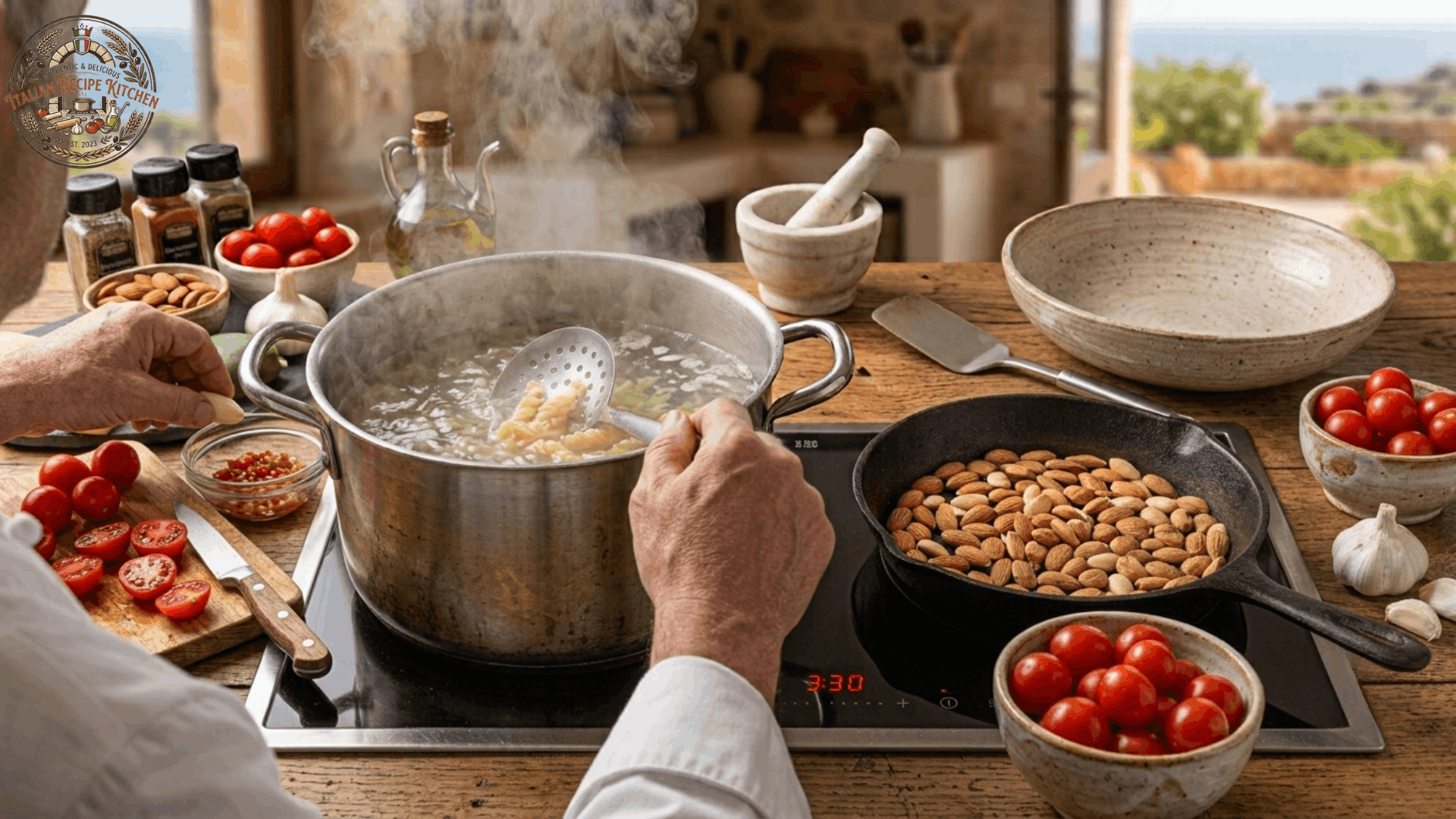
Step 4: Make the Trapanese Pesto
In a food processor (or a traditional mortar and pestle), combine:
- Cherry tomatoes
- Garlic
- A pinch of salt
Pulse until roughly chopped.
Add:
- Toasted almonds
- Fresh basil leaves
Pulse a few more times until the mixture is coarse and rustic. Slowly drizzle in the extra virgin olive oil while pulsing. Finally, stir in the grated Pecorino Romano and season with freshly ground black pepper. The pesto should remain slightly chunky rather than completely smooth.
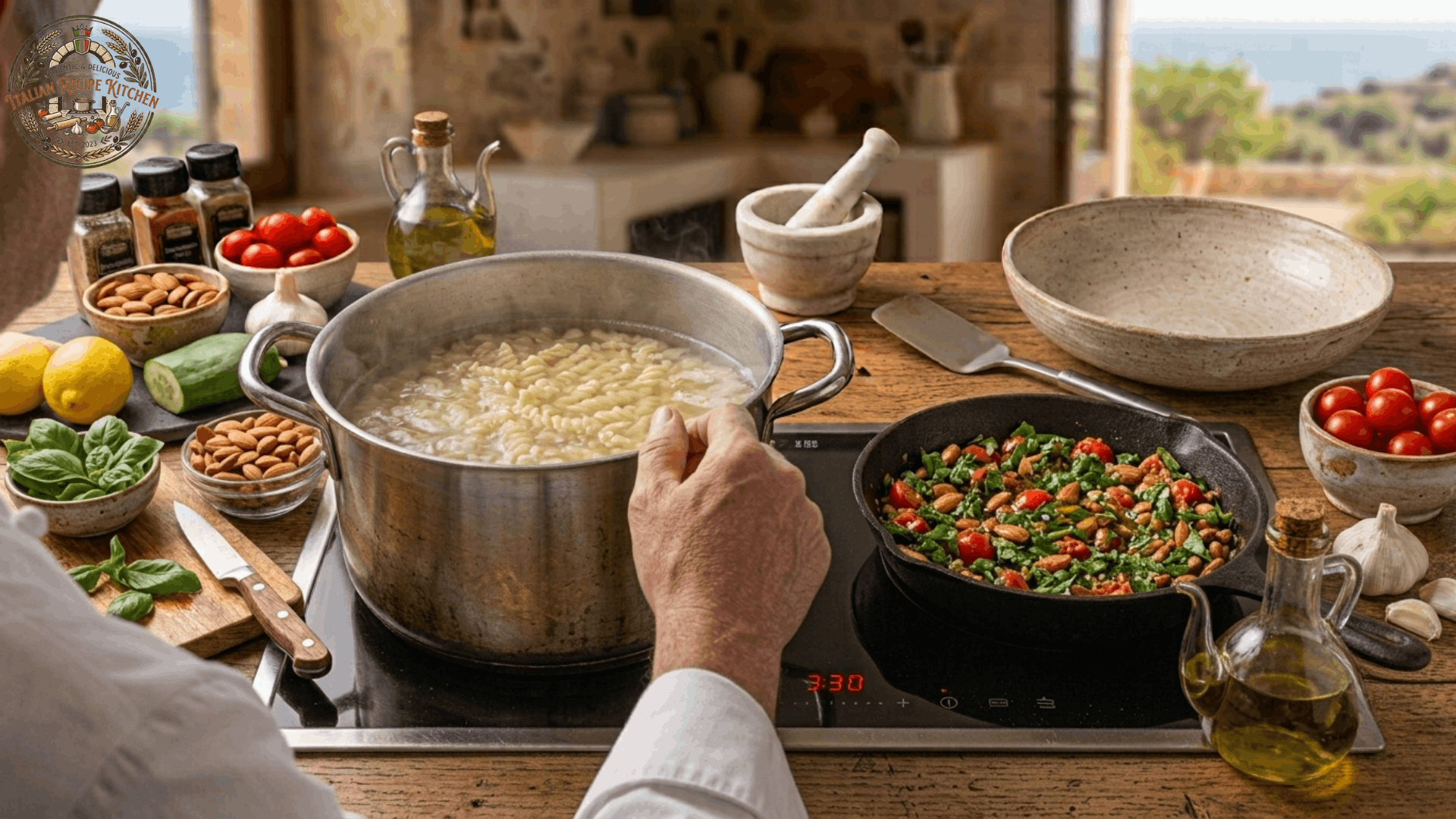
Step 5: Cook the Busiate
Add the busiate pasta to the boiling water. Cook according to the package instructions until al dente, usually about 10–12 minutes. The pasta should still have a slight bite in the center.
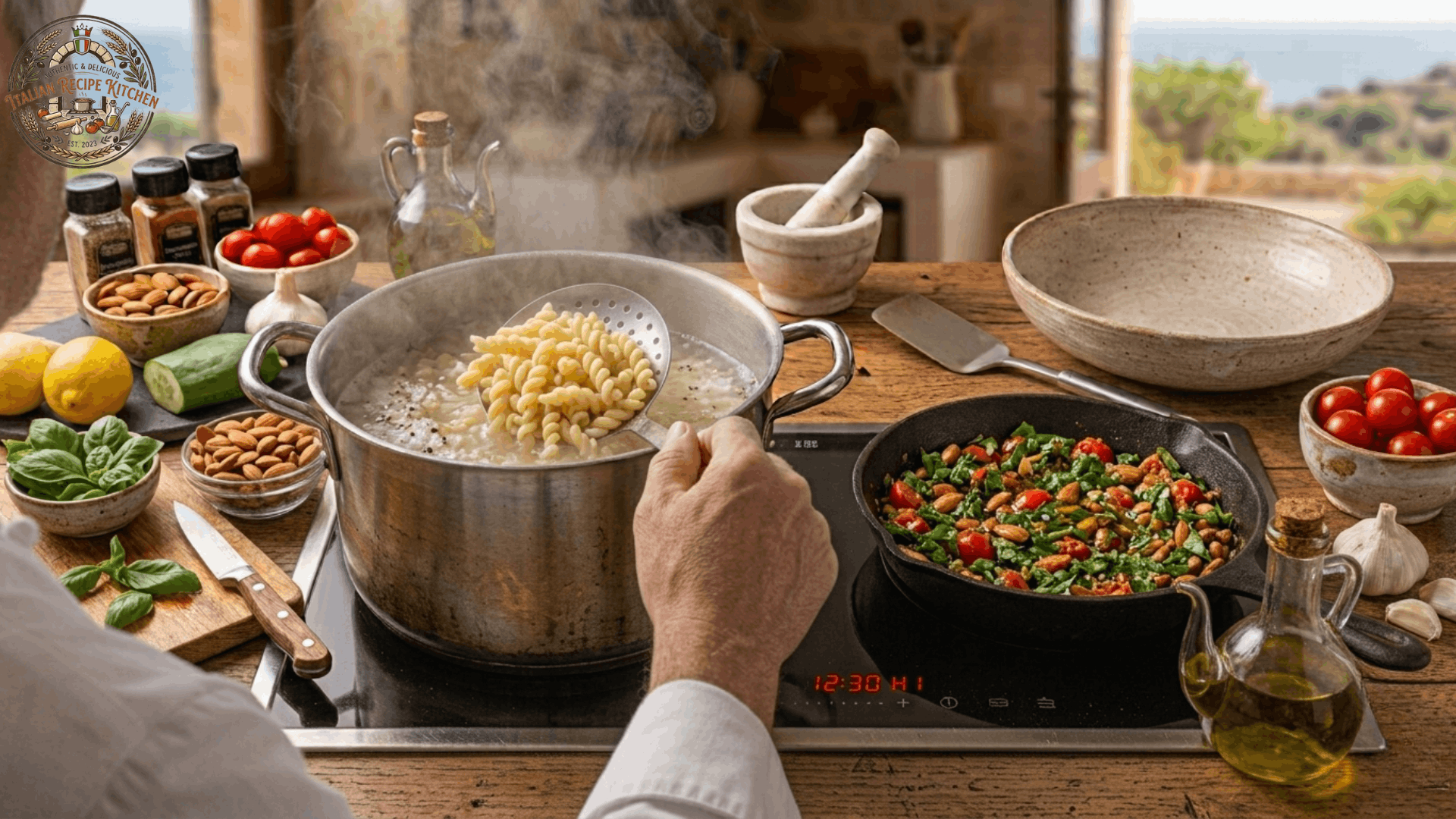
Step 6: Reserve the Pasta Water
Before draining the pasta, reserve 1 cup (240 ml) of the starchy pasta water. This simple step helps emulsify the pesto and creates a silky sauce that coats every piece of pasta. Drain the pasta immediately.
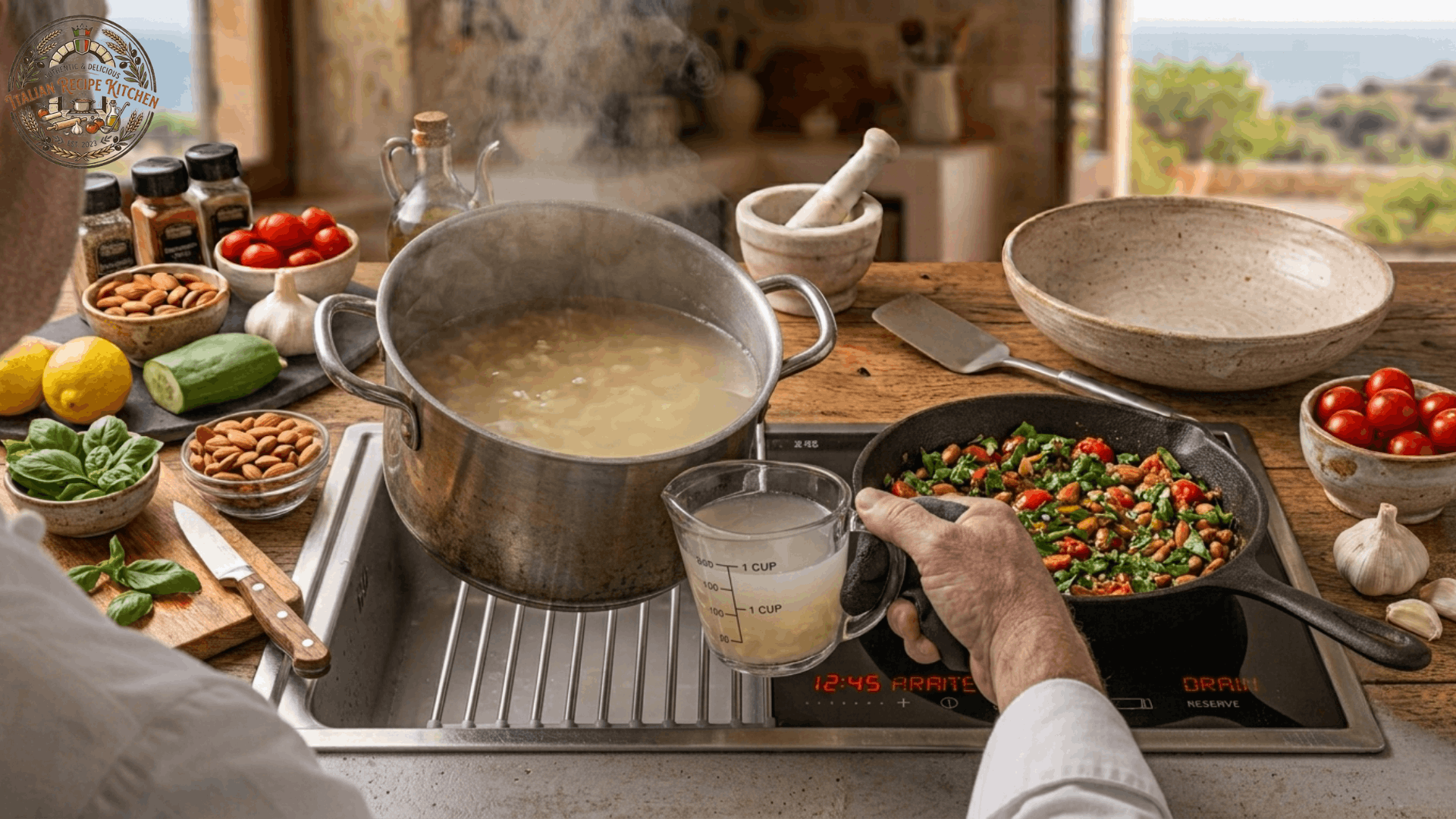
Step 7: Combine Everything
Return the hot pasta to the pot or transfer it to a large mixing bowl. Add the Trapanese pesto and gently toss until every piece of pasta is coated. If the sauce seems thick, add the reserved pasta water a tablespoon at a time until it reaches a creamy consistency. Avoid cooking the pesto over direct heat, as this can dull the fresh basil and tomato flavors.
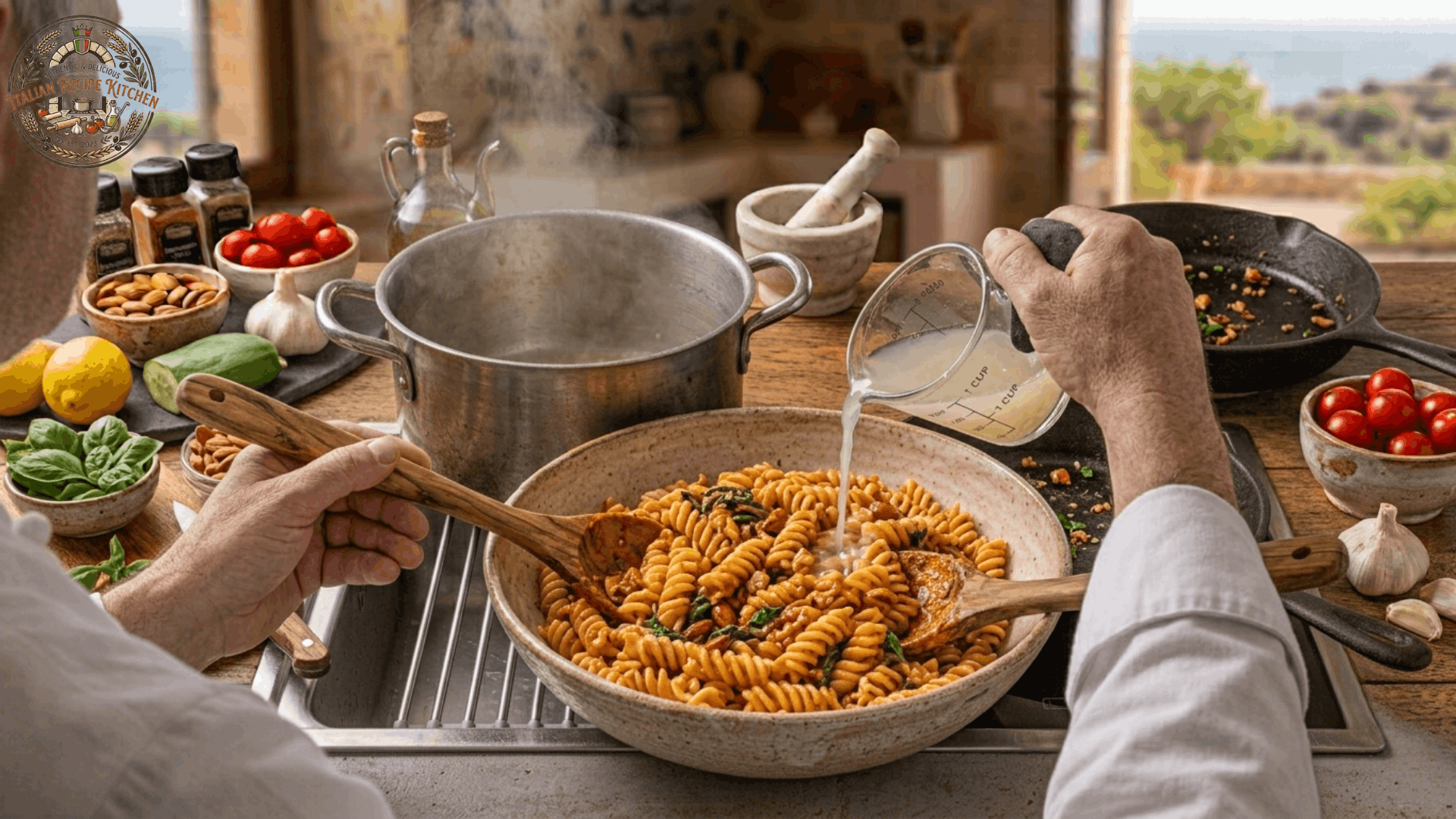
Step 8: Garnish and Serve
Serve immediately while warm.
Top with:
- Extra grated Pecorino Romano
- Fresh basil leaves
- A drizzle of extra virgin olive oil
- Freshly cracked black pepper
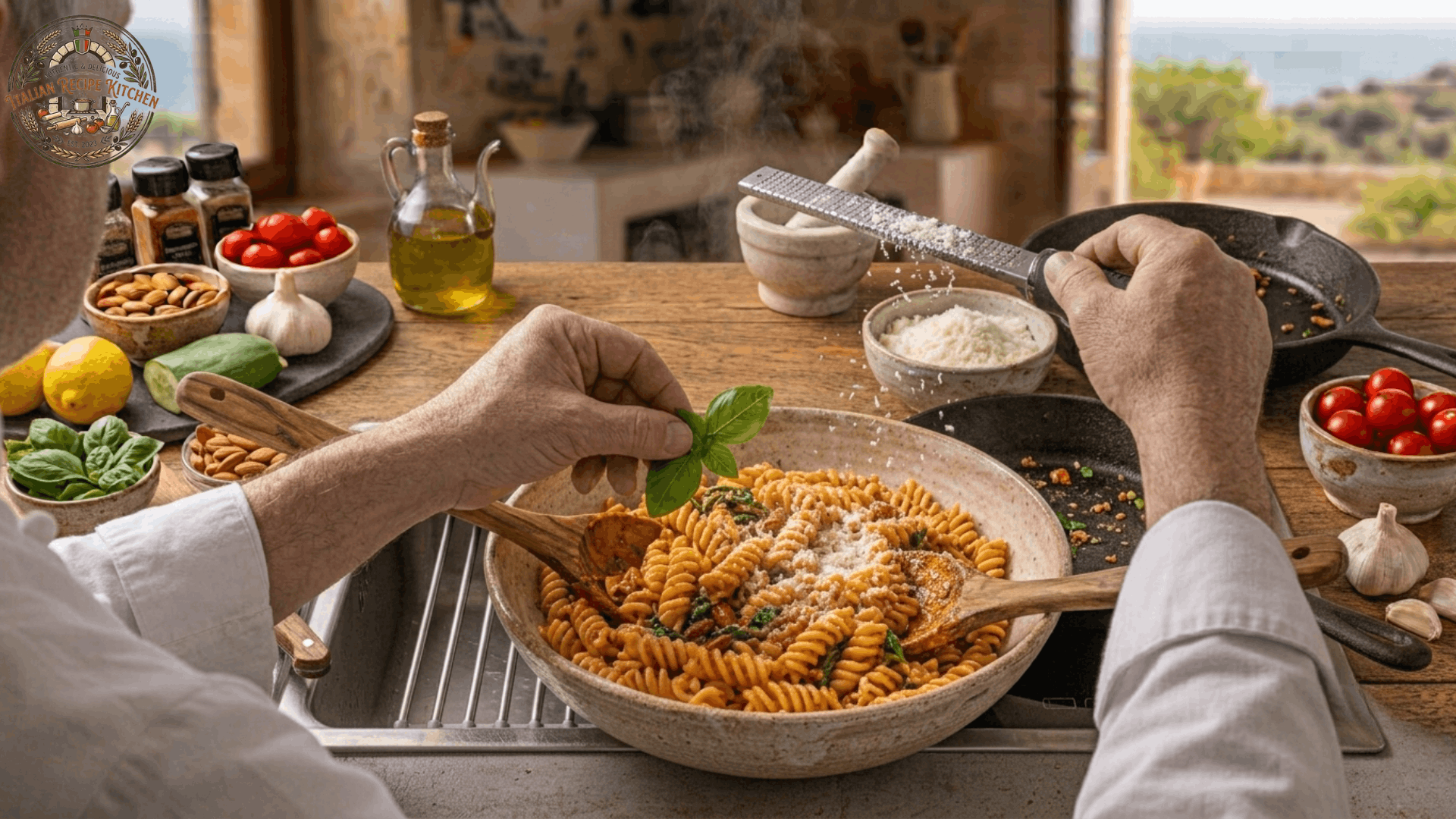
For an authentic Sicilian touch, sprinkle a few chopped toasted almonds over the top for extra crunch.
Pro Tips
A few details separate a good Trapanese pesto from a genuinely great one. Keep these in mind every time you make it.
- Use the ripest, sweetest tomatoes you can find, since underripe tomatoes make the pesto taste flat and sharp
- Do not overblend the pesto, since a slightly chunky texture is part of its rustic character
- Always reserve pasta water before draining, since its starch helps the pesto cling to the noodles
- Toss the pasta with the pesto in the same hot pot you cooked it in, which helps the sauce melt into the noodles evenly
How to Serve Trapanese Pesto
This pesto is most traditionally served over busiate pasta, either warm as a main course or at room temperature as a cold pasta salad. Both work beautifully.
- Serve warm, tossed with freshly cooked busiate and a handful of extra Pecorino
- Serve cold as a summer pasta salad with chopped fresh tomatoes on top
- Use as a sauce for grilled fish or roasted vegetables as an alternative to pasta
- Spread on crostini as a fresh, rustic appetizer
Equipment
You do not need much to make this dish. A mortar and pestle gives the most traditional texture, but a food processor works just as well and is much faster.
- Large pot for boiling the pasta
- Mortar and pestle, or a food processor
- Large mixing bowl for tossing the pasta with the sauce
- Ladle or measuring cup for scooping pasta water
Busiate with Trapanese Pesto Recipe Card
Ingredients
- 500 g busiate pasta (or fusilli as a substitute)
- 300 g cherry tomatoes
- 80 g blanched or slivered almonds, lightly toasted
- 1 large clove garlic
- 20 g fresh basil leaves (about a generous handful)
- 3 tablespoons extra virgin olive oil
- 3 tablespoons grated Pecorino Romano, plus more to serve
- Salt and black pepper, to taste
Instructions
- Bring a large pot of heavily salted water to a boil.
- Toast the almonds in a dry pan for 3 to 4 minutes until golden. Let them cool.
- Halve the cherry tomatoes and place them in the food processor with the garlic and a pinch of salt. Pulse until roughly broken down.
- Add the basil and almonds, then pulse again until the mixture is chunky but mostly blended.
- Drizzle in the olive oil and pulse briefly to incorporate. Stir in the Pecorino and taste for seasoning.
- Cook the busiate until al dente, then reserve a cup of pasta water before draining.
- Toss the hot drained pasta with the pesto in a large bowl, adding pasta water as needed.
- Serve immediately with extra Pecorino and fresh basil on top.
Notes
The pesto can be made ahead and stored in an airtight container in the fridge for up to 5 days. Press a layer of olive oil on top before sealing to help preserve the color. It also freezes well in small portions for up to 2 months.
Nutrition
| Nutrient | Amount per Serving |
|---|---|
| Calories | 345 kcal |
| Protein | 10 g |
| Carbohydrates | 47 g |
| Fat | 13 g |
| Fiber | 4 g |
| Sodium | 390 mg |
Final Thoughts
Busiate with Trapanese pesto is proof that great Italian cooking is not always about complexity. A handful of fresh, quality ingredients, a little pounding or pulsing, and hot pasta are all you need to bring a centuries-old Sicilian dish to your table. If you enjoy bold Mediterranean flavors, Artichoke Pesto Pasta is another delicious pesto-based recipe worth trying.
This is a recipe worth making all summer long, when tomatoes are at their sweetest and basil is most fragrant. Once you taste the difference between this rustic red pesto and the jarred green version, it is hard to go back.
FAQs
What is Trapanese pesto made of?
It is made with fresh tomatoes, almonds, basil, garlic, olive oil, and Pecorino Romano cheese, all blended into a rustic sauce.
What pasta is traditionally used with Trapanese pesto?
Busiate, a spiral corkscrew pasta from western Sicily, is the traditional pairing for this sauce.
Can I use pine nuts instead of almonds?
Yes, pine nuts work as a substitute, though almonds are more traditional and considerably less expensive.
Is Trapanese pesto served hot or cold?
It can be served either way. Warm over freshly cooked pasta is the most common preparation, though cold pasta salad is also traditional.
How long does Trapanese pesto keep in the fridge?
Stored in an airtight container with a layer of olive oil on top, it keeps for up to 5 to 7 days in the fridge.
Can I make busiate pasta at home?
Yes, busiate are made from just semolina flour and water, shaped by rolling small pieces of dough around a knitting needle or thin rod.