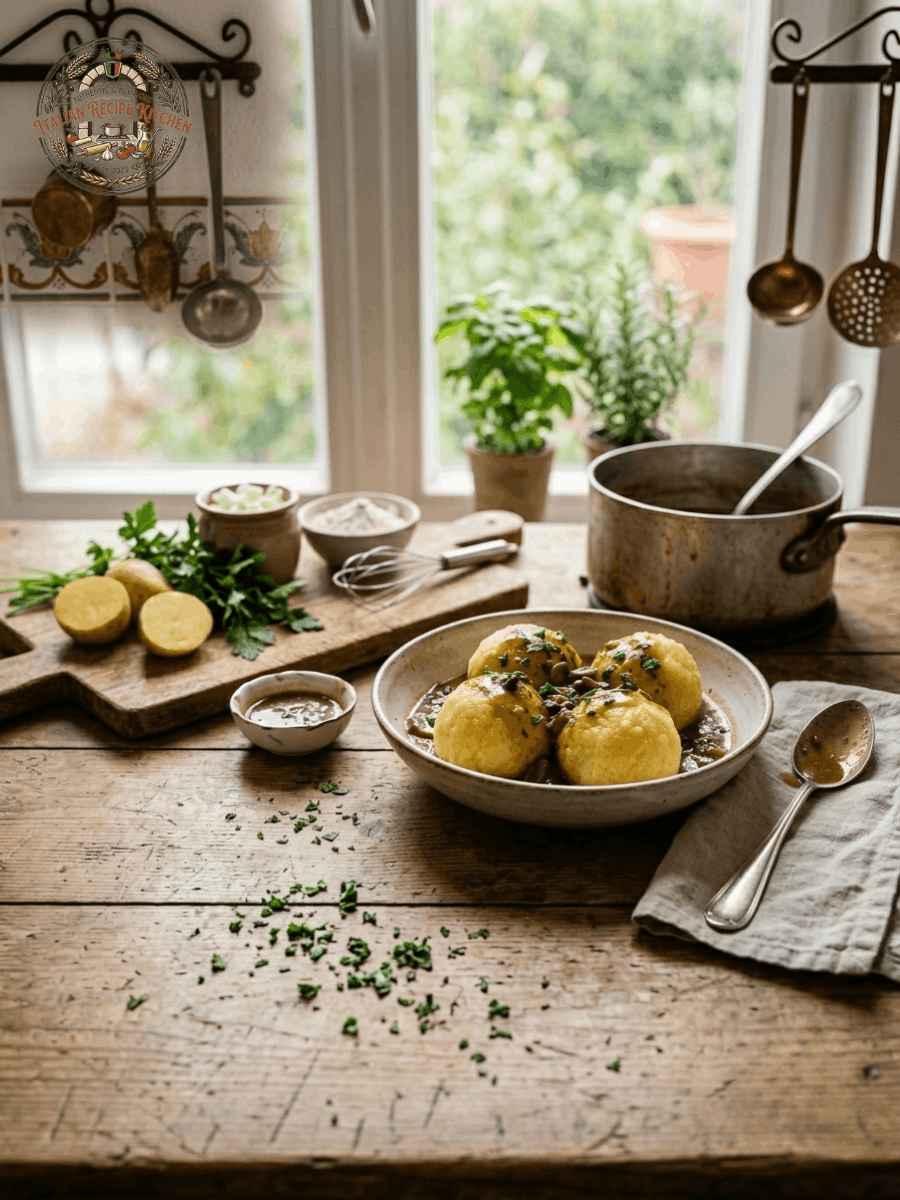
Knödel Recipe
Ingredients
Equipment
Method
- Place the bread cubes in a large mixing bowl.
- Warm the milk in a saucepan until hot but not boiling.
- Pour the warm milk over the bread cubes and gently toss.
- Cover and let the bread rest for 15 minutes to soften.
- Meanwhile, melt the butter in a small skillet and sauté the onion until soft and translucent, about 5 minutes.
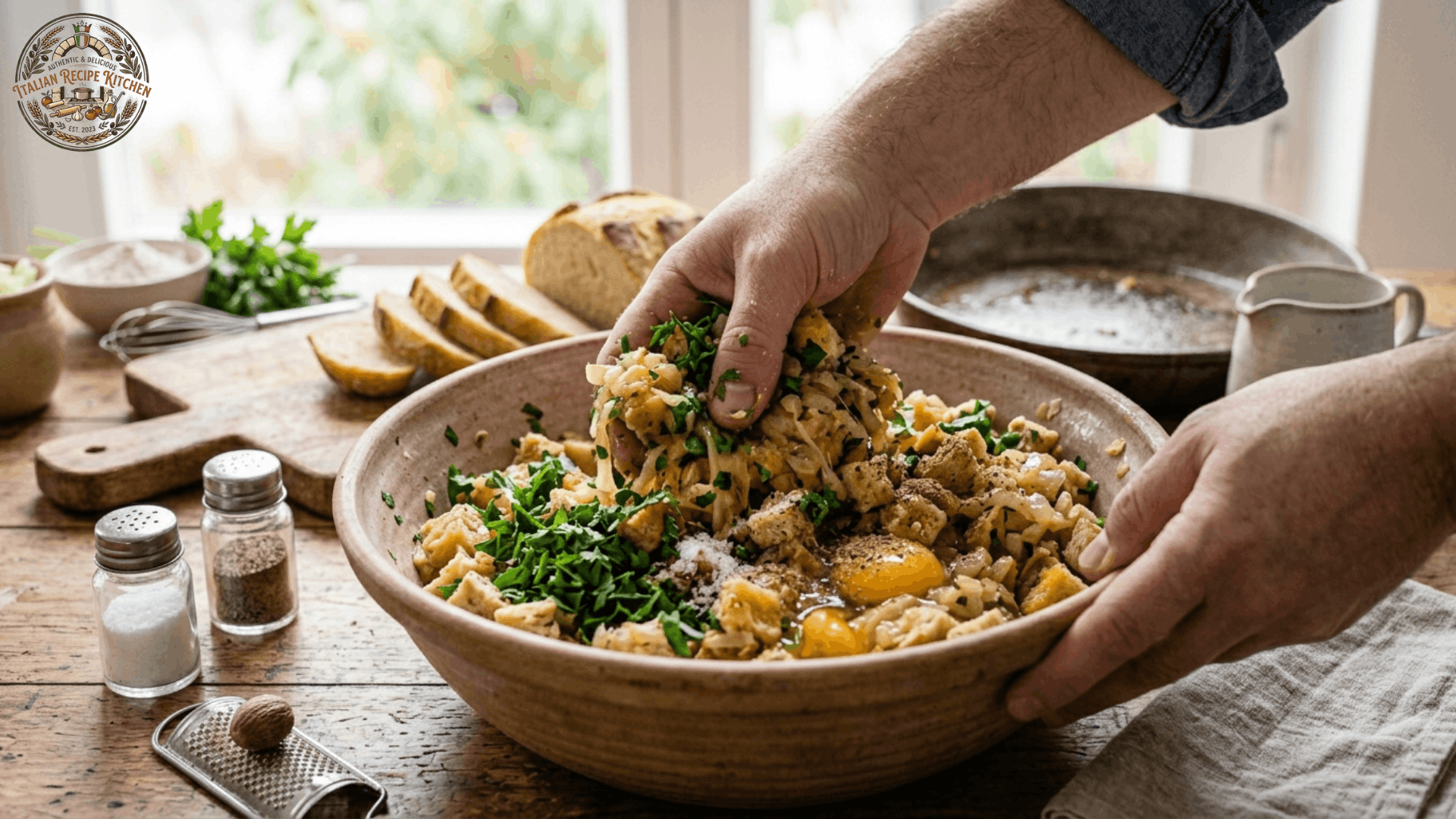
- Add the cooked onion, eggs, parsley, salt, pepper, and nutmeg to the bread mixture.
- Mix gently until everything is evenly combined. Add a little flour if the mixture feels too wet.
- Cover and let the mixture rest for another 15 minutes so it holds together better.
- Bring a large pot of lightly salted water to a gentle simmer. Do not let it boil rapidly.
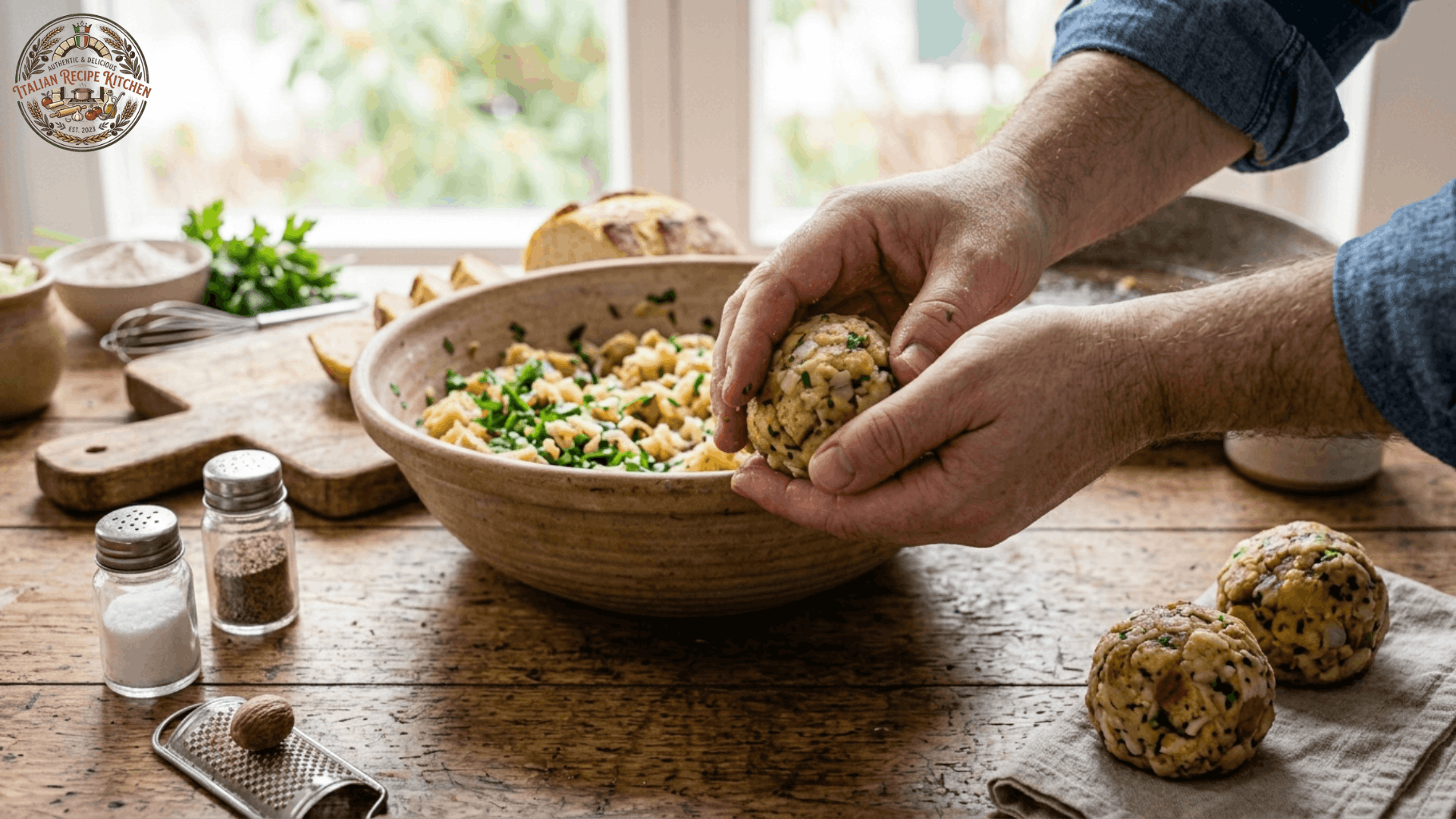
- Shape the mixture into 12 evenly sized dumplings.
- Carefully lower the dumplings into the simmering water.
- Cook for 18–20 minutes, or until they float and are firm.
- Remove with a slotted spoon and drain briefly.
- Garnish with chopped parsley and serve warm with gravy, roasted meats, mushroom sauce, or goulash.
Notes
- Use day-old bread for the best texture.
- Keep the water at a gentle simmer to prevent the dumplings from falling apart.
- If the mixture is too dry, add a splash of milk. If too wet, add a little flour.
- Leftover Knödel can be sliced and pan-fried in butter until golden.
- Refrigerate leftovers for up to 3 days.
Do you always end up with a half loaf of stale bread that nobody wants to eat? Most people just toss it in the bin. In Bavaria, that same stale bread becomes the star of one of the coziest comfort foods in Europe: Semmelknödel.
These soft, fluffy bread dumplings turn leftover bread into something warm and satisfying. Once you learn the simple method, you will never look at old bread the same way again. This guide walks you through everything, from the right bread to use to how to freeze your dumplings for later. They also make a comforting side dish to serve alongside Sausage and Cheese Quiche for a hearty meal.
Knödel: From Italian Canederli to Bavarian Semmelknödel
Knödel is simply the German word for dumpling, and this style of dumpling travels far beyond Germany. In northern Italy, especially in South Tyrol, the same idea appears as Canederli, made with almost identical ingredients.
Both dishes use stale bread, milk, and eggs to form a soft ball that gets simmered until tender. The main difference is regional flavoring. Italian Canederli often include speck or cheese, while the German version leans on parsley, onion, and nutmeg.
Semmelknödel: Germany’s Classic Bread Dumplings
Semmelknödel are the most popular version of Knödel found across Bavaria and Austria. The name comes from “Semmel,” meaning bread roll, so the dish literally translates to bread roll dumplings.
They are known for soaking up gravy like a sponge, which is exactly why people love serving them with rich, saucy meals. They also pair wonderfully with a Ricotta Bruschetta Recipe as part of a comforting Italian-inspired spread. Once you try one, you will understand why this dish has stayed a family favorite for generations.
What Are Semmelknödel Exactly?
Semmelknödel are soft dumplings made from stale bread cubes, milk, eggs, and a few simple seasonings. The mixture gets shaped into balls and gently simmered in water until cooked through.
Unlike bread crumbs or stuffing, the texture stays moist and pillowy on the inside with a light bite. They can stand alone as a light meal or sit beside a roast, soaking up every drop of sauce on the plate.
Core Knödel Ingredients
Making great bread dumplings comes down to using the right building blocks. Here is a simple breakdown of what goes into the mix.
Stale Bread: The Foundation
Fresh bread is actually the wrong choice here. Bread that is one or two days old absorbs liquid evenly, giving the dumplings their signature soft yet sturdy texture.
- Use crusty rolls, a baguette, or day-old white bread
- Avoid soft sandwich bread or anything sweet
- Rye or whole grain bread works too, though it may need extra soaking time
- If you only have fresh bread, dry it in a low oven for a few minutes
Binding Ingredients
These ingredients hold the dumplings together so they do not fall apart while cooking.
- Eggs, which act as the main binder
- Warm milk, to soften the bread
- A small amount of flour, if the dough feels too loose
- Melted butter, for richness and structure
Seasoning and Flavor Ingredients
Simple seasoning is what gives Semmelknödel their comforting, homemade taste.
- Sautéed onion for sweetness
- Fresh chopped parsley for color and freshness
- Salt and black pepper to taste
- A small pinch of nutmeg for warmth
Step-by-Step Guide to Making Knödel
Once your ingredients are ready, the actual process is quite forgiving. Follow these steps, and you will have tender dumplings on your first try.
Step 1: Cut and Soak the Bread
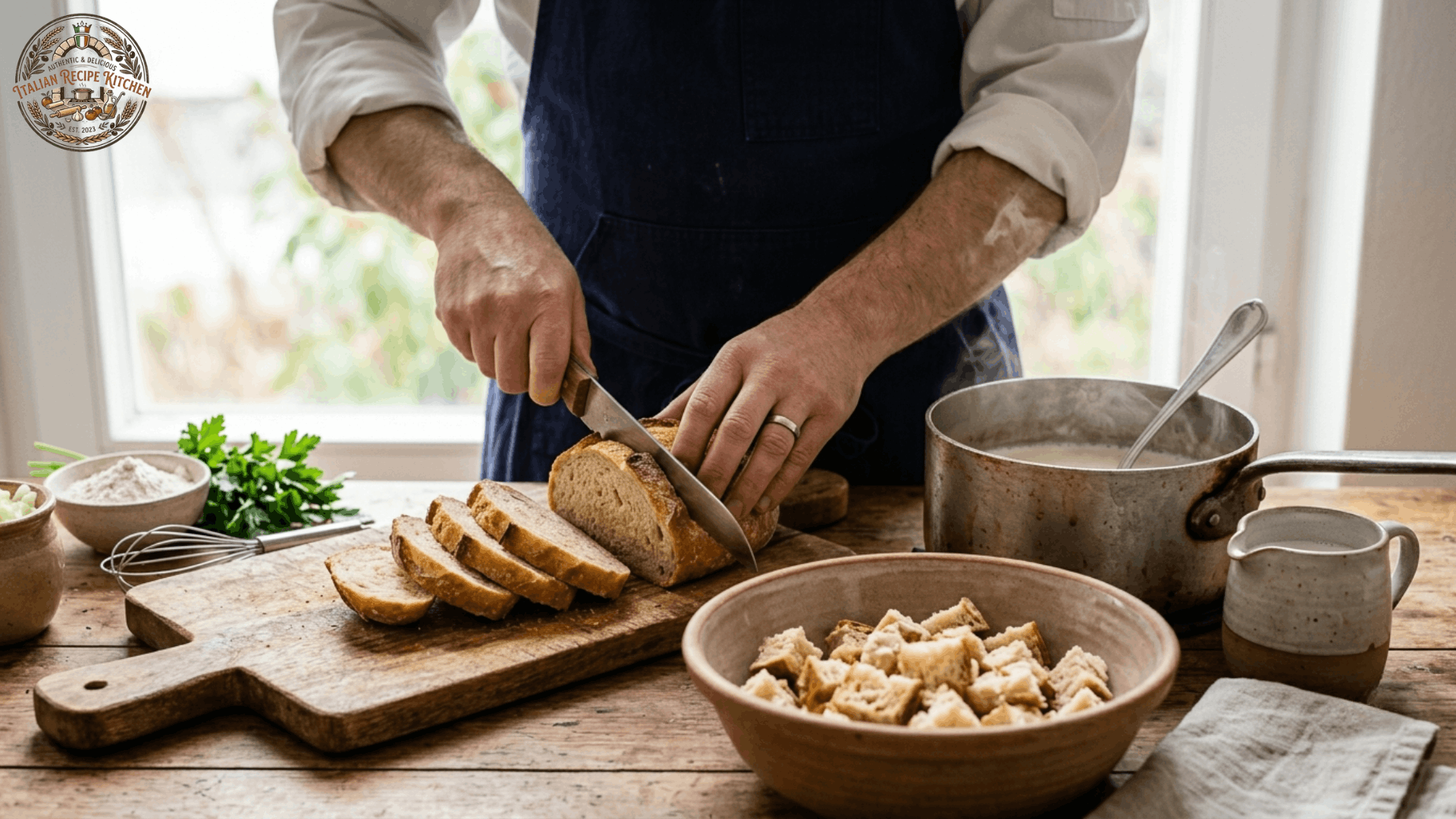
Cut the stale bread into small cubes and place them in a large bowl. Heat the milk until warm, then pour it over the bread. Let it soak for 15 to 30 minutes until the bread is soft and has absorbed most of the liquid.
Step 2: Cook the Onion
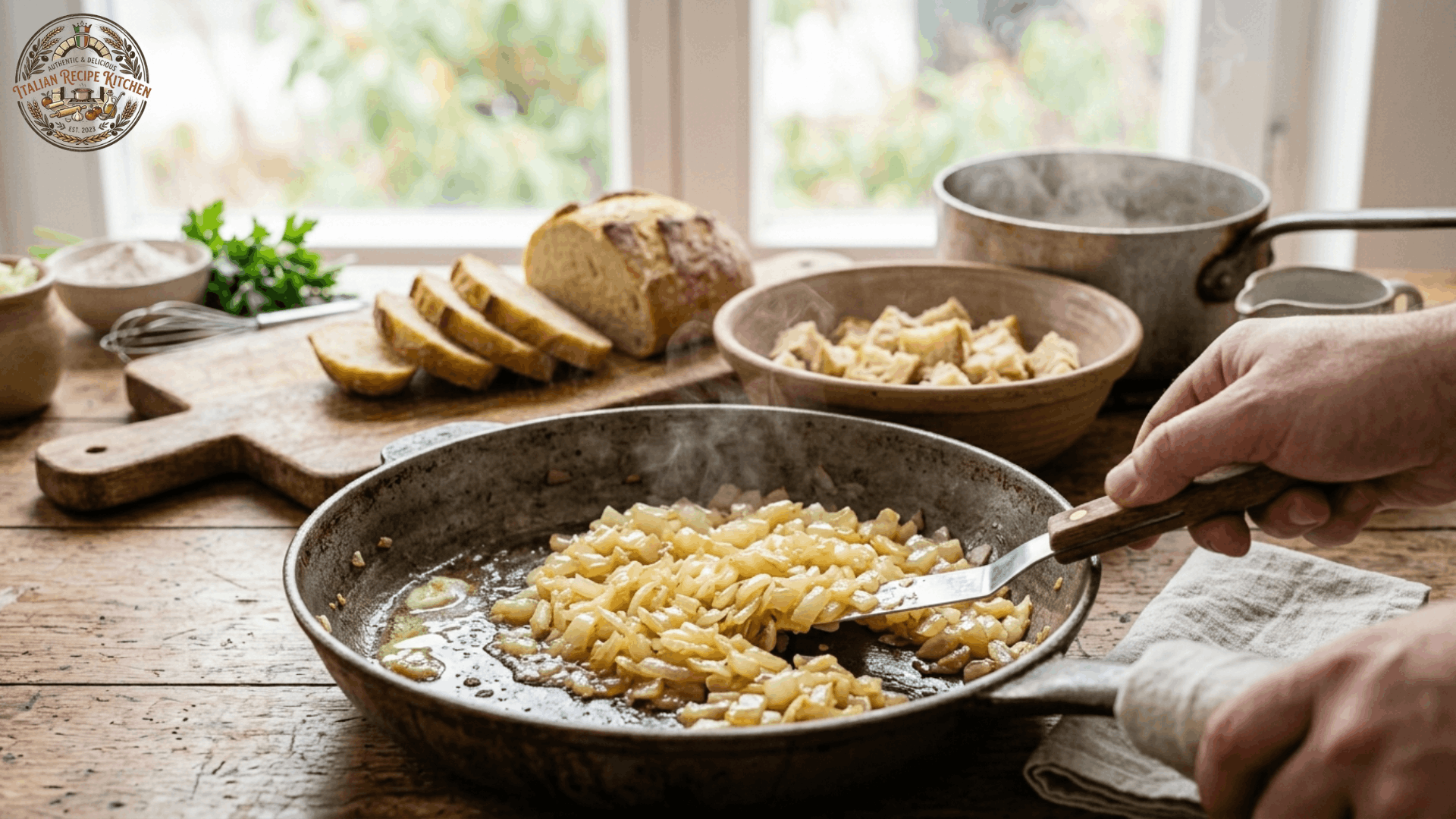
Melt the butter in a skillet over medium heat. Add the diced onion and cook until it becomes soft and translucent. Remove it from the heat and let it cool slightly.
Step 3: Mix the Ingredients
Add the cooked onion, chopped parsley, eggs, salt, black pepper, and nutmeg to the soaked bread. Gently mix everything with your hands until the mixture is evenly combined and holds together.
Step 4: Shape the Dumplings
Divide the mixture into equal portions and shape them into round balls slightly smaller than a tennis ball. They should be firm enough to hold their shape without falling apart.
German Bread Dumplings Recipe Card
| Ingredient | Amount |
| Stale bread rolls or baguette | 300 to 400 g |
| Warm milk | 250 ml |
| Eggs | 2 |
| Onion, diced | 1 medium |
| Butter | 2 tablespoons |
| Fresh parsley, chopped | 2 tablespoons |
| Salt and pepper | To taste |
| Nutmeg | A small pinch |
This recipe makes roughly six to eight dumplings, depending on the size you shape them.
How to Cook Bread Dumplings
Cooking is where many first-timers get nervous, but the process is simple once you know the trick. The water should simmer gently, never boil hard.
- Bring a large pot of salted water to a boil, then reduce the heat to a simmer.
- Carefully lower the shaped dumplings into the water.
- Let them cook uncovered for eighteen to twenty minutes.
- They are done once they float to the surface and feel firm to the touch.
- Lift them out with a slotted spoon and serve right away.
Tips for Perfect Knödel Every Time
A few small adjustments make the difference between dumplings that hold together and ones that fall apart in the pot.
- Always test one dumpling first before cooking the whole batch
- If the dough feels too wet, add a spoonful of flour or breadcrumbs
- If it feels too dry and crumbly, add a splash more warm milk
- Keep the water at a gentle simmer, since a rolling boil breaks the dumplings apart
- Use two forks to pull dumplings apart instead of cutting with a knife
Storage Instructions for Leftover Knödel
Cooked Semmelknödel keep well and taste just as good the next day. Store them in an airtight container in the refrigerator for up to three days.
To reheat, place them in simmering water for a few minutes rather than using the microwave, which can dry them out. Many people actually prefer the leftovers sliced and pan-fried the next morning.
How to Freeze German Bread Dumplings
Freezing is a great option if you want to make a big batch ahead of time. Both cooked and uncooked dumplings freeze well.
- Place cooked dumplings on a tray until firm, then transfer to a freezer bag
- Freeze uncooked dumplings the same way, then simmer them straight from frozen
- Add about five extra minutes to the cooking time for frozen dumplings
- Frozen Knödel keep well for up to two months
What to Serve with Knödel
Semmelknödel shine brightest next to rich, saucy dishes. Their soft texture is designed to soak up gravy, so pairing them well makes the whole meal better.
| Main Dish | Why It Works |
| Beef or pork roast | Rich pan gravy soaks into the dumpling |
| German goulash | Hearty sauce balances the mild bread flavor |
| Mushroom sauce | A vegetarian option that still feels indulgent |
| Sauerbraten | Classic pairing with tangy, sweet gravy |
| Roast chicken or turkey | Lighter option that still works with gravy |
Presentation and Serving Ideas
A little effort in plating turns this humble dish into something that looks like a restaurant plate. Slice the dumpling in half to show the soft interior before pouring gravy over the top.
Add a sprinkle of fresh parsley or chives for color. Serve alongside red cabbage or sauerkraut for a traditional Bavarian look, and use a wide, shallow bowl so the sauce pools around the dumpling instead of spilling off a flat plate. For an Italian-inspired meal, pair it with slices of Authentic Italian Pane Pugliese Bread.
Knödel Nutrition Facts
Semmelknödel are a comfort food, so portion size matters if you are watching your intake. Here is a general breakdown per average-sized dumpling.
| Nutrient | Approximate Amount |
| Calories | 200 to 215 kcal |
| Carbohydrates | 27 to 29 g |
| Protein | 7 to 8 g |
| Fat | 6 to 7 g |
| Fiber | 2 to 3 g |
| Sodium | 300 to 700 mg |
Values will shift slightly depending on the type of bread and how much butter you use.
Final Thoughts
Semmelknödel proves that simple, humble ingredients can turn into something truly special. With just stale bread, milk, and a few pantry staples, you get a comforting side dish that has fed German families for generations.
Once you master the basic method, you can freeze batches ahead, experiment with different breads, and pair them with almost any saucy main course. Give this recipe a try the next time your bread starts to go stale instead of throwing it away.
Frequently Asked Questions
What is the difference between Knödel and Semmelknödel?
Knödel is the general German word for dumpling, while Semmelknödel refers specifically to the bread roll version made with stale bread.
Can I make Semmelknödel without eggs?
Eggs help bind the dumplings, so skipping them may cause the dough to fall apart during cooking.
Why did my dumplings fall apart in the water?
This usually happens because the water was boiling too hard or the dough mixture was too wet.
Can I use fresh bread instead of stale bread?
Fresh bread holds too much moisture and will not absorb the milk properly, so it is best to dry it out first.
How do I know when the dumplings are fully cooked?
They are ready once they float to the surface and feel firm when gently pressed.
Are Semmelknödel the same as Italian Canederli?
They are very similar in method and ingredients, though Canederli often include extra additions like speck or cheese.